
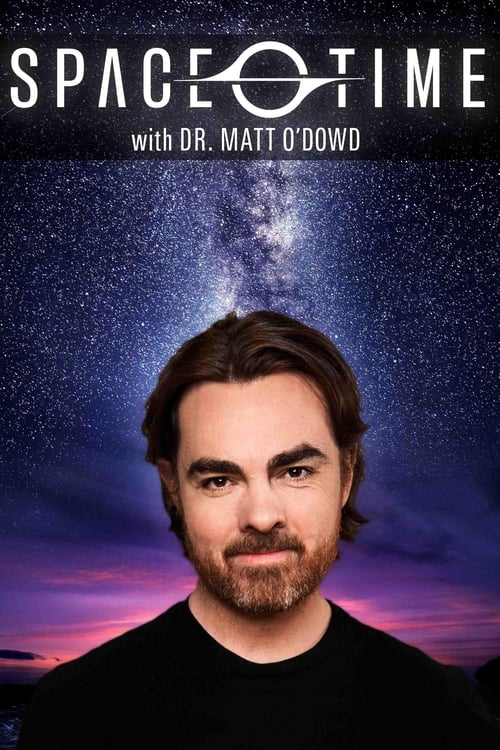
PBS Space Time Season 2017 Episode release dates & where to watch
Premiered
Wednesday, January 4, 2017
Ended: Wednesday, December 20, 2017
When does PBS Space Time Season 2017 come out?
PBS Space Time Season 2017 premiered Wednesday, January 4, 2017 on YouTube and ended Wednesday, December 20, 2017. The season has 45 episodes.
Last updated
PBS Space Time Season 2017 release schedule
| Episode | Release date |
|---|---|
|
1. How to See Black Holes + Kugelblitz Challenge Answer Find out how scientists are mapping the black holes throughout the Milky Way and beyond as well as the answer to the Escape the Kugelblitz Challenge Question. Were you able to save humanity? |
Wednesday · 9 years ago |
|
2. The EM Drive: Fact or Fantasy? Because you demanded it … we break down the EM Drive! |
Tuesday · 9 years ago |
|
3. The Phantom Singularity Isaac Newton’s Universal Law of Gravitation tells us that there is a singularity to be found within a black hole, but scientists and mathematicians have found a number of issues with Newton’s equations. They don’t always accurately represent reality. Einstein’s General Theory of Relativity is a more complete theory of gravity. So does using the General Theory of Relativity eliminate the singularity? No. Not only does it concur with Newton’s Universal Law of Gravitation but it also reveals a second singularity, not at the center of the black hole but at the event horizon. |
Thursday · 9 years ago |
|
4. Why Quasars are so Awesome When Quasars were first discovered the amount of light pouring out of such a tiny dot in space seemed impossible. A hysterical flurry of hypothesizing followed: swarms of neutron stars, alien civilizations harnessing their entire galaxy’s power, bright, fast-moving objects being ejected by our own galaxy’s core. But by the 1980’s we were converging on the most awesome explanation. It goes a little like this: Take a black hole of millions to billions times the mass of the sun. Where from? It turns out every decent-sized galaxy has one at its core. Now drive gas into the galactic core. One way this can happen is when galaxies merge and grow. That gas descends into the waiting black hole’s gravitational well and gains incredible speed on the way. It is swept up in a raging whirlpool around the black hole that we call an accretion disk, where its energy of motion is turned into heat. The heat-glow of the accretion disk is so bright that we can see quasars to the ends of the universe. |
Wednesday · 9 years ago |
|
5. The Geometry of Causality In this episode we dive deeper into the relationship between space and time and explore how we can geometrically map the causality of the universe and increase our understanding of how time and distance relate to one another. |
Thursday · 9 years ago |
|
6. Telescopes of Tomorrow |
Wednesday · 9 years ago |
|
7. The Eye of Sauron Reveals a Forming Solar System! Fomalhaut is a massive young star surrounded by a ring of dust debris that can tell us a great deal about the formation of our own solar system. |
Wednesday · 9 years ago |
|
8. The Treasures of Trappist-1 Can humanity survive on one of the seven earth-like Trappist-1 planets? Last week, seven earth-like planets were discovered orbiting a Red Dwarf star 39 light years away. Each one could be capable of supporting life. |
Wednesday · 9 years ago |
|
9. The Race to a Habitable Exoplanet - Time Warp Challenge You’ve discovered a habitable exoplanet, but so has an an evil interplanetary mining corporation. Can you get to the planet before they strip it bare and leave it unsuitable for life? You’re going to need a ship, the Lorentz Transformation and the Wait Equation. Hang on, it’s going to be a bumpy ride. |
Wednesday · 9 years ago |
|
10. Time Crystals! In this episode of the Space Time Journal Club Matt discusses how two independent research teams created their own Time Crystals, a form of matter that breaks time translational symmetry and could be used in quantum computers. |
Wednesday · 9 years ago |
|
11. Superluminal Time Travel + Time Warp Challenge Answer Find out how traveling faster than light and traveling back in time are the same thing. |
Wednesday · 9 years ago |
|
12. How Time Becomes Space Inside a Black Hole Find out how time and space switch roles when we move beyond the event horizon of the black hole. |
Wednesday · 9 years ago |
|
13. Telescopes on the Moon Find out about China’s current telescope on the moon and what the future plans are for mounting larger telescopes on the lunar surface. |
Wednesday · 9 years ago |
|
14. The Oh My God Particle In 1991 a single atomic nucleus slammed into our atmosphere with the intensity of a macroscopic object. It’s been named The Oh My God Particle. |
Wednesday · 9 years ago |
|
15. Are You a Boltzmann Brain? Was an incredible drop in entropy responsible for the Big Bang? If that’s the case, this would lead us to conclude that a great many other things are possible, including the likelihood that you are a Boltzmann Brain. |
Wednesday · 9 years ago |
|
16. Are We Living in an Ancestor Simulation? Neil deGrasse Tyson sits down with Matt to discuss Ancestor Simulations. And check out Matt and Neil discussing how sure we are about our map of the universe |
Wednesday · 9 years ago |
|
17. The Great American Eclipse The first total solar eclipse in over 40 years is about to hit the United States. |
Wednesday · 9 years ago |
|
18. Martian Evolution What will become of humanity after spend a few hundred years on Mars? What will happen after a few thousand? Evolution has, and still is, shaping humanity in rather drastic ways. How long will humans stop being human and become Martian? |
Wednesday · 9 years ago |
|
19. The Fate of the First Stars Soon after the Big Bang, the first generation of monstrously large stars ignited, lit up the universe, and then died. The resulting swarms of supernova explosions enriched the universe with the first heavy elements and LOTs of black holes. They shaped everything that came after. These were the stars of Population III, and they are one of the most enduring mysteries in astrophysics. |
Wednesday · 9 years ago |
|
20. Supervoids vs Colliding Universes! If you study a map of the Cosmic Microwave Background, or CMB, you may notice a large, deep blue splotch on the lower right. This area, creatively named the Cold Spot. Is this feature a statistical fluke, the signature of vast supervoids, or even the imprint of another universe? |
Wednesday · 9 years ago |
|
21. Anti-Matter and Quantum Relativity Paul Dirac’s insights into the nature of Quantum Mechanics laid the foundation for Quantum Field Theory and predicted the existence of anti-matter. |
Wednesday · 9 years ago |
|
22. The First Quantum Field Theory Quantum mechanics is perhaps the most unintuitive theory ever devised. And yet it’s also the most successful, in terms of sheer predictive power. Simply by following the math of quantum mechanics, incredible discoveries have been made. Its wild success tells us that the mathematical description provided by quantum mechanics reflects deep truths about reality. And by far the most successful, most predictive formulation of quantum mechanics is quantum field theory. It is our best description we have of the fundamental workings of reality. And the first part of quantum field theory that was derived – quantum electrodynamics – is the most precise, most accurate of all. |
Wednesday · 9 years ago |
|
23. Feynman's Infinite Quantum Paths How to predict the path of a quantum particle. Part 3 in our Quantum Field Theory Series. |
Friday · 9 years ago |
|
24. Solving the Impossible in Quantum Field Theory How do you calculate infinite quantum outcomes? Feynman Diagrams. |
Wednesday · 9 years ago |
|
25. The Real Star Wars Anti-Satellite weaponry, giant X-ray lasers and kinetic impact missiles nicknamed the “Rods from God.” Find out about the history of the real star wars that have been waged over the past 50 years. |
Wednesday · 9 years ago |
|
26. The Secrets of Feynman Diagrams Unlock the secrets of Feynman Diagrams. Part 5 in our Quantum Field Theory series. And if you're submitting an answer to our challenge question email your answer by August 2nd to [email protected] with the subject line "Feynman Diagram Challenge." |
Wednesday · 9 years ago |
|
27. Dark Flow Why does the universe seem to be moving in one particular direction? |
Wednesday · 9 years ago |
|
28. The One-Electron Universe Could it be that all the electrons in the universe are simply one, single electron moving back and forth through time? |
Thursday · 9 years ago |
|
29. Extraterrestrial Superstorms Earth has its share of monster storms, but even our most powerful hurricanes are a breeze compared to the great, planet-sized tempests of the gas giants. |
Wednesday · 9 years ago |
|
30. First Detection of Life What does life look like from space? |
Thursday · 9 years ago |
|
31. White Holes Black holes are very well known but... What is a White Hole? |
Wednesday · 9 years ago |
|
32. Neutron Stars Collide in New LIGO Signal? LIGO may have just detected gravitational waves from the collision of two Neutron Stars. |
Wednesday · 9 years ago |
|
33. The Future of Space Telescope The mysteries of our universe seem limitless. However to unlock them, we’re going to need some incredible technologies to peer deeper and more sharply into space time. |
Wednesday · 9 years ago |
|
34. Are the Fundamental Constants Changing? The laws of physics are the same everywhere in the universe. At least we astrophysicists hope so. After all, it’s hard to unravel the complexities of distant parts of the universe if we don’t know the basic rules. But what if this is wrong? There is a hint of evidence that the fundamental constants that govern our universe may evolve over time, and even from one location to another. |
Thursday · 9 years ago |
|
35. When Quasars Collide STJC So what happens when two Super Massive Black Holes collide? We may be about to find out, because astronomers have spotted a pair of them in a close binary orbit for the very first time. |
Wednesday · 9 years ago |
|
36. Absolute Cold Can we ever achieve absolute cold? |
Wednesday · 9 years ago |
|
37. The Nature of Nothing It turns out that "nothing" is one of the most interesting somethings in all of physics. |
Thursday · 9 years ago |
|
38. The Missing Mass Mystery For years, astronomers have been unable to find up to half of the matter in the universe. We may just have solved this problem. Fingers crossed. |
Wednesday · 9 years ago |
|
39. The Vacuum Catastrophe If vacuum energy really does have the enormous value predicted by quantum field theory then our gently expanding, geometrically flat universe shouldn’t exist. This is the vacuum catastrophe. |
Friday · 9 years ago |
|
40. Zero-Point Energy Demystified Let’s talk about the mysterious zero-point energy and what it really can, and really can’t do. |
Wednesday · 9 years ago |
|
41. Suicide Space Robots Let’s take a moment to remember the selfless sacrifices made by some amazing robotic explorers. And be sure to learn more about your personal DNA story by going to 23andMe.com/spacetime and taking advantage of their special holiday offer. |
Wednesday · 8 years ago |
|
42. Citizen Science + Zero-Point Challenge Answer The future of science is you. |
Wednesday · 8 years ago |
|
43. Understanding the Uncertainty Principle with Quantum Fourier Series Sometimes intuitive, large-scale phenomena can give us incredible insights into the extremely unintuitive world of quantum mechanics. |
Wednesday · 8 years ago |
|
44. The Origin of Our First Interstellar Visitor We were recently visited by a traveler from outside our solar system. This is the first time we’ve ever seen an object that came to us from interstellar space. It's name is 'Oumuamua. |
Wednesday · 8 years ago |
|
45. Extinction by Gamma-Ray Burst Finale Find out about the last time and the next time the Earth will be hit by a Gamma-ray Burst. |
Wednesday · 8 years ago |
PBS Space Time Season 2017 FAQ
When does PBS Space Time Season 2017 come out?
PBS Space Time Season 2017 premiered Wednesday, January 4, 2017 on YouTube.
How many episodes are in PBS Space Time Season 2017?
PBS Space Time Season 2017 has 45 episodes.
Are new episodes of PBS Space Time Season 2017 released weekly?
New episodes are released weekly.
When is the PBS Space Time Season 2017 finale?
The PBS Space Time Season 2017 finale (Episode 45) aired Wednesday, December 20, 2017.
How do I get notified when new PBS Space Time Season 2017 episodes are released?
Download the Streambay app and follow PBS Space Time. You'll get a push notification the moment each new episode is out.
Never miss PBS Space Time Season 2017.
Download Streambay and follow PBS Space Time. We’ll notify you the moment Season 2017 is released, and as each new episode comes out. It’s free, with no sign-up and no personal information required.