

E25
Still airing
This show is still going. New episodes keep coming out. Follow it in Streambay and we’ll tell you when the next one is out.
TV series
History of Architecture and Design
Latest episode
S1 E24 · The housing question
About History of Architecture and Design
History of Architecture and Design is a talk TV series that premiered on February 15, 1975. It has 1 season and 25 episodes so far and is still airing new episodes. The latest episode, Season 1 Episode 24 "The housing question", aired on October 18, 1975.
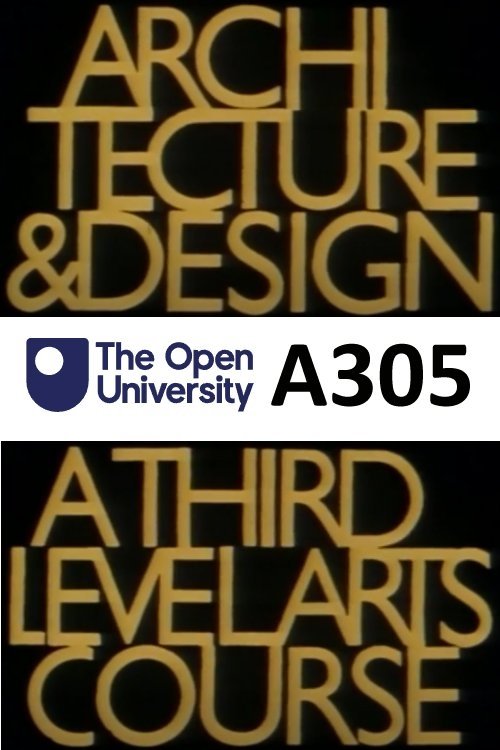
Between 1975 and 1982, The Open University broadcast a series of televised courses on the genealogy of the modern movement: A305, History of Architecture and Design 1890–1939. Through twenty-four programs aired on BBC 2, the course team aimed to offer students and viewers a critical understanding of the intentions and views of the world that fuelled the modern movement, and to present some of the alternative traditions that flourished alongside it. The course nevertheless avoided the more dismissive positions of its contemporaries, while engaging political issues of its day such postwar urban planning and the housing question.
- Talk
Last updated
Episodes
25 episodes · 1 season
Season 1
1975 · 25 episodes · Last episode: 51 years ago
- E24
24. The housing question
Housing has been the most distinctive interest of the Modern Movement in architecture; yet, despite the good intentions of the theorists, the results of this interest have not always been successful. Television broadcast 24, the final programme of the course, studies three post-war housing developments which are very different in character: the L.C.C.’s Roehampton Estate; Erno Goldfinger’s Trellick Tower in North Kensington and Ralph Erskine’s new estate at Byker, Newcastle Upon Tyne.
- E23
23. The semi-detached house : the suburban style
A case could be made for the argument that in the English suburbs, land developers and speculative builders—by wanting to build individualistic houses in vernacular styles away from the city—predicted the formulation of the garden cities. In television broadcast 23, Stephen Bayley suggests that the accumulation of different pressures combined to produce a form of housing and community planning that was, like the Roman idea of rus in urbe, an ideal of sorts.
- E22
22. Mechanical services in the cinema
Air date TBAIn television broadcast 21, Stephen Bayley takes the cinema as the paradigm of mechanical servicing in architecture. One particular cinema is singled out for detailed analysis: the Astoria, in Finsbury Park, London. The role of the heating and electrical plant is described in detail, which, in conjunction with the bizarre decoration, produced an emotional and physical atmosphere which was for many people their first taste of the convenience and benefits which modern architecture could bring.
- E21
21. The other tradition
In television broadcast 21, Geoffrey Baker examines the persistence of academic classicism in British architecture of the 1920s and 1930s, exemplified in such buildings as Manchester City Library and Liverpool Cathedral. Despite growing support during the 1930s for the ideology of the Modern Movement, examples of the style were comparatively rare in Britain. Focusing on the new headquarters of the Royal Institute of British Architects, built during the 1930s, Geoffrey Baker shows how conservative traditions were modified by modernist tastes.
- E20
20. Moderne and modernistic
Looking back at British architecture in the 1930s, there were a significant number of buildings which looked modern to the lay man, although purist advocates of modern architecture scorned them as dangerous aberrations, calling them "Moderne" or "Modernistic." In television broadcast 20, Geoffrey Baker considers some of the ingredients of the "Moderne" idiom, with examples drawn mainly from commercial architecture (including Wallis, Gilbert and Partners’ Firestone and Hoover factories) and seaside architecture (Joseph Emberton’s Blackpool Pleasure Beach buildings and Oliver Hill’s housing at Frinton-on-Sea).
- E19
19. The London Underground
In television broadcast 19, Geoffrey Baker visits three stations designed by Charles Holden for the London Underground’s Piccadilly Line (Cockfosters, Oakwood, and Southgate). At a time when the imagery of the International Style was controversial in England, Holden’s task was to evolve an architectural expression for the Underground which would fit in with suburbia and which would also project an image of a modern transport system.
- E18
18. Wood or metal : English furniture of the thirties
Television broadcast 18 examines the work of Sir Edwin Lutyens, who Amyas Connell one said would ultimately be regarded as the greatest English architect of the twentieth century. When we think of the way British architecture was purged of its former traditional romantic expression by modernists such as Connell, this viewpoint may appear curious. In looking at Deanery Gardens, Sonning (1899), Dr. Geoffrey Baker here notes Lutyens’s empirical approach to planning and discerns a supremely English character in Lutyens’s work.
- E17
17. English furniture : technique and design
Television broadcast 17 analyses the structures and the processes of production in wood and steel furniture around 1930-34, concentrating on the work of Heal and Son and Pel Limited. It investigates the introduction of tubular steel furniture to Britain from Germany and France, and questions Charlotte Perriand’s defence of tubular steel as a material of mass production and superior technological properties, as published in The Studio in 1929.
- E16
16. Hans Scharoun
Hans Scharoun is best known for his expressionist designs in the years following the First World War, for his housing at Siemensstadt and Breslau in the late 1920s, and for his work after the Second World War. Less well known is his work of the 1930s. In television broadcast 16, Tim Benton considers two of Scharoun’s domestic designs of this decade: the Mohrmann house and the Scharf house in Berlin.
- E15
15. English houses of the Thirties
In television broadcast 15, Geoffrey Baker looks at three important houses by the architectural partnership Connell, Ward and Lucas, the first firm to bring the International Style to England. The first house, High and Over, at Amersham, was designed by Amyas Connell; the other house by Connell which is discussed in this programme is New Farm, near Haslemere. The last house, Temple Gardens, Moor Park, was designed and built by Basil Ward in 1937.
- E14
14. English flats of the thirties
In television broadcast 14, Tim Benton looks at two very different developments to illustrate the differences and the common denominators in the design of flats in the 1930s. The huge municipal Quarry Hill estate in Leeds, designed by R.A.H. Livett, is compared with Highpoint I, an apartment block for upper-income tenants, in Highgate, London, designed by Berthold Lubetkin.
- E13
13. Le Corbusier : the Villa Savoye
In television broadcast 13, Tim Benton visits Le Corbusier’s Villa Savoye, built at Poissy near Paris from 1929-1931, one of the most impressive monuments of the International Style. In a detailed analysis of the building, Benton relates the Villa Savoye to ideas expressed in Le Corbusier’s writings of the 1920s. The motto of the film is Le Corbusier’s phrase: “The house: a machine for living in.“
- E12
12. Adolf Loos
In television broadcast 12, Tim Benton looks at a number of buildings in Vienna designed by Adolf Loos, including the Goldman and Salatsch store, Kniže’s, the Scheu house and the Moller house. These projects illustrate Loos’s characteristic handling of space and concern with craftsmanship and materials. Benton shows how Loos’s work developed from a sophisticated version of Arts and Crafts to something close to the International Style.
- E11
11. International Exhibition of Decorative Arts, Paris 1925
In television broadcast 11, Tim Benton provides a detailed look at the Paris International Exhibition of Decorative Arts of 1925. Benton offers a close reading of the buildings and designs exhibited to explain many of the paradoxical characteristics of French design during this period and to consider, using contemporary photographs, in what ways the architecture the exhibition's pavilions could be said to reflect avant-garde tendencies.
- E10
10. The Weissenhof Siedlung 1927
The Weissenhof Siedlung, built in Stuttgart in 1927 for the housing exhibition sponsored by the Werkbund, proved to be a turning point in the self-identification of the International Style. The Weissenhof Siedlung was intended as a ‘manifesto’ demonstration of Modern Movement architects’ abilities in the field of housing. In Television broadcast 10, Tim Benton looks at work by Peter Behrens, Walter Gropius, Mies van der Rohe, J. J. P. Oud, Mart Stam, Hans Sharoun and Le Corbusier, to assesses how far the work matches up to the architects’ ideals.
- E9
9. Berlin Siedlungen
The most notable success of the New Objectivity in architecture was the solution of most of the problems posed by mass housing in Germany. In Television broadcast 9, Tim Benton traces the development of the Siedlungen (housing estates) built in Berlin during the 1920s through the work of Bruno Taut, Hans Scharoun, Walter Gropius, Hugo Häring, and Otto Bartning. He shows that, despite the large scale of these projects, the garden city ideal was never far away.
- E8
8. Bauhaus at Weimar 1919-1925
In television broadcast 8, Bauhaus objects from the period and a model of the Haus am Horn are examined in the studio. Tim Benton talks with George Adams, who was a student at the Weimar Bauhaus in its first years; topics discussed include student attitudes during this period and the influence of prevailing trends in avant-garde art.
- E7
7. Erich Mendelsohn : the Einstein Tower
Television broadcast 2 looks at one of the very few completed Expressionist projects, Erich Mendelsohn’s Einstein Tower, near Potsdam, built between 1918 and 1922. It analyses Mendelsohn’s working methods through letters and sketches from the Front during the First World War. As a largely symbolic, though technically competent building, the Einstein Tower achieved instant notoriety for Mendelsohn, who retained his Expressionist sketching technique as a means of drafting out his ideas throughout his career.
- E6
6. R. M. Schindler : The Lovell Beach House
In television broadcast 6, Sandra Millikin discusses the highly original contribution of Rudolf Schindler to the modern movement, which is frequently attributed to his Beach House for Dr. Phillip Lovell at Newport Beach, California. This masterpiece was built during 1925-26 and its design clarity and sophistication elevate Schindler’s work to a level directly comparable with that of Le Corbusier at this time.
- E5
5. Frank Lloyd Wright : the Robie House
In television broadcast 5, Sandra Millikin discusses the Robie House built in the Hyde Park district of Chicago in 1909. The residence represents a culmination of the house type which Wright developed in the 1890s, in what has become known as the “Prairie” style. Millikin demonstrates Wright’s concern with materials and his masterly organization of space.
- E4
4. Industrial architecture : AEG and FAGUS factories
In television broadcast 4, Tim Benton compares the industrial buildings by Peter Behrens for the AEG (General Electrical Company of Germany) in Berlin with the almost exactly contemporaneous Fagus shoe-last factory which Walter Gropius designed for Karl Benscheidt, in Alfeld-an-der-Leine, both built just before the First World War. […] The Fagus factory is often referred to as the first really ‘modern’ building, while the AEG buildings, at first sight, appear to have a markedly classical aesthetic.
- E3
3. Charles Rennie Mackintosh : Hill House
Sandra Millikin takes a close look at Hill House, perhaps the most perfect of Mackintosh’s houses, built in 1903 at Helensburgh, near Glasgow, for the publisher Walter Blackie. Besides indicating how the design responded to the needs of the particular client, Millikin also suggests the ways in which the house related to traditional Scottish forms and to Mackintosh’s other work.
- E2
2. Universal International Exhibition : Paris 1900
Television broadcast 2 is intended to act as a sort of summary to the mainstream developments in architecture and design in Europe up to 1900. Tim Benton looks at some of the architecture and interior design of this mammoth turn-of-the-century celebration and shows that, far from being dominated by Art Nouveau, the Exhibition’s most marked features were eclectic and nationalist.
- E1
1. An architect at work : Fletcher's Well Ponteland
In the first broadcast, Dr. Geoffrey Baker uses the house he designed for himself, Fletcher’s Well near Newcastle upon Tyne, to explain some of the practical constraints an architect faces in the design of any building and to suggest the role played by aesthetic considerations. This discussion goes a long way to explain how contemporary architects think about architecture, and in what ways they have been influenced by the modern period we have chosen to study.
History of Architecture and Design FAQ
When is the next episode of History of Architecture and Design?
A date for the next episode of History of Architecture and Design hasn't been announced yet. Follow History of Architecture and Design in the Streambay app and you'll be notified as soon as a new episode airs.
When did the latest episode of History of Architecture and Design come out?
The most recent episode of History of Architecture and Design, Season 1 Episode 24 "The housing question", aired on October 18, 1975.
How many seasons of History of Architecture and Design are there?
History of Architecture and Design has 1 season with 25 episodes in total.
When did History of Architecture and Design first air?
History of Architecture and Design first aired on February 15, 1975.
How do I get notified when new episodes of History of Architecture and Design are released?
Download the Streambay app, follow History of Architecture and Design, and you'll get a push notification the moment each new episode is released.
More like History of Architecture and Design
-

5.0
-

7.6
-

5.8
-

6.1
-

6.5
-

5.1
-

6.2
-

7.2
-

7.2
-

5.6
-

4.3
-

5.6
Never miss History of Architecture and Design.
Download Streambay and follow History of Architecture and Design. We’ll notify you the moment a new episode is released. It’s free, with no sign-up and no personal information required.
Coming soon to
App Store
Get it on
Google Play