E100
100. The End of Imperial Rule
Revolution spreads across China, forcing the abdication of the last Qing emperor in 1912 and bringing more than two thousand years of imperial government to an end.
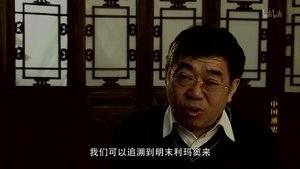
Latest episode
S1 E100 · The End of Imperial Rule
General History of China is a documentary TV series that premiered on CCTV-6 on January 21, 2013. It has 1 season and 100 episodes so far and has ended. The latest episode, Season 1 Episode 100 "The End of Imperial Rule", aired on January 21, 2013.
Tracing Chinese civilization from its prehistoric origins to the fall of the Qing dynasty, this sweeping 100-part documentary explores the rulers, wars, philosophies, religions, cultural achievements and social transformations that shaped one of the world’s oldest continuous civilizations. Through archaeological evidence, historical records and expert commentary, the series presents a chronological account of China’s dynasties, peoples and institutions across thousands of years of history.
Last updated
100 episodes · 1 season
2013 · 50 episodes · Last episode: 13 years ago
This 100-part season traces the development of Chinese civilization from prehistoric communities and the earliest dynasties through the fall of the Qing Empire, examining the rulers, institutions, ideas, conflicts and cultural achievements that shaped China’s history.
General History of China Season 1 release dates →
E100
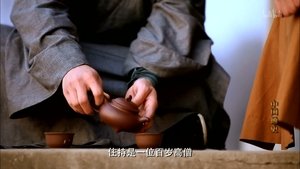
Revolution spreads across China, forcing the abdication of the last Qing emperor in 1912 and bringing more than two thousand years of imperial government to an end.
E99
Intellectuals, officials and activists pursue constitutional reform, modernization and revolution as the Qing struggles to respond to domestic crisis and foreign pressure.
E98
Conflict over Korea ends in a decisive Japanese victory, revealing the limits of Qing reform and triggering a profound crisis over China’s future.
E97
A vast religious rebellion establishes the Taiping Heavenly Kingdom and wages a devastating civil war that transforms Qing politics, society and regional military power.
E96
Commercial conflict, opium smuggling and diplomatic confrontation lead to war with Britain, exposing Qing military weakness and beginning a new era of unequal foreign pressure.
E95
After military defeats, Qing officials adopt Western weapons, industry and technical knowledge while attempting to preserve the dynasty’s traditional political and cultural foundations.
E94
The Qing sponsors scholarship and cultural projects while also prosecuting writings considered politically dangerous, revealing the close connection between learning and imperial control.
E93
A major Qing fiscal reform merges head taxes with land taxes, simplifying collection and altering the relationship between population, property and state revenue.
E92
Created to handle urgent military affairs, the Grand Council develops into the Qing emperor’s most efficient instrument for confidential decision-making and centralized rule.
E91
Through warfare, diplomacy and frontier administration, the Qing expands and consolidates a multiethnic empire across Inner Asia and the Chinese heartland.
E90
The Qing defeats the Zheng regime in Taiwan and incorporates the island into the empire, reshaping maritime defense and cross-strait administration.
E89
Early Qing rulers suppress resistance, rebuild administration and adapt imperial institutions in order to secure their authority over a vast and diverse realm.
E88
The Manchus cross the Great Wall, seize Beijing and begin the difficult process of conquering and governing China under the new Qing dynasty.
E87
The final Ming emperor struggles against rebellion, fiscal collapse, factional conflict and external threats as the dynasty moves toward catastrophe.
E86
The influx and circulation of silver reshape taxation, trade and everyday life in Ming China, tying the empire more closely to emerging global economic networks.
E85
Commercial towns, specialized crafts and regional markets transform the prosperous Jiangnan region into one of the most dynamic centers of the late imperial economy.
E84
Jesuit missionaries enter late Ming China and build relationships through astronomy, mathematics, cartography and scholarship, opening a complex new era of cultural exchange.
E83
The grand secretary Zhang Juzheng strengthens finances, administration and imperial authority through ambitious reforms, but his program faces reversal after his death.
E82
E81
The philosopher Wang Yangming teaches that moral knowledge is rooted within the mind and must be united with action, challenging established interpretations of Neo-Confucian learning.
E80
A disastrous campaign against the Oirats ends with the capture of the Ming emperor, creating a succession crisis and exposing serious weaknesses in court and military leadership.
E79
The Ming grand secretariat evolves into a powerful coordinating institution, helping emperors manage the bureaucracy despite the dynasty’s formal rejection of the chancellorship.
E78
The Ming court dispatches Zheng He’s enormous fleets across Southeast Asia and the Indian Ocean, projecting imperial prestige through diplomacy, trade and maritime power.
E77
The Yongle Emperor transfers the Ming capital to Beijing, constructs the Forbidden City and reshapes the political and strategic center of the empire.
E76
From impoverished beginnings and rebellion against the Yuan, Zhu Yuanzhang rises to found the Ming dynasty and creates an intensely centralized imperial state.
E75
The last Yuan emperor confronts factional conflict, natural disasters, fiscal crisis and widespread rebellion as Mongol rule in China collapses.
E74
The celebrated traveler’s account provides a window into Yuan China while raising enduring questions about observation, memory and the transmission of knowledge between East and West.
E73
Ports, ships and merchant communities link Yuan China to Southeast Asia, India and the wider Indian Ocean through a flourishing network of maritime trade.
E72
The Tibetan lama Phagpa becomes an influential adviser to Kublai Khan, shaping Yuan religious policy and creating a new script intended for the empire.
E71
The Yuan court moves seasonally between Dadu and Shangdu, reflecting the dynasty’s effort to balance steppe traditions with the administration of China.
E70
Kublai Khan completes the conquest of the Southern Song, establishes the Yuan dynasty and governs China as ruler of a vast, multiethnic Mongol empire.
E69
Temüjin unites the Mongol tribes as Genghis Khan and creates a military empire whose campaigns transform Eurasia and threaten every state in northern China.
E68
The Tangut state builds a distinctive empire along the northwestern frontier, develops its own script and culture, and survives between powerful neighbors until the Mongol conquest.
E67
The cultural achievements of the Khitan Liao and Jurchen Jin reveal societies that blended their own traditions with the institutions, religions and arts of neighboring peoples.
E66
The Jin conquers the Liao and Northern Song, rules a vast multiethnic realm and then faces internal strain and the devastating advance of the Mongols.
E65
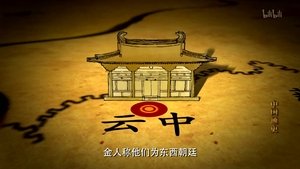
The Jurchen leader Wanyan Aguda unites his people, rebels against Liao domination and founds the Jin dynasty, transforming the balance of power in northern China.
E64
After the fall of the Liao in the east, Yelü Dashi leads Khitan followers westward and establishes a powerful new state in Central Asia.
E63
The Khitan peoples unite under Abaoji, found the Liao dynasty and build an empire that combines steppe traditions with institutions suited to ruling agricultural lands.
E62
Printing, scholarship, painting, literature, science and urban life illustrate the extraordinary cultural creativity of the Song era.
E61
Song thinkers reinterpret Confucian tradition through new discussions of morality, human nature and the cosmos, culminating in a philosophy that reshapes education and government.
E60
The bustling life of Northern Song Kaifeng is reconstructed through markets, festivals, entertainment and urban scenes immortalized in art and literature.
E59
Driven from northern China, the Song establishes a new center in the prosperous southeast, where commerce, maritime activity and urban culture support a resilient dynasty.
E58
The Southern Song and Jin alternate between fierce warfare and negotiated peace as each seeks security, legitimacy and control of the contested frontier.
E57
Jurchen armies capture the Northern Song capital and its emperors, ending the dynasty’s rule in the north and forcing the court to rebuild in the south.
E56
Wang Anshi introduces controversial policies to strengthen state finances, defense and rural society, dividing the Song court between reformers and their opponents.
E55
The Song expands examinations, schools and civil administration, creating a government in which educated scholar-officials exercise unprecedented influence.
E54
After years of conflict, Song and Liao negotiate a landmark peace that stabilizes their frontier and creates a lasting diplomatic relationship between rival empires.
E53
Zhao Kuangyin founds the Song dynasty, reunifies much of China and limits military power through institutions designed to place civil government above the generals.
E52
Following the Tang collapse, short-lived northern dynasties and competing southern kingdoms divide China until new political and military forces prepare the way for reunification.
E51
Buddhism, Daoism and foreign faiths flourish in Tang China, shaping art and society while also becoming entangled in debates over wealth, authority and state control.
General History of China has ended, so no new episodes are scheduled. The final episode aired on January 21, 2013.

The most recent episode of General History of China, Season 1 Episode 100 "The End of Imperial Rule", aired on January 21, 2013.
General History of China has 1 season with 100 episodes in total.
General History of China first aired on CCTV-6 on January 21, 2013.
Download the Streambay app, follow General History of China, and you'll get a push notification the moment each new episode is released.
Download Streambay and follow General History of China. We’ll notify you the moment a new episode is released. It’s free, with no sign-up and no personal information required.
General History of China
Get new episode alerts
Get alerts