
Skip to content
Streambay
Understanding Japan - A Cultural History poster
TV series

Understanding Japan - A Cultural History

Latest episode

S1 E24 · The Making of Contemporary Japan

About Understanding Japan - A Cultural History

Understanding Japan - A Cultural History is a TV series that premiered on January 1, 2015. It has 1 season and 24 episodes so far and has ended. The latest episode, Season 1 Episode 24 "The Making of Contemporary Japan", aired on June 11, 2015.

Japan’s extraordinary culture is like no other in the world. The 2,000-year-old civilization grew through periods of seclusion and assimilation to cultivate a society responsible for immeasurable influences on the rest of the world. What makes Japan so distinctive? The answer is more than just spiritual beliefs or culinary tastes. It’s the ongoing clash between tradition and modernity; a conflict shaped by Japan’s long history of engagement and isolation.

Last updated

Episodes

24 episodes · 1 season

Season 1

2015 · 24 episodes · Last episode: 11 years ago

Understanding Japan - A Cultural History Season 1 release dates →
  1. E24

    24. The Making of Contemporary Japan

    What makes 1989 the turning point for contemporary Japan? Explore four pivotal moments from that year whose repercussions are still being felt in the Japan of the 21st century: the death of Hirohito, China's Tiananmen Square Massacre, the bursting of the Japanese real estate bubble, and a dramatic stock market crash.

  2. E23

    23. Kurosawa and Ozu: Two Giants of Film

    Meet Japan's greatest filmmakers: Ozu Yasujirō and Kurosawa Akira. How do their best films reflect lasting connections to world cinema? Revisit Ozu's 1953 masterpiece Tokyo Story (inspired by an American domestic drama) and Kurosawa's rousing 1961 adventure Yojimbo (which fused samurai culture with the American Western).

  3. E22

    22. Japan's Economic Miracle

    From 1955 to 1975, the Japanese economy grew more than 435%-an astonishing rate that economists refer to as "the Japanese Miracle." Take a closer look at the six factors that led to this unprecedented growth, including the country's cheap and motivated workforce, as well as the critical influence of the United States....

  4. E21

    21. Japanese Foodways

    There's so much more to Japanese cuisine than just sushi. Move beyond the basics and plunge into the enormous diversity and complexity of Japan's culture of food. How do foods like soba noodles, tempura, and yakitori (and the rituals of eating them) reflect the waves of globalization and isolation you've explored in previous lectures?

  5. E20

    20. Japanese Family Life

    You can't truly grasp a country's culture without understanding its ideas about the family. Explore the three main models of Japanese family life: the aristocratic model (uji), the samurai model (ie), and the postwar model. Along the way, learn about shifting attitudes toward domestic life, including women's rights and family planning.

  6. E19

    19. A War without a Master Plan: Japan, 1931-1945

    A political culture dominated by fanatics. The quagmire of the Sino-Japanese War. The takeover of Manchuria and the puppet government of Manchukuo. Japan's surprising failure in attacking Pearl Harbor. Learn about all these and more in this lecture on the disorganized chaos (and legacy) of World War II-era Japan.

  7. E18

    18. Three Visions of Prewar Japan

    Take a fresh approach to the story of early 20th-century Japan. Rather than a review of major events, focus instead on the ideologies of three individuals whose competing views shaped Japan's actions on the eve of World War II: Nitobe Inazō and Shidehara Kijūrō, both proponents of democracy and international cooperation; and Ishiwara Kanji, a die-hard militarist.

  8. E17

    17. The Meiji Restoration

    Investigate the Meiji Restoration: the start of the third major period of Japanese globalization, defined by a vibrant synthesis of tradition and modernity. From the abolition of the samurai class to the creation of a new educational system to the restructuring of land ownership, how did Japan achieve revolutionary change through a smooth political transition?

  9. E16

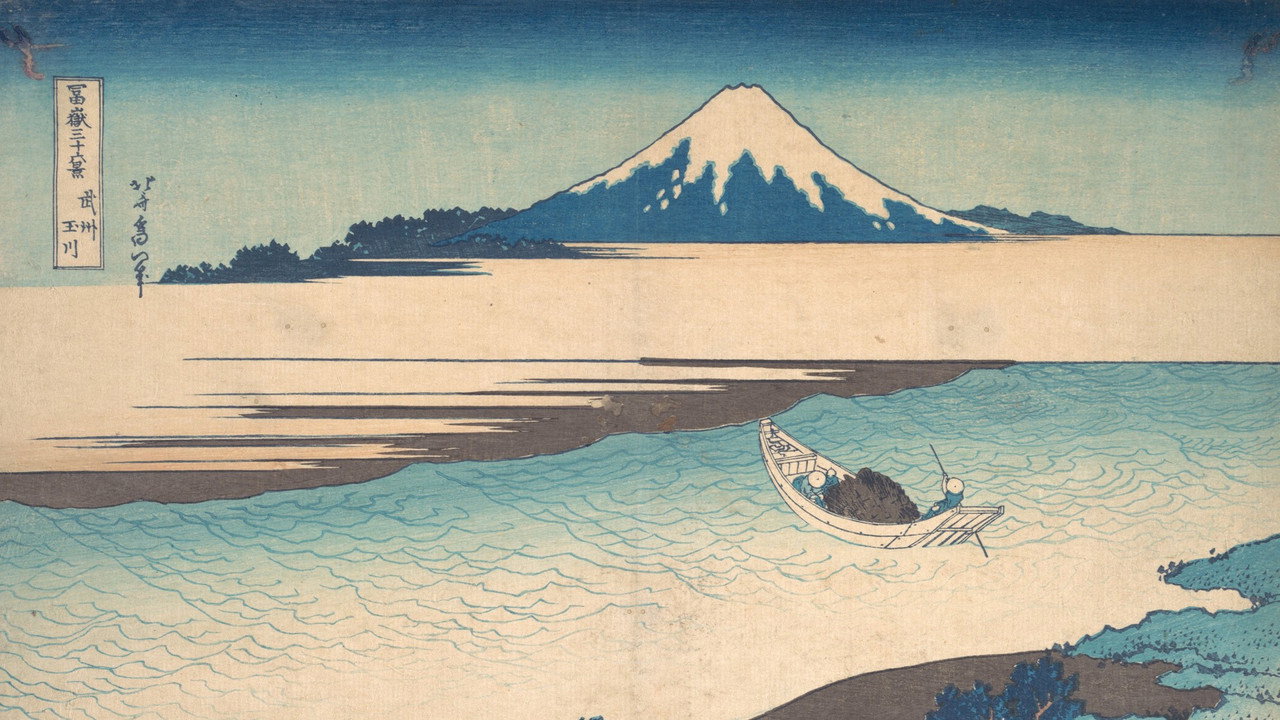
    16. Hokusai and the Art of Wood-Block Prints

    Katsushika Hokusai, the renowned Japanese artist, is the perfect entryway into the history of both Japanese wood-block prints and late Tokugawa society. Among the topics covered are ukiyo-e ("floating world") pictures; Hokusai's iconic masterpiece, The Great Wave off Kanagawa; his encyclopedic collection of manga ("sketches"); and more.

  10. E15

    15. Japanese Poetry - The Road to Haiku

    Journey through some of the best-known styles and voices of Japanese poetry. You'll start with the oldest surviving Japanese poems and follow the development of tanka, the classical five-line form, and renga, a single poem written by multiple poets. We conclude with the master poet Bashō and the emergence of haiku, now Japan's most famous and popular form of poetry.

  11. E14

    14. The Meaning of Bushidō in a Time of Peace

    Professor Ravina adds more depth to your understanding of Japan's warrior ethos, bushidō ("the way of the warrior"). As you look at historical snapshots, such as a samurai's petulant memoir and the vendetta of the 47 rōnin, you'll discover the deep nostalgia that lies at the heart of this misunderstood aspect of Japanese culture. Bushidō is full of a longing for a lost age.

  12. E13

    13. The Importance of Japanese Gardens

    Japanese gardens are popular tourist destinations, cultural treasures, and even UNESCO heritage sites. Here, consider the splendor and harmony of some of Japan's most important gardens (including tea gardens, rock gardens, and strolling gardens) as part of a history of aesthetics and also as expressions of religious and cultural ideals.

  13. E12

    12. Japanese Theater - Noh and Kabuki

    Explore two major forms of Japanese theater: Noh (the high classical form) and Kabuki (the more popular form). In looking at two important theatrical works - Atsumori, rich in lofty ideals and elegant aesthetics, and The Scarlet Princess of Edo, full of crude decadence and mayhem - you'll uncover what these traditions share, and what they make their own.

  14. E11

    11. Japan's Isolation in the Tokugawa Period

    Lasting for over 250 years, the Tokugawa shogunate curtailed both globalization and Christianity. How did this feudal government come to power? How did its policies isolate Japan? Along the way, you'll get an insightful look at what we really mean by "isolation" – and how Japan was shaped by foreign cultures even when most Japanese were banned from travelling overseas....

  15. E10

    10. Japan at Home and Abroad, 1300-1600

    Japan's second great wave of globalization, the subject of this lecture, stretched from the 1300s to the early 1600s. It's a fascinating period that includes competition with China's Ming dynasty; the new influence of the West (which brought with it guns and Christianity); and the rule of Toyotomi Hideyoshi, Japan's most powerful warlord.

  16. E9

    9. Samurai Culture in the Ashikaga Period

    Samurai culture was not fixed but constantly adapting to larger social and cultural changes. Central to these changes was the Ashikaga dynasty. As you'll learn, political turmoil under the Ashikaga led to the samurai defining themselves with a culture of extreme loyalty and a new sense of valor, independent of imperial court culture.

  17. E8

    8. Pure Land Buddhism and Zen Buddhism

    How did the decline of the court and the rise of the warrior class shape the evolution of Buddhist aesthetic, spiritual, and philosophical concepts? Find out in this illuminating lecture, which covers the massive growth of Pure Land Buddhism (the dominant form in Japan today) and the two main schools of Zen Buddhism.

  18. E7

    7. The Rise of the Samurai

    Turn away from the court in Kyoto to the countryside, where political infighting led to the rise of Japan's first shogunate ("warrior dynasty") and the emergence of the samurai. You'll also explore the rise of warrior culture through the lines of The Tale of the Heike, an epic ballad spread by wandering minstrels.

  19. E6

    6. Heian Court Culture

    Journey through Japan's first period of isolation (from the 800s to the 1300s) and the rise of the Heian court, ancient Japan's cultured and exclusive aristocracy. Along the way, you'll meet the powerful Fujiwara family and unpack how the novel The Tale of Genji reveals the court's penchant for scandal and intrigue.

  20. E5

    5. Early Japanese Buddhism

    Professor Ravina explains why Buddhism was so appealing in ancient Japan. He reveals three key observations about the religion's earliest form (including its spread with direct support from Japanese rulers) and discusses the two main strands of Japanese Buddhism: the more esoteric tradition of Shingon and the more accessible Pure Land.

  21. E4

    4. Aspects of the Japanese Language

    Make sense of one of the world's most complex writing systems, and discover how spoken Japanese reflects a long-standing concern with order, hierarchy, and consensus. Why is social context so important when speaking Japanese? And what are the linguistic consequences of adopting Chinese characters in Japanese writing?

  22. E3

    3. The Emergence of the Ritsuryō State

    In the late 500s, Japan began an unprecedented project of state building that evolved into the highly centralized, emperor-led Ritsuryō state. As you examine the state's laws and accomplishments, you'll uncover how this political centralization was actually inspired by - and responded to - the emergence of powerful states in China and Korea.

  23. E2

    2. Understanding Japan Through Ancient Myths

    Get an engaging introduction to ancient Japanese myths, collectively known as Shinto ("Way of the Gods"). Focusing on the oldest written compilation of Japanese oral tradition, the Kojiki, you'll examine fascinating stories about gods and heroes, the origins of the universe, the Rock Cave of Heaven, rival clans, and more....

  24. E1

    1. Japan - A Globally Engaged Island Nation

    How has Japanese culture been shaped by powerful cycles of globalization and isolation? When was the earliest human habitation of Japan, and what are the origins of its rich culture? These and other probing questions are the perfect starting points for dispelling common Western misconceptions about this great island nation....

Cast & crew

Created by Mark J. Ravina

Understanding Japan - A Cultural History FAQ

Will there be new episodes of Understanding Japan - A Cultural History?

Understanding Japan - A Cultural History has ended, so no new episodes are scheduled. The final episode aired on June 11, 2015.

When did the latest episode of Understanding Japan - A Cultural History come out?

The most recent episode of Understanding Japan - A Cultural History, Season 1 Episode 24 "The Making of Contemporary Japan", aired on June 11, 2015.

How many seasons of Understanding Japan - A Cultural History are there?

Understanding Japan - A Cultural History has 1 season with 24 episodes in total.

When did Understanding Japan - A Cultural History first air?

Understanding Japan - A Cultural History first aired on January 1, 2015.

How do I get notified when new episodes of Understanding Japan - A Cultural History are released?

Download the Streambay app, follow Understanding Japan - A Cultural History, and you'll get a push notification the moment each new episode is released.

Never miss Understanding Japan - A Cultural History.

Download Streambay and follow Understanding Japan - A Cultural History. We’ll notify you the moment a new episode is released. It’s free, with no sign-up and no personal information required.

Coming soon to App Store Get it on Google Play
Understanding Japan - A Cultural History Get new episode alerts Get alerts