
Skip to content
Streambay
DW Documentary poster
TV series

DW Documentary

Latest episode

S10 E69 · Mao Zedong and the founding of the People's Republic of China (2/3)

About DW Documentary

DW Documentary is a documentary TV series that premiered on Deutsche Welle on January 9, 2017. It has 11 seasons and 327 episodes so far and is still airing new episodes. The latest episode, Season 10 Episode 69 "Mao Zedong and the founding of the People's Republic of China (2/3)", aired on October 10, 2026.

Exciting stories on a wide variety of topics from around the globe: DW brings viewers background reports from the worlds of politics, business, science, culture, nature, history, lifestyle and sport.

  • Documentary

Last updated

Episodes

327 episodes · 11 seasons

2017 Documentaries

2017 · 1 episode · Last episode: 9 years ago

DW Documentary 2017 Documentaries release dates →
  1. E1

    1. DW Documentary

    Finale

    Exciting stories on a wide variety of topics from around the globe: DW brings viewers background reports from the worlds of politics, business, science, culture, nature, history, lifestyle and sport.

DW Documentary 2018 Documentaries release dates →

Episodes for this season haven't been announced yet.

DW Documentary 2019 Documentaries release dates →

Episodes for this season haven't been announced yet.

2020 Documentaries

2020 · 44 episodes · Last episode: 5 years ago

DW Documentary 2020 Documentaries release dates →
  1. E44

    44. Tour of the Arctic (2/2)

  2. E43

    43. Tour of the Arctic (1/2)

  3. E42

    42. Coronavirus complications

  4. E41

    41. China's gateway to Europe

  5. E40

    40. Oil promises- how oil changed a country

  6. E39

    39. The marriage market for Indian HIV patients

  7. E38

    38. What happened to Otto Warmbier in North Korea?

  8. E37

    37. Street children in the Philippines

  9. E36

    36. Love and sex in the internet age

  10. E35

    35. Lehmann- the last cultural diplomat

  11. E34

    34. Boeing- what caused the 737 max to crash?

  12. DW Documentary S4 E33 still E33

    33. The power of pharmaceutical companies

    How much is a human life worth? An innovative cancer therapy promises to save lives. But it is extremely expensive. Will the insurance companies pay for it? What is the manufacturer's return on investment? And do lobbyists drive up prices? A paradigm shift has taken place in the pharmaceutical industry: Whereas high drug prices used to be justified by research costs, the industry is now using the value of gained lifetime to argue its case.

  13. E32

    32. Fine-tuning the climate

  14. E31

    31. The murder of Jamal Khashoggi

  15. E30

    30. Africa's looted art

  16. E29

    29. How coronavirus is changing the world

  17. E28

    28. Thai berry pickers in Sweden

  18. E27

    27. Generation Putin

  19. E26

    26. Superfoods- is healthy eating just hype?

  20. E25

    25. Sex trafficking in Nigeria

  21. E24

    24. Preserving Gaza's photographic history

  22. E23

    23. Wind power getting headwind in Germany

  23. E22

    22. Traveling through North Korea

  24. E21

    21. Forgotten wrecks are a time bomb

  25. E20

    20. Climate change- living on the water

  26. E19

    19. The Russians- An intimate journey through Russia (2/2)

  27. E18

    18. The Russians- An intimate journey through Russia (1/2)

  28. E17

    17. Bayer and de bees

  29. E16

    16. Indonesia: Diversity under threat

  30. E15

    15. The 3D printing revolution

  31. E14

    14. Corona diaries

  32. E13

    13. Jewish life on Poland

  33. E12

    12. Have you ever heard of the “Emoji Commission”

  34. E11

    11. The death of Adolf Hitler

  35. E10

    10. Born poor, die poor? How to tackle poverty- Founders Valley (3/3)

  36. E9

    9. Fighting the migration challenge in Malaysia- Founders Valley (2/3)

  37. E8

    8. The kindnapping campaign of Nazi Germany

  38. E7

    7. The clothes we wear

  39. E6

    6. Sustainable business, rethinking growth- Founders Ballet (1/3)

  40. E5

    5. Dreadly waste from raw materials

  41. E4

    4. Germany's role in NATO and the world

  42. E3

    3. Looted art in the Third Reich

  43. E2

    2. Drought and floods- the climate exodus

  44. E1

    1. Tomatoes and greed- the exodus of Ghana's farmers

2021 Documentaries

2021 · 2 episodes · Last episode: 5 years ago

DW Documentary 2021 Documentaries release dates →
  1. DW Documentary S5 E2 still E2

    2. Pakistan - Journey Across a Land of Contrasts

    Pakistan, the "Land of the Pure" in Urdu, remains a paradox. Known as a bastion of radical Islam, the country is striving to become a modern state.

  2. E1

    1. Antarctica: A message from another planet

DW Documentary 2022 Documentaries release dates →

Episodes for this season haven't been announced yet.
2023 Documentaries

2023 · 7 episodes · Last episode: 3 years ago

DW Documentary 2023 Documentaries release dates →
  1. DW Documentary S7 E7 still E7
    7. The dirty business of beauty

    Jade for courage, amethyst to improve concentration and rose quartz for love. Social media influencers are driving demand for quartz and gemstones. But these pretty materials are mined under questionable conditions in the Global South. From the European beauty industry to middlemen in Asia to the mining regions: Nadja Mitzkat gets to the bottom of the esoteric gemstone production chain. The reporter finds that many of the beauty products originate in Madagascar. She travels to the African island state to talk to local people about their working conditions.

  2. E6

    6. Globalization: Winners and losers in world trade (2/2)

  3. E5

    5. Honduras: Escaping violence and poverty

  4. E4

    4. Globalization: Winners and losers in world trade (1/2)

  5. E3

    3. Russia's forest under threat

  6. E2

    2. An endless war: Irán, Israel and the United States (2/2)

  7. E1

    1. An endless war: Irán, Israel and the United States (1/2)

    Since the Islamic Republic of Iran was founded in 1979, there has been a war between Iran, Israel and the US. The war has never been officially declared, and there has been no real reconciliation. Part One of this two-part documentary focuses on the origins of the conflict between Iran and Israel. It began when the Israelis invaded Lebanon to confront a new Lebanese Shiite force backed by Iran: Hezbollah. Based on painstaking archival research and featuring high-profile players in Israel, Iran, Lebanon and the US, the film looks back on the more than forty years since Iran’s Islamic Revolution. It explores key moments and provides ways of understanding the new Middle East.

2024 Documentaries

2024 · 50 episodes · Last episode: 1 year ago

DW Documentary 2024 Documentaries release dates →
  1. DW Documentary S8 E88 still E88

    88. Fake steak - Future-proof food and lab-grown meat

    Industrial livestock farming is responsible for around 15 percent of global greenhouse gas emissions. It also requires huge amounts of land and water and is thought to be contributing to the rise in antibiotic-resistant infections in humans. This is why more and more scientists and entrepreneurs are conducting research on alternatives to conventional meat production.

  2. DW Documentary S8 E87 still E87

    87. Collecting, storing and preserving

    We humans like to preserve everything, whether we’ve collected or created it. We want to preserve objects, memories and even microorganisms. How can we preserve our current flood of knowledge, data and objects for future generations? What is important, and what can go? The better storage options become, the more difficult it is to answer this question.

  3. DW Documentary S8 E86 still E86

    86. The dark side of mass-produced fashion jewelry from China

    Cheap fashion jewelry is a booming business, but its shine hides a dark side. Workers endure starvation wages, and toxic materials in the jewelry endanger customers' health. This film uncovers the origins and production of these items.

  4. E85

    85. Cyberbullies - Online hate unmasked

    For the first time, a documentary film penetrates deep into the most extreme levels of online hate. Cyberbullies engage in a series of campaigns intended to provoke an intense emotional reaction from the victim. The film explores some of their most perfidious methods. [Warning: This documentary addresses the topic of suicide. If you or someone you know is suffering from serious emotional strain or suicidal thoughts, do not hesitate to seek professional help. You can find information on where to find such help, no matter where you live in the world, on this website: https://www.befrienders.org/ ]

  5. E84

    84. Lost on the run between Belarus and Poland

    More and more people are taking the migratory route through Belarus - and disappearing without a trace. Relatives from their home countries, such as Iraq, Syria and Egypt, are looking for them. Polish volunteers offer their support in what is often a distressing endeavor.

  6. DW Documentary S8 E83 still E83

    83. Smoking - Anatomy of an addiction industry

    The World Health Organization says smoking results in the death of eight million people every year. That’s one reason why you’ll now often hear tobacco companies promoting the switch to e-cigarettes, with claims that these are less harmful to our health. It’s first and foremost young people who believe the industry’s promises, thereby taking the first step on the road to addiction. After all, nicotine is an addictive substance. And although it may taste better than tobacco, puffing on a vape is still going to get you hooked in precisely the same way as smoking a regular cigarette. The film investigates the cynicism of an industry that not only accepts this, but also deliberately aims for it. Big Nicotine - Anatomy of an Addiction Industry /TEMPS PRESENT / Laurent Burkhalter & Philippe Mach / 2024 / RTS Radio television Suisse

  7. DW Documentary S8 E82 still E82

    82. Battle for the Amazon

    In the Amazon, the Yanomami staunchly oppose the destruction of their habitat. Since the 1970s, illegal gold mining in particular has posed a threat and destroyed the indigenous people's habitat. The situation was further exacerbated when former Brazilian President Bolsonaro declared his intention to legalize the extraction of resources in Yanomami territory. Their shaman and spokesperson, Davi Kopenawa, undertakes a world tour to give a face and a voice to their campaign of resistance. He’s certain that if the shamans stop dancing and life in the rainforest is thrown out of balance, the sky will fall and crush everything beneath it - not just the Yanomami. But can he convince those who are running the country?

  8. DW Documentary S8 E81 still E81

    81. Europe's shark trade

    Europe is the largest exporter of shark meat and fins - in an industry worth several billion euros per year. The tons of shark meat found on sale by marine biologist Lukas Müller are mainly from young animals not yet old enough to have reproduced. Activists want an EU-wide ban on the shark fin trade. But for many people in Vigo, fishing is their livelihood. Can a balance be found between economic interests and the protection of our natural world?

  9. DW Documentary S8 E80 still E80

    80. Indonesia’s environmental disasters

    Indonesia is grappling with grave ecological problems. While pollution caused by plastic waste threatens ecosystems, Jakarta is sinking into the sea. The city is quite literally going under. Climate activists and authorities are doing what they can to halt the process.

  10. E79

    79. The missing Van Gogh

  11. DW Documentary S8 E78 still E78

    78. Siberia: Gazprom, a pipeline and the last nomads

    The Yamal Peninsula in the Arctic is the heart of the Russian energy empire. It is home to the world's largest natural gas reserves. But this is also where the migration routes of the Nenets run. Is their habitat being destroyed?

  12. DW Documentary S8 E77 still E77

    77. Pakistan: Pashtun kids fight for their education

    In Pakistan, every third child is out of school – and the situation is dire in particular for children belonging to the ethnic group of the Pashtuns. Poverty, corruption, terrorist attacks, and traditions that sometimes oppose to secular education all get in the way of these kids. And yet, some don’t give up. We meet Jalal, who’s school classes take place in a tent in the mountains – and we follow his and his father's fight for better education.

  13. DW Documentary S8 E76 still E76

    76. Teaching in the isolated Venezuelan Andes

    Rodolfo Dugarte Sanchez has a dream. The young teacher from the Venezuelan Andes wants the children of the remote village of Las Plumas to learn to read and write. He regularly walks almost four hours to teach them. Rodolfo had just started building a school when the pandemic hit. He’s made no progress since. The crisis-ridden state of Venezuela is not supporting him. The provincial government in Mérida also seems indifferent to the children in the mountains. Now, the pandemic is over and Rodolfo wants to resume his project. Will he succeed in building the children of Las Plumas a school?

  14. E75

    75. What are the consequences of Germany's ban on chick killing?

    Roosters bring little profit on the poultry market. They lay no eggs and produce little meat. So, many German hatcheries sell millions of chicks abroad. But what are conditions like there? Animal welfare activists have evidence of serious abuses. The film follows the trail from the hatching of the chicks in a German hatchery to rearing in Poland and sale to Ghana. The research shows: The ban on chick killing in Germany shifts the problems abroad and animal welfare is usually ignored. The law seems well-intentioned but poorly thought out.

  15. E74

    74. How heatwaves impact our lives

    Heatwaves. They are occurring more and more frequently, lasting longer and becoming more intense. In Europe, temperature records are constantly being broken. One question has scientists particularly concerned: How hot will it get in the future? What adaptation options are available to us in the face of the new heat reality?

  16. E73

    73. Europe’s deadly migration policy

    The European Union is investing money in equipping and training North African security forces with the aim of stopping migrants to Europe before they reach the Mediterranean coast. However, this approach is causing enormous human suffering that has so far gone largely unnoticed by the European public. In this film, an international research team documents the systematic arrest and abduction of migrants by North African security forces co-financed by the EU. The film shows how thousands of migrants are transported to remote areas and left to their fate without protection, while EU representatives continue to conclude new migration agreements with North African states.

  17. E72

    72. Hiding and surviving - Growing up under National Socialism

    "Everyone who survived has a story that you simply can't believe.” Charlotte Knobloch survived the Holocaust - because farmer's wife Kreszentia Hummel passed her off as her own, illegitimate child and kept her hidden on her farm. Now Charlotte Knobloch, she’s President of the Jewish Community of Munich and Upper Bavaria and former President of the Central Council of Jews in Germany. In this film, she tells viewers about her own life - and a past that is full of fear and loss. Despite all her devastating experiences, she would go on to become one of the most important figures representing Jewish life in the German-speaking world. She has dedicated her life to the fight for peace, equality and democracy.

  18. DW Documentary S8 E71 still E71

    71. Is prosperity without economic growth possible?

    Critics of growth want to bring the economy into harmony with the environment and social well-being. They see a world that functions without constantly wanting more. But is that realistic?

  19. DW Documentary S8 E70 still E70

    70. How pandemics, wars and disasters jeopardize global trade

    Pandemics, wars and natural disasters jeopardize trade and supply chain security. Even in the best of times, international supply chains often lack the necessary transparency, especially when it comes to poor working and environmental conditions.

  20. DW Documentary S8 E69 still E69

    69. Tel Aviv and October 7

    The Hamas terror attack of 7 October 2023 has had profound consequences in Israel, Gaza and beyond. This film asks how those in Tel Aviv have reacted to the subsequent war, and what they expect the future will bring.

  21. DW Documentary S8 E68 still E68

    68. How can ships become cleaner?

    Soot, particle pollution and heavy fuel oil: freighters and cruise liners are real climate killers. It’s high time for a change of course on the seas. The film shows how both innovations and tried-and-tested ideas can make shipping cleaner. With countless innovations and strict regulations, Norway is leading the way in the transition to emission-free shipping. The Scandinavians are focusing on electric motors and hybrid technologies. Climate change is already being felt in the Norwegian Arctic - another reason why the government is getting serious. From 2026, only emission-free ships will be allowed to sail in Norway's most beautiful fjords. And climate-friendly tourist ships are already sailing along the traditional postal ship route.

  22. DW Documentary S8 E67 still E67

    67. Trauma in the Middle East: The terror of Hamas and Israel's war in Gaza

    How was the attack on the Israeli state prepared? How was it even possible? To mark the first anniversary of the Hamas attack, the documentary film analyzes the failures of intelligence services, politics and the army. Could the catastrophe have been prevented? What motivated Hamas to carry out the attack? And what was Israel’s response - with which consequences? In the making of this film, directors Duki Dror and Jens Strohschnieder revisit scenes where the 7 October attack took place and speak to survivors, journalists and security experts.

  23. DW Documentary S8 E66 still E66

    66. How climate change threatens coffee production

    Climate change could halve the amount of land suitable for coffee production by 2050. In a bid to save one of the world’s most popular drinks, many people are busy experimenting with more resilient coffee varieties and sustainable growing methods.

  24. DW Documentary S8 E65 still E65

    65. Climate change or climate hoax? Skeptics and activists

    Climate change is real, and it is dangerous. Some people are actively trying to stop it. Others deny or intensify it - or suppress information. Most don’t bother at all and continue to contribute to global warming through their lifestyle.

  25. DW Documentary S8 E64 still E64

    64. Smart insects

    The latest research shows we’ve long underestimated the intelligence of insects. Bumblebees, for example, succeed at behavioral tests also passed by intelligent crows. They use tools to reach nectar in an artificial flower. The insect world is much more complex than previously thought. One reason is that any species with a wide range of diverse individuals can better adapt to climate changes - an evolutionary advantage for survival.

  26. DW Documentary S8 E63 still E63

    63. The fight against exploitation of migrant workers in Italy

    Yvan Sagnet has been campaigning against the exploitation of migrant workers in Italy for years. His organization No Cap works to ensure fair conditions for laborers in the agricultural industry.

  27. DW Documentary S8 E62 still E62

    62. Will artificial intelligence save us or kill us?

    Will artificial intelligence make life better for humans or lead to our downfall? As developers race toward implementing AI in every aspect of our lives, it is already showing promise in areas like medicine. But what if it is used for nefarious purposes? What are the promises and perils of AI? And who gets to decide how it will be used?

  28. DW Documentary S8 E61 still E61

    61. Butchers fighting cheap meat

    Mark Junglas is disgusted by conventional factory farming. The trained butcher wants to do better. Eating meat is fine, he says. But only if the animals have led a good, species-appropriate life -- and experience a stress-free death. But getting the farm out of the red while holding his own against the influx of cheap meat is no easy task. Even though animal welfare is very much in vogue, few people are prepared to pay more for organic meat.

  29. DW Documentary S8 E60 still E60

    60. Urban rats

    Rats are seen as transmitters of disease and are hated in the West. But to this day, we don’t know very much about this feared animal. Science is only just beginning to properly delve into the world of rats and "rehabilitate" their image.

  30. E59

    59. Varanasi - Facing death without fear

  31. DW Documentary S8 E58 still E58

    58. Endometriosis

    190 million women around the world suffer from endometriosis, a chronic disease of the abdomen. For a long time, medicine didn’t take these women’s complaints seriously. But now, the taboo issue is finding a wider audience. Women are breaking their silence. It takes an average of seven years to get a diagnosis - a long time for women to be left suffering. Their periods are extremely painful, but the pain can also come at any time during the menstrual cycle, sometimes affecting the entire body. This is often accompanied by heavy menstrual bleeding, bowel problems, exhaustion, pain during sex and sometimes problems conceiving. The pain is caused by uterus-like cells that colonize areas outside the uterus, for example the ovaries, intestine or peritoneum.

  32. E57

    57. How the Nazis concealed their atrocities

    The Nazis meticulously planned and documented their acts of mass murder. They were just as meticulous when it came to covering their tracks. Their systematic, cruel methods are a chapter of war history that’s still largely unknown. The documentary film accompanies the French organization Yahad-In Unum as it conducts research in Ukraine. In the Lviv region, researchers attempt to identify the locations of mass shootings and find any eyewitnesses who might still be alive and able to recount what they saw.

  33. DW Documentary S8 E56 still E56

    56. Trophy hunting

    Elephants, antelopes, lions. Rich people kill animals threatened with extinction, then hang them on their walls as trophies. On the face of it, trophy hunting seems morally reprehensible. But could it be more complicated? Trophy hunting is big business. Germany is the second most important country in the world when it comes to trophy hunting. There is no other country in Europe where so many hunters set off every year to shoot animals abroad. Why is this allowed and who benefits from it? Is it just a bloody hobby, or might it contribute to species conservation?

  34. DW Documentary S8 E55 still E55

    55. Mental health and body image

    For years, Sofia suffered from eating disorders and depression. By talking openly about the issue, she hopes to help others. Like many young people, 22-year-old Sofia struggled with body dysmorphia for years. She started using her Instagram account, @mechoosinglife, to raise public awareness of mental illness, and provide support to others affected by body dysmorphia. The move marked the beginning of her ongoing healing process, and her conscious decision to choose life. [Warning: This documentary addresses the topic of suicide. If you or someone you know is suffering from serious emotional strain or suicidal thoughts, do not hesitate to seek professional help. You can find information on where to find such help, no matter where you live in the world, on this website: https://www.befrienders.org/ ]

  35. DW Documentary S8 E54 still E54

    54. Protecting the climate

    Can the climate still be saved? Scientists like oceanologist Mojib Latif are disillusioned. Neither the warnings from climate researchers nor public protests have prompted sufficient action from politicians and big business interests. Why? This question is the subject of this film. One factor is the sluggish political action of governments in almost every country in the world -- despite numerous climate protection conferences. The lack of political action can often be traced to large fossil fuel companies, which have prevented the implementation of effective environmental and climate protection measures, fearing for their profit margins. The film shows which hurdles still need to be overcome -- economic and political, as well as very human ones - and how science can help.

  36. DW Documentary S8 E53 still E53

    53. Building in harmony with nature

    Building in harmony with nature, using renewable materials from the region. Sustainable building is still an adventure. But in future, it’s likely to be necessary. The future lies in understanding a house as a place where material is stored, according to construction experts committed to sustainable construction. Building within existing buildings is their top priority. It saves the most CO2 and conserves the most resources - that approach is better than any new building, no matter how ecological. They’re calling for a change in regulations to bring standards for renovated houses in line with the realities. Because as long as it’s easier and cheaper to demolish and rebuild from scratch, only a few builders will be enthusiastic about conversion.

  37. DW Documentary S8 E52 still E52

    52. Toxic and tenacious - How "forever chemicals” are damaging our health

    Coated pans, waterproof clothing, refrigerants for air conditioning systems. All these everyday items contain PFAS. This group of chemical compounds makes life more convenient. But PFAS compounds are also highly controversial because they are both toxic and long-lasting. Known as "perpetual chemicals”, PFAS accumulate in the environment and also enter the human body. The film examines the question of whether PFAS should be banned because they threaten our health. Or should they continue to be used because they are so practical and virtually irreplaceable in our everyday lives?

  38. E51

    51. Nicaragua - 45 years after the revolution, a return to dictatorship

    This is documentary film about the eventful period following the victory of the Sandinista revolution in Nicaragua and the commitment of thousands of West German supporters who traveled to Nicaragua in the 1980s. What has become of their dreams, wishes and hopes 45 years later?

  39. DW Documentary S8 E50 still E50

    50. Turning vapor into drinking water

    Turning vapor into drinking water: a bizarre response to the impact of climate change? Or a stroke of genius? It’s hoped that the cloud catchers - nets that fish water out of the air - will provide a solution to water shortages worldwide. But how does it work?

  40. DW Documentary S8 E49 still E49

    49. America’s right-wing radicals - US veterans against democracy

    On 6 January 2021, hundreds of Donald Trump supporters stormed the Capitol in Washington. Five people were killed and many injured. Some 15 per cent of those involved were former members of the US military or police. The US-American filmmaker Charlie Sadoff and his co-writer and producer Kenneth Harbaugh both used to be in the military, something that allowed them to delve deep into the veterans’ world. Through them, they gained access to violent rightwing extremist circles in America, including anti-government militias such as the Proud Boys, the Three Percenters and the Oath Keepers. These groups - organized and led by well-educated, highly motivated military veterans - represent the greatest threat to democracy in the United States today. The documentary examines the complexity of this development, tracing it back to its historical roots.

  41. DW Documentary S8 E48 still E48

    48. Nuclear fusion's hope - The dream of endless clean energy

    Could nuclear fusion generate an infinite amount of clean energy? In contrast to nuclear fission, nuclear fusion looks favorable when it comes to environmental and safety concerns. Could nuclear fusion be the solution to our environmental problems? The film explains how nuclear fusion works and what role it could play in the European energy landscape, the challenges involved, the difference between fission and fusion and whether this just might be the solution to humanity's hunger for energy.

  42. DW Documentary S8 E47 still E47

    47. Raid on the Atlantic - Overfishing and exploitation of the sea

    West African waters once had some of the richest fish stocks in the world. Today they are severely depleted. Fishermen in Senegal fear for their livelihoods. Europeans, Chinese, Russians and Turks have overfished the waters.

  43. DW Documentary S8 E46 still E46

    46. Isolation and dementia - Why we should protect our ears

    If you’re young, you don’t usually do enough to protect your hearing. But more than a billion youngsters are at risk of hearing loss worldwide. People often turn to assistive devices when it’s already too late. Hearing loss can result in isolation and accelerate the onset of dementia. We introduce young people suffering from hearing loss as a result of listening to music too loudly for too long, look at everyday situations that put extreme strain on our hearing and present new solutions from the hearing aid industry. In the making of this film, directors Duki Dror and Jens Strohschnieder revisit scenes where the 7 October attack took place and speak to survivors, journalists and security experts.

  44. DW Documentary S8 E45 still E45

    45. Melting wetlands - How can nature slow down climate change?

    Peatlands and wetlands play an important role in global warming because they influence the greenhouse gas cycle. But not all bogs are the same. Some bind carbon, while others release it into the atmosphere in the form of carbon dioxide and methane emissions. The film follows the work of two research teams investigating the influence of moors and swamps on the climate. Greenhouse gases escape when permafrost moors melt. But swamp and mire areas that have been thrown out of balance, for example by plantation farming for the production of palm oil, can actually accelerate climate change. The documentary explains what happens when carbon escapes from swamp and moorland areas into the atmosphere and how nature's potential can be used to slow down climate change.

  45. DW Documentary S8 E44 still E44

    44. Ozempic - What’s the truth behind the hype?

    The hype is enormous: A new weight-loss drug is being aggressively marketed on social media - promising patients a quick fix for obesity. But what’s the truth behind the hype?

  46. DW Documentary S8 E43 still E43

    43. European migration? How a continent is sealing itself off

    There’s hardly a more divisive topic in Europe than the issue of immigration. When the refugee crisis began in 2015, the EU welcomed many with open arms. Now, tightened borders have become the norm.

  47. DW Documentary S8 E42 still E42

    42. India's new generation between luxury and poverty

    India, a nation on the verge of becoming a superpower? The country has overtaken China and is now the world’s most populous nation. The average age is 28. What dreams and what opportunities for advancement does this generation in India have today?

  48. DW Documentary S8 E41 still E41

    41. What is life like without smells?

    Since Covid-19 and the symptoms of loss of smell and taste, many people have begun to realize just how important smell is in our lives. Our sense of smell is the oldest sense we have. Not only the enjoyment of our food, but also our memories, emotions and social interactions are influenced by it. The loss of the sense of smell, or ‘anosmia’, significantly impairs people's experience of the world. In this documentary, people talk about their lives without smell. But what if you've never been able to smell before? Lauren Ramoser only noticed at the age of 11 in chemistry class that the strong-smelling acids seemed to smell "corrosive" to her classmates, but that she didn't notice anything herself. How does this affect a person’s life?

  49. DW Documentary S8 E40 still E40

    40. Floods, heavy rain, extreme weather - Why we need to build differently

    Billions of people in cities around the world are affected by climate change. Sustainable urban planning can help reduce risks and improve life in urban centers.

  50. DW Documentary S8 E39 still E39

    39. How car tires drive deforestation

    Rainforests are sacrificed to provide the rubber used in tires, even though alternatives exist. 70% of the global rubber harvest goes to the tire industry, which must now meet new supply chain rules approved by the European Parliament in April 2024. The rules are designed to ensure due diligence and corporate accountability. Once the law takes effect, manufacturers in the EU will need to show their tires do not contain natural rubber from deforested land. This certification process poses a problem for producers. Most natural rubber is produced in Asia. The supply chains from rubber farmers through various intermediaries to Europe have, however, been largely nontransparent to date. Companies are therefore exploring alternative materials and methods. In addition, discarded old tires could be retreaded, recycled, and put back on the market - instead of ending up on a landfill site. Is the industry having a genuine change of heart, or are these merely examples of greenwashing?

2025 Documentaries

2025 · 50 episodes · Last episode: 10 months ago

DW Documentary 2025 Documentaries release dates →
  1. E133

    133. Images of war - The legacy of photographer Anja Niedringhaus

  2. E132

    132. Machu Picchu - The secrets of the Inca builders

  3. E131

    131. Neuschwanstein - Fairytale castle and architectural icon

  4. DW Documentary S9 E130 still E130

    130. Amazon: Who pays the price?

    Online retailer Amazon has been repeatedly criticized for its business practices. The US company puts pressure on retailers and exerts influence on pricing policies, thus fueling cut-throat competition.

  5. E129

    129. Weapon of war: Sexual violence against men

  6. DW Documentary S9 E128 still E128

    128. How the world is choking on plastic

    Plastic is everywhere, not just in our rivers and oceans. It permeates the air, soil, and even our bodies. The problem is getting worse, and yet the plastics industry is increasing production. Is the plastics industry listening? Can people trust it to take responsibility for plastic products after the end of their life cycle? And what solutions are there in a world that is increasingly choking on plastic?

  7. DW Documentary S9 E127 still E127

    127. Invasive fungal infections - The new threat

    Invasive fungal infections are increasingly leading to life-threatening diseases worldwide. And in agriculture, fungi pose a massive threat to harvests. And the available antidotes for humans and plants are increasingly losing their effectiveness. The documentary shows the role that intensive agriculture and climate change play in the spread of fungal infections.

  8. DW Documentary S9 E126 still E126

    126. The hidden realities of farming (2/2)

    The photographer and filmmaker Kadir van Lohuizen embarks on an investigative journey into the food we eat each day. His research takes him to the US, China, the Netherlands, Kenya, Saudi Arabia and the United Arab Emirates—exposing the problems and contradictions of globalized food production. It is a wake-up call for global agriculture, asking the question: How can we secure the future of our food supply without further endangering our planet?

  9. E125

    125. Women in Mexico fight femicide

  10. E124

    124. The Cuban Missile Crisis

  11. DW Documentary S9 E123 still E123

    123. Autism: Understanding the ‘spectrum’

    For people with autism, recognizing a smile or enjoying a touch is often not possible. More and more people, especially children, are being diagnosed with "autism spectrum disorder”, a complex neurological condition. Despite an increase in the number of people diagnosed with autism, many autistic people still remain undiagnosed. This is because autism is highly complex and can manifest in many different ways. Some of those affected can live lives similar to people without autism, while others require lifelong care. The causes of autism are also a mystery. Scientists around the world are working to find out why the brains of people on the autism spectrum develop differently. This would help medical practitioners to establish reliable methods of diagnosis and effective therapies.

  12. DW Documentary S9 E122 still E122

    122. The hidden realities of farming (1/2)

    Where does our food come from, and where does it end up? This two-part series looks at the journey from production to plate, exploring the hidden world behind the food we eat.

  13. E121

    121. Israelis and Palestinians working together for peace

    Israelis and Palestinians are working together for peace. Despite the terrorism of Hamas, Israel's brutal war on Gaza, and violence against Palestinians in the West Bank, people on both sides are seeking reconciliation.

  14. E120

    120. The San Andreas Fault

    California is one of the most active earthquake regions in the world. The San Andreas Fault, a 1,300-kilometer-long fracture zone in the earth's crust, runs through the cities of San Francisco and Los Angeles. Scientists fear a major earthquake. The San Andreas Fault is currently the most strongly observed geological phenomenon in the world. Scientists have long feared an earthquake so strong that it could mean the death of thousands of people. Economic damage, running into the billions, would also result. The documentary shows the scientific efforts being made to predict the unpredictable. International seismologists are studying the fault to make more accurate forecasts. The aim is also to reduce the risks for people.

  15. DW Documentary S9 E119 still E119

    119. Living with climate change

    In the global North, climate change is often still something very abstract. For people in countries like India or the Philippines, however, it is already very real. Extreme heat dominates everyday life. Heavy rain washes away houses and roads.

  16. E118

    118. Our immune system - Miracle weapon against cancer?

    Our immune system protects us from pathogens, harmful substances and malignant cell changes. For humans, it is indispensable. This film examines the immune system and shows how it can be strengthened - as well as how it can fail. The film presents fascinating examples, clear explanations and interviews with international experts. A pediatrician in Hamburg explains how the immune system develops in infants and young children. Immunologists in Paris and New York shed light on the relationship between the microbiome and the immune system. And an oncologist in Heidelberg uses immunotherapy to specifically combat cancer. Never before has the immune system been the focus of so much scientific research as it is now.

  17. E117

    117. DNA tests: Who is getting rich with the data from our genes?

  18. E116

    116. German colonial crimes in Tanzania

  19. DW Documentary S9 E115 still E115

    115. Tardigrades - Showing us the way of immortality?

    Their appearance is amusing - and they’re extremely hardy. Tardigrades are microscopic creatures. Their lumbering gait resembles that of bears, and they can withstand extreme temperatures, enormous pressure, toxic substances and radioactive radiation. NASA sent them into space in 2021 on board the ISS, where they orbited the Earth around 7,000 times. Thanks to the cute tardigrades, it may even be possible to find a way to send humans to Mars in the future. The survivalists show that life is possible everywhere - even where it seems unimaginable.

  20. E114

    114. The orphans of World War Two

    The Second World War claimed the lives of millions of people and left many children orphaned. One of the worst-affected countries was Poland, where entire families were wiped out. This documentary highlights the desperate fate of these children orphaned by war.

  21. DW Documentary S9 E113 still E113

    113. Globalization - How crises change our world (2/2)

    The battle for raw materials. Climate change. Digitalization. These things have rapidly changed the world. Who wins, who loses? What is yet to come? This film looks at how lives are shifting, in seven regions of the world.

  22. DW Documentary S9 E112 still E112

    112. Globalization - How crises change our world (1/2)

    The battle for raw materials. Climate change. Digitalization. These things have rapidly changed the world. Who wins, who loses? What is yet to come? This film looks at how lives are shifting, in seven regions of the world.

  23. DW Documentary S9 E111 still E111

    111. TikTok, China and the fear of digital propaganda

    TikTok is the most popular app among young people, with more than 1.6 billion users worldwide today. Streaming videos featuring influencers in particular draw huge numbers of viewers. But TikTok is highly controversial. Not just because the app has a very opaque content management system and collects a massive amount of its users' personal data. This, after all, is also the case with many other social media and apps. However, TikTok is owned by a Chinese company, Byte Dance. This is why the governments of Europe and the US in particular suspect that all the data collected could be passed on to the Chinese regime. They, in turn, could use it to influence public opinion worldwide.

  24. DW Documentary S9 E110 still E110

    110. Children in elite sports - A lost childhood

    For top-class sport, many people have had to sacrifice their childhood. Even before they reach the age of 10, some have experienced a range of abuse. More and more athletes are speaking out, in order to draw attention to this.

  25. DW Documentary S9 E109 still E109

    109. Can Norway’s wild salmon be saved?

    Factory farming is threatening to wipe out wild salmon populations in Norway - due to the dramatic spread of parasitic salmon lice. Can the wild salmon still be saved? On Norway's vast salmon farms, a parasite is causing mass deaths of fish. Salmon lice have gotten out of control, infesting not just farmed salmon but also the wild salmon that swim between the sea and Norway's rivers. The parasites are finding their way into open water from the open-net cages of off-shore salmon farms, where millions of fish swim. Fishing enthusiasts, scientists and environmentalists are fighting to preserve the wild salmon as well as the culture it represents.

  26. DW Documentary S9 E108 still E108

    108. PFAS - "Forever chemicals" in drinking water

    It’s one of the biggest environmental scandals ever to hit Germany. In 2012, a routine inspection uncovers industrial chemicals, known as PFAS, in the drinking water of the southern German town of Rastatt. PFAS, perfluorinated and polyfluorinated alkyl compounds, are found in many everyday products such as Teflon pans and water-repellent clothing. They accumulate in the environment and in tissue and can cause considerable damage. PFAS pose risks to human health including an increased risk of certain cancers, fertility issues and a reduced response to vaccinations. PFAS are highly persistent in the environment and don’t readily break down, which is why they’re also known as "forever chemicals". The EU is currently considering a PFAS ban.

  27. DW Documentary S9 E107 still E107

    107. Superpower laughter - How humor makes us strong

    Laughter is both contagious and a social behavior: people laugh 30 times more often in company. The documentary shows how neuroscience and psychology have discovered that humor makes us stronger. In London, neuroscientist Sophie Scott has dedicated herself to researching laughter. "Laughter plays an important role in building and maintaining social relationships. It reduces stress and relaxes us. It is an important behavior to understand," she says. This is why laughter is also interesting for psychology. A research team at the Alpen-Adria-Universität Klagenfurt is exploring how humor can help in psychotherapy.

  28. DW Documentary S9 E106 still E106

    106. International adoptions - A global scandal

    In the last 60 years, over a million "orphans” have been adopted by Western families. Many of them are now discovering that their past is a lie. International adoptions are at the center of an unprecedented scandal. The film follows investigative journalists, activists and researchers in South Korea, Sweden, France, Chile, Germany and Switzerland. How was this huge, lucrative market able to flourish? And why does it still exist today? In many cases, these practices come to light mainly due to pressure from adopted children who have grown into adults. After discovering the dubious conditions of their adoptions, they begin to search for their birth parents and demand explanations. These searches are often easier to conduct these days, thanks to social media, the Internet and the availability of genealogy websites.

  29. DW Documentary S9 E105 still E105

    105. Surfing - Once upon a wave

    The documentary tells the fascinating story of surfing. With breathtaking footage, the film provides insights into a sport that has its origins in Polynesian culture. It was filmed on the coasts of Tahiti, Hawaii and California. Surfing is a sport that’s far more than just a game: It’s also the expression of a culture. In this case, it is the culture of a people who live with and on the water - the Polynesians. The art of riding the waves is their ancient heritage. Surfing was on the verge of extinction almost a century ago - a thorn in the side of Christian missionaries. It owes its resurrection to a handful of young runaways, businessmen and rebellious young men and women from all over the world. Their stories are told here. Surfing grew in popularity around the world, and eventually became a competitive sport, earning a place in the Olympics.

  30. DW Documentary S9 E104 still E104

    104. Is there an effective alternative to antibiotics?

    Is there an effective alternative to antibiotics? Researchers around the world are focusing on bacteriophages. These "good" viruses infect specific bacteria and destroy them. Do they offer a way out of the antibiotics crisis? Every year, around 1.3 million people die because of antibiotic resistance. According to the World Health Organization (WHO), this is one of the biggest threats to global health. There are various reasons for the growing number of antibiotic resistances: Unspecific or incorrect use of antibiotics causes bacteria to mutate into multi-resistant germs. In addition, the excessive use of antibiotics in animal husbandry has alarming consequences for humans: Antibiotics, which were considered one of medicine's greatest achievements against infections, are increasingly losing their effectiveness. Increasingly, science is relying on the potential of bacteria-eating viruses, or bacteriophages, to combat bacteria.

  31. DW Documentary S9 E103 still E103

    103. Treasure islands in the Pacific (2/2)

    On the Chatham Islands, we learn how loneliness becomes a daily challenge when you live surrounded by so much water. A supply ship fails to arrive on time, leading to food prices rising quickly and diesel becoming scarce. But there is a treasure that is harvested in this remote region - something prized by gourmets that fetches high prices: abalone. Jade Kahukore-Dixon dives for these precious sea snails, gathering them at depths of 10 to 15 meters. But the job is dangerous. This is great white shark territory. Divers are regularly injured or even killed. Over on the Marshall Islands, we find the area where the United States tested atomic and hydrogen bombs until the 1960s. The people of these remote atolls are still living with the consequences. On Runit Island lies one of the world’s largest nuclear waste sites - the structural integrity of which is now under threat because of rising sea levels and tropical storms.

  32. DW Documentary S9 E102 still E102

    102. Treasure islands in the Pacific (1/2)

    The Pacific Ocean is larger than the entire land mass of the Earth combined. Today, it is increasingly becoming a strategic arena for the world’s major powers - each seeking to safeguard its own economic and political interests. Lucie Knor, a German doctoral student, is researching how an increased uptake of greenhouse gases is affecting living conditions in the ocean around Hawaii. On the Cook Islands, the team finds out how climate change impacts the lives of whales. Whale researcher Nan Hauser and her team hope that their work will shed new light on the migration of whales - to protect them. Many islands are facing an uncertain future. But on the Cook Islands, people are hoping for a new gold rush, thanks to the presence of minerals in the seabed that could become increasingly valuable as demand for renewable energies grows. Mark Brown, head of the Cook Islands government, says deep-sea mining has the potential to make his island nation more economically independent.

  33. E101

    101. Burnout - What are the warning signs?

    Every year, hundreds of thousands of people worldwide suffer burnout. This mostly invisible and insidious illness often gnaws at those affected for a long time. Often, they report not knowing why they feel so bad. Diagnosis is difficult. How can you recognize the symptoms before it’s too late? What are the warning signs? What tools do we have to deal with it? And why does the WHO not recognize burnout as a disease? In Europe and North America, measures are now being taken to prevent the onset of the disease and to measure its cost to society. In France, structures are being created for the care and reintegration of those affected. However, there still seems to be a long way to go before mental health in the workplace becomes a priority again in today's world.

  34. DW Documentary S9 E100 still E100

    100. Water - Too much and not enough

    Water forms the basis for all life on Earth. It has shaped human activity and influenced the development of entire societies. Water has always been a mainstay of health, prosperity and power. Water means life or death. Experts around the world are urging us to rethink the way we use water. Fresh water accounts for only 2.5 percent of the total volume of water on earth. Water is practically never "lost" on Earth. But precipitation volumes and zones are changing. Extreme weather conditions last longer and become more intense. The consequences are obvious and far-reaching. Drinking water shortages, dwindling water levels in lakes and rivers, floods and mudslides are increasingly becoming the focus of media coverage. Consumption must not simply continue to rise from year to year. Rather, we must make better use of what is available to us. On the one hand, this means using extracted water more efficiently and, on the other, finding solutions to adapt to the new circumstances.

  35. DW Documentary S9 E99 still E99

    99. Hiroshima - A story of survival, loss and forgiveness after the atomic bomb

    On August 6, 1945, at 8:15 a.m., the first atomic bomb explosion in a war killed more than 70,000 Japanese civilians in Hiroshima in one fell swoop. Countless others, seriously injured, fought for their lives. The massive detonation wave completely destroyed 80 percent of Hiroshima’s city center. Just 1,200 meters away, Shinji Mikamo and his father Fukuichi miraculously survived the catastrophe. Shinji was rescued from the danger zone by his father, who was also wounded and suffering from severe injuries and burns. It was a long, painful journey. When they parted ways, the teenager Shinji had to survive on his own. The documentary shows the true story of Shinji's journey of survival and forgiveness. It combines rare footage with poignant re-enactments to create a haunting first-hand account of the horrors of nuclear war. It was produced by Shinji's daughter Akiko. She sends a message of peace to the world, so that "no one has to suffer from nuclear war again”.

  36. DW Documentary S9 E98 still E98

    98. Wars and their toxic legacy

    Until the 2000s, France submerged, buried or destroyed thousands of tons of ammunition. Long forgotten, these rubbish heaps are now releasing pollution that is toxic and carcinogenic. The film follows environmental activists over the course of a year as they investigate the consequences of these buried weapons.

  37. E97

    97. Hitler's invasion of the Soviet Union: Operation Barbarossa (2/2)

  38. E96

    96. Hitler's invasion of the Soviet Union: Operation Barbarossa (1/2)

  39. DW Documentary S9 E95 still E95

    95. A small Polish village saves the moors

    The Polish village of Rozwarowo in northern Poland is saving the moors. Local thatcher Alfred Smolczynski initiated the process: He’s been renaturalizing the moor since the 1980s, in the face of much resistance. Now, bird conservationists are reintroducing the sedge warbler there.

  40. DW Documentary S9 E94 still E94

    94. Are fish smarter than we thought?

    For several years, researchers have been trying to understand what goes on in the minds of aquatic creatures. And the latest discoveries exceed all expectations. The documentary presents these astonishing findings and illustrates how fish perceive the world, communicate with each other and interact with their environment.

  41. DW Documentary S9 E93 still E93

    93. Nitrous oxide - How harmless is laughing gas really?

    Nitrous oxide, commonly referred to as laughing gas, is often considered a harmless way of getting high. In Germany, you can buy it freely over the counter. But while the gas might make you feel relaxed or elated for a few seconds, it can also lead to long-term health problems.

  42. DW Documentary S9 E92 still E92

    92. Deep sea mining: What’s the true cost of renewable energies?

    The idea is that electric cars, solar panels and wind turbines will reduce our consumption of coal, oil and gas. However, these technologies rely on many raw materials present below the seabed. The race for deep sea resources has begun. The immense demand for metals such as nickel, cobalt and copper for electromobility and alternative energy sources has so far largely been met in the Global South - in Africa, Asia and Latin America. But these deposits aren’t enough. Attention is now turning to the oceans. Here, it’s thought that vast deposits of the metals exist below the seabed. A geopolitical race has begun between states to exploit these resources. And that's not all: extraction of the metals threatens to cause major ecological damage.

  43. E91

    91. New alliances in East Asia?

  44. DW Documentary S9 E90 still E90

    90. Racism, hatred and terror - The global network of rightwing extremists

    Racist and right-wing extremist networks are coalescing, worldwide. They carry out terrorist attacks on minorities and democratic institutions. Authorities in the USA and Europe consider this movement to be more dangerous than Islamist terrorism. Filmed in the USA, western and eastern Europe, the UK, Scandinavia and Brazil, WORLD WHITE HATE charts the development of the threat posed by right-wing terror. It is exacerbated by populist politicians such as Donald Trump and radical right-wing parties. The documentary WORLD WHITE HATE by Dirk Laabs analyzes the mechanisms of radicalization and discusses possible counter-strategies for democratic societies. The central question remains: “How can we win the digital and real battle against increasing violence from the right?”

  45. DW Documentary S9 E89 still E89

    89. Without time, without light - How do the brain and body react?

    14 volunteers live underground for 40 days. With no way to mark time, this is an extreme experiment. How do people adapt to these conditions? How do the body and brain react to the loss of a sense of time? A scientific adventure aims to find out.

  46. DW Documentary S9 E88 still E88

    88. Oppenheimer after Trinity

    American physicist Julius Robert Oppenheimer is regarded as the father of the atomic bomb. Delving into his complex mind, this prize-winning documentary explores what happened before, during and after the testing of the world's first atomic bomb in the deserts of New Mexico in July 1945.

  47. DW Documentary S9 E87 still E87

    87. Superpower or escape from reality: What is maladaptive daydreaming?

    Many people daydream. But excessive daydreaming can become a burden. This is because the exaggerated mental digressions, termed Maladaptive Daydreaming (MD), often get in the way of real life. Although the fantasies in daydreams can also help to organize thoughts, reduce stress, process events and wishes and inspire creativity, the film shows that ‘too much of a good thing’ prevents people from mastering their everyday lives and completing important tasks. And if the hopes expressed in daydreams aren’t fulfilled, it can even be a trigger for depression.

  48. E86

    86. Crypto fraud: The OneCoin scandal

    OneCoin was launched in 2014 and billed as the world's largest cryptocurrency. Founder Ruja Ignatova earned many millions of Euros before a tech nerd stepped in to stop the scam - putting himself in danger.

  49. DW Documentary S9 E85 still E85

    85. How sustainable are tomatoes?

    Delicious, sweet, low in calories: Tomatoes have a good reputation. They’re the most important vegetable in the world, with a total production of 190 million tons per year. But how sustainable is their cultivation?

  50. E84

    84. Everyday life in the Bosnian War - What happened in Srebrenica?

2026 Documentaries

2026 · 50 episodes · Last episode: 4 weeks ago

DW Documentary 2026 Documentaries release dates →
  1. DW Documentary S10 E69 still E69

    69. Mao Zedong and the founding of the People's Republic of China (2/3)

    From peasants' son to revolutionary leader — Mao Zedong laid the foundation for modern China. This three-part documentary offers an in-depth look at one of the most influential figures of the 20th century. The legacy of the "founding father" of the People's Republic of China remains deeply controversial. Revered in Europe as a revolutionary icon in the late 1960s, Mao led China to the brink of disaster and ultimately clung to power with a regime of terror. Yet today's leaders in Beijing continue to draw on the cult of Mao. China is now a global power, a transformation that would be difficult to imagine without Mao Zedong. Archival footage, as well as interviews with historians and eyewitnesses, tell the story of the man who changed China forever.

  2. DW Documentary S10 E68 still E68

    68. Skin: Multitalented and underappreciated

    Our skin connects us to the world while also providing us with a boundary and a layer of protection. It's a biotope, an object of desire, and it allows us to smell the way we do. How can we keep our skin healthy, and heal it when it's unwell?

  3. DW Documentary S10 E67 still E67

    67. From 0 to 9 - The mysterious origins of our numbers

    Why do people in Europe refer to them as "Arabic numerals" when they were invented in India? How could ten tiny symbols conquer the world? And how did zero change the course of history? From Europe to America, and from the dawn of modern science to the computer age — the fascinating history of these ten small digits is enmeshed with the stories of the people who invented, spread, adopted, imposed and scrutinized them. Little by little, they have permeated every area of our lives. With the computer, numbers became the code of the modern age — and the only truly universal language.

  4. DW Documentary S10 E66 still E66

    66. Mao Zedong - Communist revolutionary (1/3)

    From peasants' son to revolutionary leader — Mao Zedong laid the foundation for modern China. This three-part documentary offers an in-depth look at one of the most influential figures of the 20th century. The legacy of the "founding father" of the People's Republic of China remains deeply controversial. Revered in Europe as a revolutionary icon in the late 1960s, Mao led China to the brink of disaster and ultimately clung to power with a regime of terror. Yet today's leaders in Beijing continue to draw on the cult of Mao. China is now a global power, a transformation that would be difficult to imagine without Mao Zedong. Archival footage, as well as interviews with historians and eyewitnesses, tell the story of the man who changed China forever.

  5. DW Documentary S10 E65 still E65

    65. On the trail of product counterfeiters

    Germany is one of the most important destination countries for counterfeit goods in Europe. The trade in counterfeit goods is booming—especially in clothing and accessories. But most dangerous of all are counterfeit medications. The trade in fake medications has become extremely lucrative. In some cases, it is even more profitable than the drug trade. This investigative documentary traces the paths of counterfeit brand-name products and medications, uncovers production facilities, and exposes the criminal networks behind them. Laboratory tests show that counterfeit medications can be harmful to consumers’ health. In some cases, they can even be life-threatening.

  6. E64

    64. Life on the autism spectrum (2/2)

    "Life on the Spectrum" tells the stories of Sebastian, Lena, Diane and Elias. With sensitivity and intimacy, it shows us just how varied and complicated life with autism can be. There’s Sebastian, who's looking for a partner. Lena wants to become a doctor, despite all the setbacks she has faced. And Diane, who wants to help her son Elias settle into school life, but keeps encountering obstacles in the process. They offer us moving insights into their lives at these pivotal moments. The documentary doesn't focus on the diagnosis, but rather on the people themselves, with their hopes, strengths and vulnerabilities. With a gentle camera style and a visual language that also brings inner landscapes to life, the documentary opens doors to a world that's still unfamiliar to many.

  7. E63

    63. Life on the autism spectrum (1/2)

    "Life on the Spectrum" tells the stories of Sebastian, Lena, Diane and Elias. With sensitivity and intimacy, it shows us just how varied and complicated life with autism can be. There’s Sebastian, who's looking for a partner. Lena wants to become a doctor, despite all the setbacks she has faced. And Diane, who wants to help her son Elias settle into school life, but keeps encountering obstacles in the process. They offer us moving insights into their lives at these pivotal moments. The documentary doesn't focus on the diagnosis, but rather on the people themselves, with their hopes, strengths and vulnerabilities. With a gentle camera style and a visual language that also brings inner landscapes to life, the documentary opens doors to a world that's still unfamiliar to many.

  8. DW Documentary S10 E62 still E62

    62. 9/11 - The day that changed the world

    On September 11th, 2001, four hijacked airplanes struck the heart of America. At 8:46 am, New York time, the first airplane crashed into the World Trade Centre -- an attack whose global consequences still reverberate to this day. But how could the attack manage to succeed? Months before the attacks, the CIA had crucial leads - including the names of known terrorists. Yet they failed to put the puzzle together. This documentary retraces the attacks of September 11th, 2001 in precise chronological order - in the air, at Ground Zero, in newsrooms and in the centers of power in the USA. Archival footage, audio recordings and findings from the 9/11 Commission Report make it possible to reconstruct the events, almost in real time.

  9. DW Documentary S10 E61 still E61

    61. Deep-sea fishing in the Arctic Ocean

    The film offers a glimpse into the tough business of deep-sea fishing - work the fishermen love, despite the hardships.

  10. DW Documentary S10 E60 still E60

    60. Can trees save the planet?

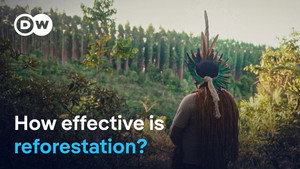
    Deforestation is increasing, and CO2 emissions are reaching record levels. In the fight against environmental catastrophe, planting trees is often presented as a silver bullet. Politicians, NGOs, and multinational corporations are turning to this simple and affordable solution. But could excessive tree planting actually exacerbate the ecological imbalance we are trying to combat? This documentary examines the real-life impacts of global tree-planting campaigns, featuring interviews with researchers in France, Brazil, Portugal, Spain, and the Democratic Republic of the Congo.

  11. DW Documentary S10 E59 still E59

    59. Argentina's stolen children - The crimes of the military dictatorship

    From March 1976, Argentina was ruled for several years by a military junta led by General Jorge Videla. Some 30,000 people were abducted and murdered by the regime’s security forces. Many of their children disappeared - but where did they go? After searching for many years, investigators made a shocking discovery: many of these children had been secretly adopted by families with links to the military, and raised under new identities. In some cases, they were living with people who had been involved in the crimes committed against their parents. The documentary traces the history of Argentina's disappeared children and follows families’ ongoing search for truth, identity and justice. It focuses on the mothers and grandmothers who have been searching for their loved ones for decades, as well as the children themselves, now adults coming to terms with their origins and the circumstances of their past.

  12. DW Documentary S10 E58 still E58

    58. Climate change and displacement

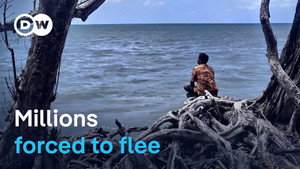
    Over the past 10 years, climate change has displaced an average of 70,000 people, every day. This, according to figures from the UN Refugee Agency, UNHCR. Poorer countries are particularly hard hit. There is no universal legal framework that would offer these people protection. Climate-induced displacement is not recognised as a valid ground for asylum under the Geneva Convention. Now, three countries in Latin America, the Pacific and Asia are responding to an emergency that directly affects each of them.

  13. E57

    57. WikiLeaks founder Julian Assange

    For some he's a hero. For others, he’s public enemy number one. Certainly, his revelations challenged US power. This film follows the WikiLeaks founder’s extraordinary life story. With the publication of thousands of secret US military and diplomatic documents in 2010, WikiLeaks ushered in a new information age. Suddenly, thanks to founder Julian Assange, state secrets were out in the open — and under scrutiny. For many journalists and activists, Assange was a pioneer who used new technologies to evade both censorship and reprisals. For others, he symbolized an openness that could bring both nation states and multinational corporations to their knees.

  14. E56

    56. Drone warriors - Autonomous weapon systems and the wars of the future

    As the war on Ukraine rages on, drone technology is advancing rapidly — and fundamentally changing the battlefield. How close are we to the ultimate "killer drone"—an autonomous weapon that can select and destroy a target without human intervention? Does it matter whether death is caused by human hands or by a machine? Can we limit this technology to the front lines, or will it seep into everyday life? The film explores how tech drones are changing war.

  15. DW Documentary S10 E55 still E55

    55. Steve Jobs and the Apple story

    As Apple turns 50, this film tells the story of the tech company that revolutionized our world, along with its opportunities and downsides. Has this tool of liberation become an instrument of control?

  16. DW Documentary S10 E54 still E54

    54. Can future pandemics be prevented?

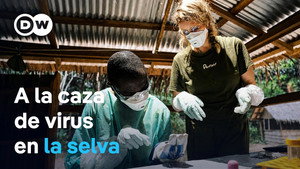
    Ebola, COVID-19 and mpox - some of the illnesses caused by germs that jump from animals to humans. In the Central African Republic, researchers are searching for the origins of these zoonotic diseases. Frédéric Singa is a WWF veterinarian working in the Dzanga-Sangha Protected Areas in the Central African Republic. He captures bats, collects samples from gorilla droppings, and talks to people with diseases to better understand which pathogens are circulating in the forest. As part of his research, Singa also plans to regularly test bushmeat sold in local markets, but to do so he needs the community to be on his side. Will he manage to convince skeptical hunters and market vendors to support his project?

  17. E53

    53. The Milwaukee Cannibal - "My Friend Dahmer"

    The graphic novel "My Friend Dahmer” recounts the early years of a serial killer in the US. This deeply disturbing book by Derf Backderf, a school friend of Dahmer’s, delves into the depths of human madness. Jeffrey Dahmer, one of the most feared serial killers in US history, was arrested in 1991. He had killed 17 men, most of them young, Black, and gay. When he learned of the crimes, Derf Backderf suddenly found himself confronted with his own past: at secondary school and sixth form, he had been on friendly terms with Dahmer, who was already considered an outsider at the time. To process his shock and make sense of it all, Backderf decided to write a graphic novel — a project spanning almost 20 years. "My Friend Dahmer” became one of the most significant works in the genre.

  18. DW Documentary S10 E52 still E52

    52. Making billions from tiny eels

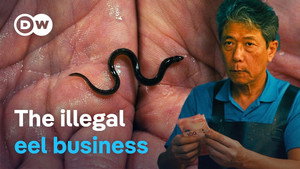
    The European eel is threatened with extinction. But it is also a highly sought-after commodity on the global market. The trade in young eels is booming. And it’s increasingly controlled by organized crime. The film "Billion Dollar Babies — The Big Business of Eel Trafficking" tells the story of a multi-billion-dollar illegal trade, centered on one of nature’s most enigmatic creatures. Born in the Sargasso Sea near the Bermuda Triangle, the eel begins its journey of up to 5,000 kilometers to Europe — as a translucent ‘willow-leaf’ larva known as a glass eel. To this day, it remains unclear exactly how the European eel reproduces. Commercial breeding isn’t possible: every eel consumed comes from the wild.

  19. DW Documentary S10 E51 still E51

    51. Flatpack forests - IKEA’s practices in the Carpathian Mountains

    IKEA is one of the world’s largest consumers of wood. Almost 15 million cubic meters of the material are used every year in cheap IKEA products — with millions of trees felled for the mass production machine. IKEA Loves Wood ('IKEA elsker træ') is a Danish investigative documentary from 2024 that looks at IKEA's forestry practices in the Rumanian Carpathian Mountains — an area with some of the last old-growth forests of Europe. Biologists, environmental groups and local activists say the Swedish furniture giant’s timber production is having a significant impact on old-growth forests and biodiversity. IKEA, however, states that it doesn’t tolerate illegal or unethical practices and that its suppliers are carefully selected.

  20. DW Documentary S10 E50 still E50

    50. Illegal dolphin hunting

    Humans kill more than 100,000 dolphins worldwide each year. Many end up as bycatch in fishing nets. Others are hunted down. Japan, the Faroe Islands and West Africa are three places where the animals are slaughtered. Dolphins play an important role in marine ecosystems, but their numbers are dwindling. About one third of dolphin species are endangered. Researchers are monitoring their behavior and raising public awareness by visiting local schools and teaching children about the need to protect the species. Can this effort aid in the protection of Africa's dolphins?

  21. DW Documentary S10 E49 still E49

    49. America's war for freedom - 250 years of independence

    In 1776, America was torn: between loyalty to the British Crown, and its own desire for independence. 250 years later, digitized eyewitness accounts provide insights into daily life during the War of Independence for the first time.

  22. DW Documentary S10 E48 still E48

    48. From Latin America to Europe- Human traffickers

    Women in Latin America are recruited with brutal methods, then enslaved in Europe. A survivor recounts how she was lured to Spain with the promise of a job, then forced into prostitution.

  23. DW Documentary S10 E47 still E47

    47. From bees to robots: The new power of swarm intelligence

    Researchers are investigating how animals behave in swarms. Their findings are being applied to robotics, logistics and new models of participation — and are opening up new perspectives for business and democracy.

  24. DW Documentary S10 E46 still E46

    46. Illegitimate children in Iran - Invisible and without rights

    Leyla loves her daughter Nila more than anything. But there’s a problem: according to Iranian law, Nila does not exist. Because she is an illegitimate child, she has no papers or rights. Mother and daughter must fight the absurd rules of a disingenuous regime. But the resourceful duo refuse to give up. They hope to become part of Iranian society and save Nila from a life in hiding. "Nila's Dream in the Garden of Eden" accompanies Leyla in her struggle to achieve recognition of her daughter Nila's identity. Until then, she cannot obtain papers, go to school or receive medical care. The doors of Iranian society are closed to her.

  25. E45

    45. Hitler’s invasion of the Soviet Union: Operation Barbarossa (2/2)

  26. DW Documentary S10 E44 still E44

    44. Nikola Tesla - The visionary who invented our future

    Nikola Tesla, born in 1856 in what is now Croatia, was one of the world’s greatest inventors. He developed numerous innovations in the field of electrical engineering and was granted over 280 patents, many of them in the USA.

  27. DW Documentary S10 E43 still E43

    43. India's last nomads

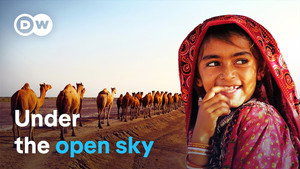
    This film tells the story of Ahmed and his family, camel herders in the deserts of western India. For generations, they’ve roamed the barren land with their animals, leading lives shaped by tradition and nature. But this way of life is coming under increasing pressure: industrialization, climate change and economic challenges are rapidly transforming the region and threatening the future of nomadic life.

  28. E42

    42. Hitler's invasion of the Soviet Union: Operation Barbarossa (1/2)

  29. DW Documentary S10 E41 still E41

    41. Displaced on Java- A village battling rising sea levels

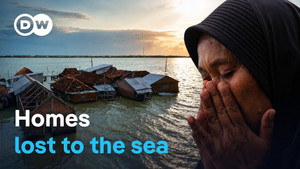
    So far, the residents of the village of Timbulsloko in Java have been able to keep pace with the rising sea levels by building their homes on higher ground. How long can that go on for? Where once roads and vast rice fields stood, there's now nothing but water. The ocean has carved deep into the land, washing away everything in its path: Homes, gardens, mangrove forests. For generations, people here lived mainly from rice farming. Now they fish, and are experimenting with aquaculture. Residents here are struggling to contain the impacts. How long can they stop the water from disrupting their day-to-day living? At which point will they be forced to leave?

  30. DW Documentary S10 E40 still E40

    40. Trump and Greenland- The new rush for raw materials

    Ever since Donald Trump started talking about acquiring Greenland, the country has become the focus of global attention. Why? As the ice sheets melt, the Arctic Ocean is opening up to shipping and resource extraction. Greenland is thus becoming a key strategic region between North America, Europe and Russia. Its vast mineral resources - ranging from oil and gas to gold and rare earths, which are indispensable for the energy transition and the defense industry - are turning the island into a new El Dorado. Mining companies and world powers alike are competing for a share.

  31. DW Documentary S10 E39 still E39

    39. The dark side of AI- Exploitation of humans and nature

    While tech companies promise us a better future, AI is already causing serious harm. Huge data centers and server farms are required for AI programs to function. These are paving over landscapes and consuming immense amounts of water and electricity — mostly from fossil fuels, and thus dirty energy sources. Millions of low-wage workers worldwide are busy feeding data to, and training, the algorithms for AI programs — often at the expense of their mental and emotional health. These workers, many of them young and living in the Global South, are exposed to all manner of harmful content to train AI models to detect such material.

  32. DW Documentary S10 E38 still E38

    38. Peru- Life at extreme altitudes above 4,000 meters

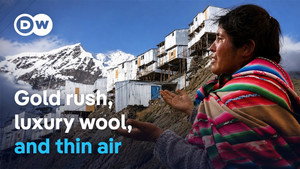
    The Peruvian Altiplano is one of the most extreme habitats in the world. Located over 4,000 meters above sea level, the region attracts millions of visitors - and pushes many of them to their physical limits. But for tens of thousands of people, the highlands are everyday life.

  33. DW Documentary S10 E37 still E37

    37. Our memory- A phenomenal storage system

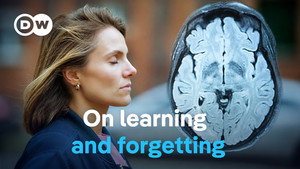
    Our memory also makes us who we are. The experiences and feelings we’ve stored, the knowledge we’ve retained - all of this connects us to ourselves and our past. But how can we improve our memory and make it more efficient? How can we keep it fit and healthy? What happens when it fails us?

  34. DW Documentary S10 E36 still E36

    36. The sushi hype- Ravenous appetites and species extinction

    Sushi: Once an expensive gourmet food, now a global fast-food phenomenon. Whether you get it from an Asian snack bar or a supermarket to-go box, sushi is trendy. But sushi consumption also brings problems. Overfishing through aggressive fishing methods, factory farming and modern slave labor are all part of the dark side of the great sushi craze.

  35. DW Documentary S10 E35 still E35

    35. Will AI lead to the death of the internet?

    The internet is being flooded with AI-generated garbage. Disinformation, propaganda, a flood of synthetic images and sounds. Will we soon only be getting information that AI feeds us?

  36. DW Documentary S10 E34 still E34

    34. Axolotl

    The axolotl, a tailed amphibian, is a marvel of evolution. It can regenerate injured body parts and is exceptionally long-lived. However, the axolotl's habitat is now under serious threat. The latest census revealed that fewer than a hundred specimens exist in the wild.

  37. DW Documentary S10 E33 still E33

    33. Dangerous apps- In the web of data brokers

    What many smartphone users know: the apps on their phones collect detailed location data. What few people know: the information often ends up with a global network of data brokers and advertising companies.

  38. DW Documentary S10 E32 still E32

    32. The secret to concentration

    Constant stimuli, digital distractions - how can we stay focused these days? Does talent, training, or technology help? Neuroscientists and mental coaches show how concentration works in the brain. In an increasingly demanding world, we seem to be able to concentrate less and less. How does our brain manage to focus, even when we’re constantly exposed to distractions? This documentary accompanies a top athlete, an air traffic controller trainee, and an e-sports professional on their journeys in search of maximum focus.

  39. E31

    31. Nano- and microplastics: The invisible danger to the body

    All organisms harbor an invisible, omnipresent enemy: plastic. Researchers worldwide have shown that plastic particles can also be detected in humans - in organs and bodily fluids. The documentary shows the current state of research on the harmfulness of microplastics and the consequences for the human species. Micro- and nanoplastics pollute the environment and pose a threat to humans and animals.

  40. DW Documentary S10 E30 still E30

    30. Sudan: The world's biggest humanitarian crisis

    In Sudan, the government is waging a bloody civil war against rebels. An estimated 12 million people have fled their homes, either to destinations within the country or to neighboring states. Many of them are seeking help in Chad. It is arguably the world's biggest humanitarian crisis - yet the civil war in Sudan has received little attention from the international community.

  41. E29

    29. The German obsession with cars

    More than 140 years after its invention, the car remains a source of fascination for many people. In Germany, for example, there are more vehicles on the road than ever before. For some, the car is a cult object. But it also deeply polarizing. Germany is considered the birthplace of the automobile. Here, cars are like the family's favorite child. Many Germans maintain an emotional relationship with motorized vehicles - one explored in this film.

  42. DW Documentary S10 E28 still E28

    28. Gothic architecture

    Gothic architecture emerged in France in the 12th century. This architectural style revolutionized church construction, creating cathedrals that soared skywards. But where did the knowledge and technology for building these monuments come from?

  43. E27

    27. The Da Vinci Code - Has the mystery been solved?

    Dan Brown's novel "The Da Vinci Code” is one of the century’s most successful thrillers worldwide. But how much truth is behind the claims made in the book - and what is pure fiction?

  44. DW Documentary S10 E26 still E26

    26. Octopus under threat

    Octopus is considered a delicacy - grilled, boiled, or fried. But rising demand has consequences, and in several regions of Europe, this intelligent cephalopod is already considered overfished. The ecological consequences of octopus overfishing are already visible: in Italy, the invasive blue crab is spreading uncontrollably. It is one of the octopus's favorite foods - but without natural enemies, it is now destroying mussel farming in the Po Delta and thus posing a threat to livelihoods.

  45. DW Documentary S10 E25 still E25

    25. The heart- The most powerful organ in our body?

    Women's hearts differ from men's, and often present subtler heart attack symptoms. This can lead to dangerously late diagnoses. Every minute counts in a heart attack: as soon as the blood supply stops, heart tissue begins to die, irretrievably.

  46. DW Documentary S10 E24 still E24

    24. The story of our planet

    The documentary shows the evolutionary history of our planet, in which the history of humankind represents only a brief moment. Rocks existed on our planet long before the oceans, forests, plants, and even air came into being. From the very beginning, the earth itself was the foundation of creation. The documentary looks at how inanimate matter created life, shaped landscapes, and gave rise to civilizations.

  47. DW Documentary S10 E23 still E23

    23. How sugar created slavery (2/2)

    Sugar has long played a central role in the global economy. But this lucrative business was also a major driver of both colonialism and slavery. To this day, workers are systematically exploited for sugar production.

  48. DW Documentary S10 E22 still E22

    22. How sugar created slavery (1/2)

    Sugar has long played a central role in the global economy. But this lucrative business was also a major driver of both colonialism and slavery. To this day, workers are systematically exploited for sugar production.

  49. DW Documentary S10 E21 still E21

    21. The secrets of lightning

    Lightning is a force of nature. Traveling at a speed of 100,000 km/h, with a temperature five times that of the Sun's surface, it strikes the Earth millions of times a day. But what makes lightning? Does it have a purpose? The phenomenon has puzzled generations of scientists for centuries, from Benjamin Franklin to Nikola Tesla. Today, in a bid to unravel its true nature, researchers are trying to achieve something once thought to be impossible: capturing lightning.

  50. DW Documentary S10 E20 still E20

    20. India - Nuclear Power, space power, economic power?

    India has set its sights on becoming an economic global power. For western entrepreneurs, the country could be a feasible alternative to China. But how sustainable is the current boom?

2014 Documentaries

2014 · 1 episode · Last episode: 11 years ago

DW Documentary 2014 Documentaries release dates →
  1. E1

    1. Coming home to Mongolia

    When Saruul Fischer came to East Germany from Mongolia at the age of eleven, she could not have known how important her homeland would be to her in the future. She stayed there after the fall of the Berlin Wall, went to university, married and had children. Struck by a yearning for her homeland, she began developing an idea for the fashion label "Edelziege”.

Cast & crew

  • Abdul Aziz Ghazi

    Abdul Aziz Ghazi

    Himself, Imam Abdul Aziz

DW Documentary FAQ

When is the next episode of DW Documentary?

A date for the next episode of DW Documentary hasn't been announced yet. Follow DW Documentary in the Streambay app and you'll be notified as soon as a new episode airs.

When did the latest episode of DW Documentary come out?

The most recent episode of DW Documentary, Season 10 Episode 69 "Mao Zedong and the founding of the People's Republic of China (2/3)", aired on October 10, 2026.

How many seasons of DW Documentary are there?

DW Documentary has 11 seasons with 327 episodes in total.

When did DW Documentary first air?

DW Documentary first aired on Deutsche Welle on January 9, 2017.

How do I get notified when new episodes of DW Documentary are released?

Download the Streambay app, follow DW Documentary, and you'll get a push notification the moment each new episode is released.

More like DW Documentary

  • Arena poster

    7.2

    S1 · E686 1 year ago

    Arena

    Synopsis: Arena is a British television documentary series, made and broadcast by the BBC. Voted by leading TV executives in Broadcast as one of the top 50 most influential programmes of all time, it has run since 1 October 1975 with over five hundred episodes made, directed by the likes of Martin Scorsese, Alan Yentob, Roly Keating, Frederick Baker, Volker Schlondorff and Vikram Jayanti. Arena's subjects are a roll-call of the world's best known cultural figures from the 20th and 21st centuries, from singers Bob Dylan and Amy Winehouse to academics Edward Said and Eric Hobsbawm, from writers Jean Genet...

  • The South Bank Show poster

    5.6

    S45 · E4 3 years ago

    The South Bank Show

    Synopsis: The South Bank Show is a television arts magazine show produced by ITV between 1978 and 2010. A new series began on Sky Arts from 27 May 2012. Presented by Melvyn Bragg, the show aims to bring both high art and popular culture to a mass audience.

  • Galileo poster

    4.8

    S14 · E235 4 years ago

    Galileo

    Synopsis: This daily German magazine show delivers interesting facts on numerous topics centering around technology, life, and bizarre knowledge.

  • Cosmic Disclosure poster

    10.0

    S30 · E11 6 months ago

    Cosmic Disclosure

    Synopsis: For the first time ever, a 30-year insider has come forward to reveal over 70 years of humanity's hidden history in space. Corey Goode joins David Wilcock in this inaugural presentation of Cosmic Disclosure to offer an overview of the history and extent of humanity's celestial presence.

  • Mayday poster

    8.2

    S26 · E10 7 months ago

    Mayday

    Synopsis: Major real-life air disasters are depicted in this series. Each episode features a detailed dramatized reconstruction of the incident based on cockpit voice recorders and air traffic control transcripts, as well as eyewitnesses recounts and interviews with aviation experts.

  • Fuse poster

    7.6

    S47 · E136 18 years ago

    Fuse

    Synopsis: Fitil is a popular Soviet/Russian television satirical/comedy short film series which ran for about 500 episodes. Some of the episodes were aimed at children, and were called Фитилёк, Fitilyok, Little Fuse. Each issue contained from the few short segments: documentary, fictional and animated ones. Directed by various artists, including Leonid Gaidai who presented his famous trio of Nikulin, Vitsin and Morgunov into the cast. It was called in USSR as "the anecdotes from the Soviet government".

  • Great Performances poster

    6.1

    S55 · E4 1 week ago

    Great Performances

    Synopsis: The best in the performing arts from across America and around the world including a diverse programming portfolio of classical music, opera, popular song, musical theater, dance, drama, and performance documentaries.

  • NOVA poster

    7.1

    S53 · E16 4 days ago

    NOVA

    Synopsis: PBS' premier science series helps viewers of all ages explore the science behind the headlines. Along the way, NOVA demystifies science and technology, and highlights the people involved in scientific pursuits.

  • Fantástico poster

    8.4

    S54 · E45 Today

    Fantástico

    Synopsis: 'Fantástico' is a journalistic program shown on Sundays, presented by Poliana Abritta and Maju Coutinho. Every week, he presents special reports, shows and various paintings.

  • 20/20 poster

    6.3

    S50 · E3 1 month ago

    20/20

    Synopsis: 20/20 is an American television newsmagazine that has been broadcast on ABC since June 6, 1978. Created by ABC News executive Roone Arledge, the show was designed similarly to CBS's 60 Minutes but focuses more on human interest stories than international and political subjects. The program's name derives from the "20/20" measurement of visual acuity. The hour-long program has been a staple on Friday evenings for much of the time since it moved to that timeslot from Thursdays in September 1987, though special editions of the program occasionally air on other nights.

Never miss DW Documentary.

Download Streambay and follow DW Documentary. We’ll notify you the moment a new episode is released. It’s free, with no sign-up and no personal information required.

Coming soon to App Store Get it on Google Play
DW Documentary Get new episode alerts Get alerts