Skip to content
Streambay
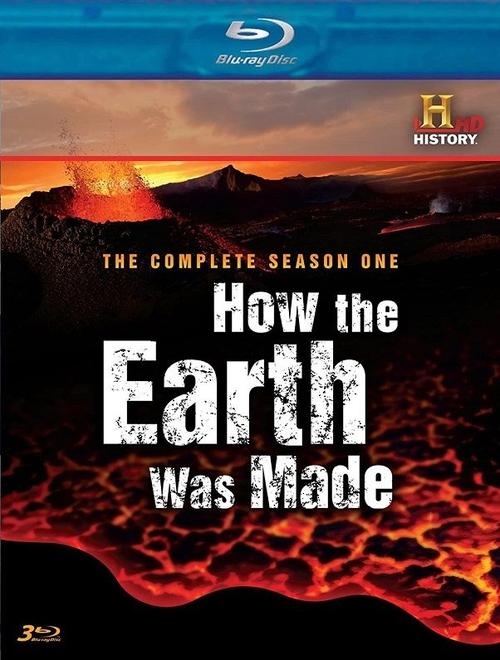
How the Earth Was Made poster
TV series

How the Earth Was Made

Latest episode

S2 E13 · America's Gold

About How the Earth Was Made

How the Earth Was Made is a documentary TV series that premiered on History on February 10, 2009. It has 2 seasons and 26 episodes so far and has ended. The latest episode, Season 2 Episode 13 "America's Gold", aired on March 2, 2010.

HISTORY goes to the ends of the earth to find where our world began. Forged from fire and ice, formed by floods, volcanoes, asteroids and earthquakes, our planet tells a dynamic geological story. What are mega-tsunamis? What happens when you have millions of years of rain? Visual effects, location filming and stunning aerial photography bring viewers back 4.5 billion years to enjoy a unique window on our world. How the Earth Was Made peels back time like layers of rock to reveal the origins of the place we call home.

  • Documentary

Last updated

Episodes

26 episodes · 2 seasons

Season 1

2009 · 13 episodes · Last episode: 17 years ago

How the Earth Was Made Season 1 release dates →
  1. How the Earth Was Made S1 E13 still E13

    13. The Alps

    Finale

    The jagged backbone of Europe, spanning seven countries and providing essential water to millions, the Alps are Europe's most important landmark. But how did marine fossils get here, seven thousand feet above sea level?

  2. How the Earth Was Made S1 E12 still E12

    12. Hawaii

    The Hawaiian Islands are the most remote island chain on the planet. Emerging in the center of the Pacific, their origins have remained a puzzle for generations. Follow the story of the attempts to try and understand these beautiful, yet violent islands. It is a story of raging volcanoes, vast landslides, mega-tsunamis and strange forces emerging from the bowels of the planet. It reveals that Hawaii's Big Island is over 25 times bigger than Mt. Everest, that the entire Island chain is disappearing faster than any other land mass on Earth, and that volcanoes here might hold essential clues as to the inner workings of our planet.

  3. How the Earth Was Made S1 E11 still E11

    11. Iceland

    It is the largest and most fearsome volcanic island on the planet. We'll scour the island for clues, to address the mystery of what powerful forces are ripping Iceland apart and lighting its fiery volcanoes. Here, lava rips huge tears in the ground and new islands are born from the waves. Yet despite the active volcanoes, Iceland historically has been covered in and carved by ice. Fire and ice collide, locked in a titanic battle, as glaciers explode and cataclysmic floods decimate the landscape. But Iceland's volcanoes have had ramifications far beyond the shores of Iceland, causing climatic chaos and devastation across the planet; a fate which may one day happen again.

  4. How the Earth Was Made S1 E10 still E10

    10. Asteroids

    Asteroids might provide clues about the formation of early Earth; detective work uncovers that a big nickel deposit in Canada, vast oil reserves in the Gulf of Mexico and a gold mine in South Africa all resulted from asteroid impacts.

  5. How the Earth Was Made S1 E9 still E9

    9. Tsunami

    Tsunamis are one of the most terrifying forces of nature, destroying all in their path. The December 26th Tsunami is estimated to have released the energy of 23,000 Hiroshima-type atomic bombs. What are the enormous forces that generate these catastrophic waves deep on the ocean floor? With 50% of the world's population living within a mile of the sea, this episode looks at what could happen in the future. East coast cities from New York to Miami face the threat of a truly colossal wave that could be generated by the collapse of an active volcano off the coast of Africa.

  6. How the Earth Was Made S1 E8 still E8

    8. Yellowstone

    Geologists evaluate Yellowstone National Park, one of the most dangerous geological features on Earth; the park is hit by 500 earthquakes in early 2009, raising concerns a super-volcano is beginning to stir.

  7. How the Earth Was Made S1 E7 still E7

    7. Great Lakes

    Scientists seek clues to the formation of North America's Great Lakes, the largest expanse of fresh water on the planet; delving into an underground salt mine; investigating a fossilized coral reef; diving to the bottom of Lake Superior.

  8. How the Earth Was Made S1 E6 still E6

    6. Driest Place on Earth

    The Atacama desert is considered the driest place on Earth. Since human records of the area began, some places have never received rain. But the records don't stop there--the Atacama is also the oldest desert in the world, and recently it has been dated to an amazing 150 million years old. Other research shows that the surface of this desert is also incredibly ancient, with boulders lying there that have not moved for over 23 million years--more than 50 times longer than it's taken for our human species to evolve. The soil is so dry, it has been used as a test bed for the Mars rovers. And though the desert was once thought to be completely lifeless, strange bacteria discovered there have given scientists new hope that they might find life on the red planet. Atacama is also home to the largest copper mine in the world. Inspect the riddle of the Atacama and uncover how this extraordinarily dry landscape was created.

  9. How the Earth Was Made S1 E5 still E5

    5. New York

    It is one of the most man-made spaces on the planet, but everything in New York from the height of the skyscrapers to the way the subway was constructed to the position of the harbor is governed by the extraordinary forces that ultimately shaped this city. You can tell the geology of Manhattan at a glance by looking at the skyline. The skyscrapers of Midtown and Downtown are built on hard granite; the low-rise buildings in between are built on a soft, gravelly soil left over from the Ice Age. Learn how New Jersey and North Africa were neighbors 250 million years ago, how the rocks New York are built on are the remains of mountains that 450 million years ago were as tall as the Himalayas, and how Long Island is covered in rubble that remained as ice sheets retreated 10,000 years ago.

  10. How the Earth Was Made S1 E4 still E4

    4. Loch Ness

    Home to the legend of the Loch Ness Monster, this lake holds more water than any other lake in Britain. It's only 10,000 years old, but billions of years in the making. Trace the extraordinary story of Loch Ness: from the three billion year old bedrock of Northern Scotland, to the giant glaciers that carved out the Loch. On this incredible journey we reveal that Loch Ness was once part of America, giant dinosaurs, suspiciously similar to the fabled monster once roamed the area, and that the entire region was engulfed by huge volcanic eruptions as Scotland was ripped from its birth place on the American continent. Could the mythical Loch Ness monster be a descendant of the dinosaurs, somehow surviving in the murky waters of the loch

  11. How the Earth Was Made S1 E3 still E3

    3. Krakatoa

    On August 27th, 1883 a series of blasts on the island of Krakatoa culminated in a colossal explosion that blew the island apart in one of the largest eruptions in recorded history. We explore the underground forces that led to this extraordinary explosion that killed over 36,000 people and the devastation that it caused. But this is not just history because Anak Krakatoa (the Son of Krakatoa) is growing bigger and bigger and will blow again

  12. How the Earth Was Made S1 E2 still E2

    2. The Deepest Place on Earth

    The Marianas Trench is the deepest place on earth, deeper than Mt. Everest is high. The trench is where the ocean floor disappears into the center of the earth. The pressures at this depth are 17 times greater than what it takes to crush a nuclear submarine. Only two men have ever been down the Trench, fewer than have set foot on the moon. Follow the daring missions into the abyss and explore the extraordinary geology that has created this deep scar along the ocean floor

  13. How the Earth Was Made S1 E1 still E1

    1. San Andreas Fault

    The San Andreas Fault runs roughly 800 miles through some of the most valuable real estate in the world. The southern section hasn't had a significant quake for over 300 years and is now primed and ready for another "big one." This new series takes a trip along the most famous fault line in the world and examine the geology that gives it its immense destructive power. It's an investigation given new urgency by recent warnings from 300 of America's leading scientists about the death and devastation that a major earthquake on the fault could unleash on Los Angeles.

Season 2

2009 · 13 episodes · Last episode: 16 years ago

How the Earth Was Made Season 2 release dates →
  1. How the Earth Was Made S2 E13 still E13

    13. America's Gold

    Finale

    In the deserts of Nevada, research analysts will examine sedimentary rocks, which have built up over many years, to reveal how extracting several layers of rocks can lead to the discovery of gold residing deep below the surface.

  2. How the Earth Was Made S2 E12 still E12

    12. America's Ice Age

    A look at past Ice Age eras that Earth has experienced throughout its existence; how the slightest changes in the planet's orbit and angle of rotation can bring them about; how long they can last, and when the Earth will endure another.

  3. How the Earth Was Made S2 E11 still E11

    11. Earth's Deadliest Eruption

    A look back 250 million years ago when a massive volcanic eruption, (in what is now Siberia), spewed lava one mile thick over an area the size of Texas and caused intense climatic change that killed 95% of the life on the planet; paving the way for the next dominant species – the dinosaurs.

  4. How the Earth Was Made S2 E10 still E10

    10. Mt. St. Helens

    A look at the creation of the Mount St. Helens volcano in Washington state; its history of violent eruptions and the evidence another massive eruption could occur again in the near future.

  5. How the Earth Was Made S2 E9 still E9

    9. Death Valley

    A look at the geologic treasure trove of Death Valley; how one of the hottest places on Earth holds evidence for the coldest times on our planet; and how the valley, already well below sea level, is still sinking lower into the Earth.

  6. How the Earth Was Made S2 E8 still E8

    8. Everest

    It is the tallest and biggest mountain on earth, as far removed from sea level as it's possible to be--and yet its sedimentary layers contain fossils that were once creatures that lived on the ocean seabed. The Himalayas formed when India smashed into Asia--propelled by plate tectonics. Everest is still rising but its height is limited--extreme erosion counteracts and limits the amount of uplift.

  7. How the Earth Was Made S2 E7 still E7

    7. Ring of Fire

    The single longest linear feature on Earth--the "Ring of Fire" circles almost the entire Pacific. It is a ring of active volcanoes from White Island just north of New Zealand, through the South China seas, Japan, Kamchatka, the Aleutians, the Cascades and down through the Andes. Almost 25,000 miles long, it is one of the most awesome sights on Earth.

  8. How the Earth Was Made S2 E6 still E6

    6. The Rockies

    From Alaska to New Mexico, the Rockies are one of the great mountain belts of the world--caused by tectonic forces of the Pacific Plate pushing against the North American continent. They have formed as the earth's continental crust has been shortened under pressure--by around 1 inch a year. What's more, they are still rising and they are still young in geologic terms: when the dinosaurs roamed the Earth they had not even started to form.

  9. How the Earth Was Made S2 E5 still E5

    5. Yosemite

    The Sierra Nevada, North America's highest mountain range, contains one of the most awe-inspiring geological features on the planet: Yosemite Valley. Walled by sheer 3,000-foot granite cliffs and made from one of the toughest rocks on earth, it is home to the mighty El Capitan and iconic Half Dome. Yet how this extraordinary valley formed has been the subject of controversy for over 100 years. Was it carved by gigantic glaciers or a cataclysmic rifting of the Earth?

  10. How the Earth Was Made S2 E4 still E4

    4. Sahara

    Africa's Sahara Desert is the size of the United States, making it the largest desert in the world. It's also the hottest place on the planet. But now an astonishing series of geological discoveries has revealed this searing wasteland hides a dramatically different past. Scientists have unearthed the fossils of whales, freshwater shells and even ancient human settlements. All clues to a story that would alter the course of human evolution and culminate in biggest climate change event of the last 10,000 years.

  11. How the Earth Was Made S2 E3 still E3

    3. Birth of the Earth

    The creation of the Earth is explored. Included: a study of the planet's oldest rocks and meteorites to see what they reveal about the birth of the Earth and its continued existence after it was first formed.

  12. How the Earth Was Made S2 E2 still E2

    2. Vesuvius

    Mt Vesuvius is the world's most dangerous volcano, and it threatens three million people. It was responsible for the most famous natural disaster of ancient history, the eruption that destroyed the Roman city of Pompeii. And its most recent blast was caught on film in 1944. Today Vesuvius is the most densely populated volcano in the world. Now recent scientific discoveries show that it is capable of an eruption larger than ever before thought possible and that hidden beneath Vesuvius there is a vast magma chamber of boiling hot rock, ready to come out.

  13. How the Earth Was Made S2 E1 still E1

    1. Grand Canyon

    The Grand Canyon is nearly 300 miles long and over a mile deep. You could stack four Empire State buildings one on top of the other and they still wouldn't reach the lip of the Canyon. As vast tectonic plates clash and grind against one another a giant plateau has been pushed up over a mile in the air. The Colorado river, flowing from high in the Rockies and carrying a thick load of sediment, has carved an amazing canyon in the rising plateau.

How the Earth Was Made FAQ

Will there be new episodes of How the Earth Was Made?

How the Earth Was Made has ended, so no new episodes are scheduled. The final episode aired on March 2, 2010.

When did the latest episode of How the Earth Was Made come out?

The most recent episode of How the Earth Was Made, Season 2 Episode 13 "America's Gold", aired on March 2, 2010.

How many seasons of How the Earth Was Made are there?

How the Earth Was Made has 2 seasons with 26 episodes in total.

When did How the Earth Was Made first air?

How the Earth Was Made first aired on History on February 10, 2009.

How do I get notified when new episodes of How the Earth Was Made are released?

Download the Streambay app, follow How the Earth Was Made, and you'll get a push notification the moment each new episode is released.

More like How the Earth Was Made

  • Arena poster

    7.2

    S1 · E686 1 year ago

    Arena

    Synopsis: Arena is a British television documentary series, made and broadcast by the BBC. Voted by leading TV executives in Broadcast as one of the top 50 most influential programmes of all time, it has run since 1 October 1975 with over five hundred episodes made, directed by the likes of Martin Scorsese, Alan Yentob, Roly Keating, Frederick Baker, Volker Schlondorff and Vikram Jayanti. Arena's subjects are a roll-call of the world's best known cultural figures from the 20th and 21st centuries, from singers Bob Dylan and Amy Winehouse to academics Edward Said and Eric Hobsbawm, from writers Jean Genet...

  • The South Bank Show poster

    5.6

    S45 · E4 3 years ago

    The South Bank Show

    Synopsis: The South Bank Show is a television arts magazine show produced by ITV between 1978 and 2010. A new series began on Sky Arts from 27 May 2012. Presented by Melvyn Bragg, the show aims to bring both high art and popular culture to a mass audience.

  • Galileo poster

    4.8

    S14 · E235 4 years ago

    Galileo

    Synopsis: This daily German magazine show delivers interesting facts on numerous topics centering around technology, life, and bizarre knowledge.

  • Cosmic Disclosure poster

    10.0

    S30 · E11 6 months ago

    Cosmic Disclosure

    Synopsis: For the first time ever, a 30-year insider has come forward to reveal over 70 years of humanity's hidden history in space. Corey Goode joins David Wilcock in this inaugural presentation of Cosmic Disclosure to offer an overview of the history and extent of humanity's celestial presence.

  • Mayday poster

    8.2

    S26 · E10 7 months ago

    Mayday

    Synopsis: Major real-life air disasters are depicted in this series. Each episode features a detailed dramatized reconstruction of the incident based on cockpit voice recorders and air traffic control transcripts, as well as eyewitnesses recounts and interviews with aviation experts.

  • Fuse poster

    7.6

    S47 · E136 18 years ago

    Fuse

    Synopsis: Fitil is a popular Soviet/Russian television satirical/comedy short film series which ran for about 500 episodes. Some of the episodes were aimed at children, and were called Фитилёк, Fitilyok, Little Fuse. Each issue contained from the few short segments: documentary, fictional and animated ones. Directed by various artists, including Leonid Gaidai who presented his famous trio of Nikulin, Vitsin and Morgunov into the cast. It was called in USSR as "the anecdotes from the Soviet government".

  • Great Performances poster

    6.1

    S55 · E4 1 week ago

    Great Performances

    Synopsis: The best in the performing arts from across America and around the world including a diverse programming portfolio of classical music, opera, popular song, musical theater, dance, drama, and performance documentaries.

  • NOVA poster

    7.1

    S53 · E16 4 days ago

    NOVA

    Synopsis: PBS' premier science series helps viewers of all ages explore the science behind the headlines. Along the way, NOVA demystifies science and technology, and highlights the people involved in scientific pursuits.

  • Fantástico poster

    8.4

    S54 · E45 Today

    Fantástico

    Synopsis: 'Fantástico' is a journalistic program shown on Sundays, presented by Poliana Abritta and Maju Coutinho. Every week, he presents special reports, shows and various paintings.

  • 20/20 poster

    6.3

    S50 · E3 1 month ago

    20/20

    Synopsis: 20/20 is an American television newsmagazine that has been broadcast on ABC since June 6, 1978. Created by ABC News executive Roone Arledge, the show was designed similarly to CBS's 60 Minutes but focuses more on human interest stories than international and political subjects. The program's name derives from the "20/20" measurement of visual acuity. The hour-long program has been a staple on Friday evenings for much of the time since it moved to that timeslot from Thursdays in September 1987, though special editions of the program occasionally air on other nights.

Never miss How the Earth Was Made.

Download Streambay and follow How the Earth Was Made. We’ll notify you the moment a new episode is released. It’s free, with no sign-up and no personal information required.

Coming soon to App Store Get it on Google Play
How the Earth Was Made Get new episode alerts Get alerts