

Equator Season 1 Episode release dates & where to watch
Premiered
Monday, August 7, 2006
Ended: Monday, August 14, 2006
When does Equator Season 1 come out?
Equator Season 1 premiered Monday, August 7, 2006 on Discovery and ended Monday, August 14, 2006. The season has 6 episodes.
Last updated
Equator Season 1 release schedule
| Episode | Release date |
|---|---|
|
1. Power of an Ocean The Galapagos Islands are desert islands surrounded by an ocean oasis. Palmyra is an island oasis in the middle of a desert ocean. They lie half an ocean apart, yet both are shaped by the power of the Equator. Great ocean currents, set in motion by the force of the Equatorial sun, affect the destiny of animals living in both places |
Monday · 20 years ago |
|
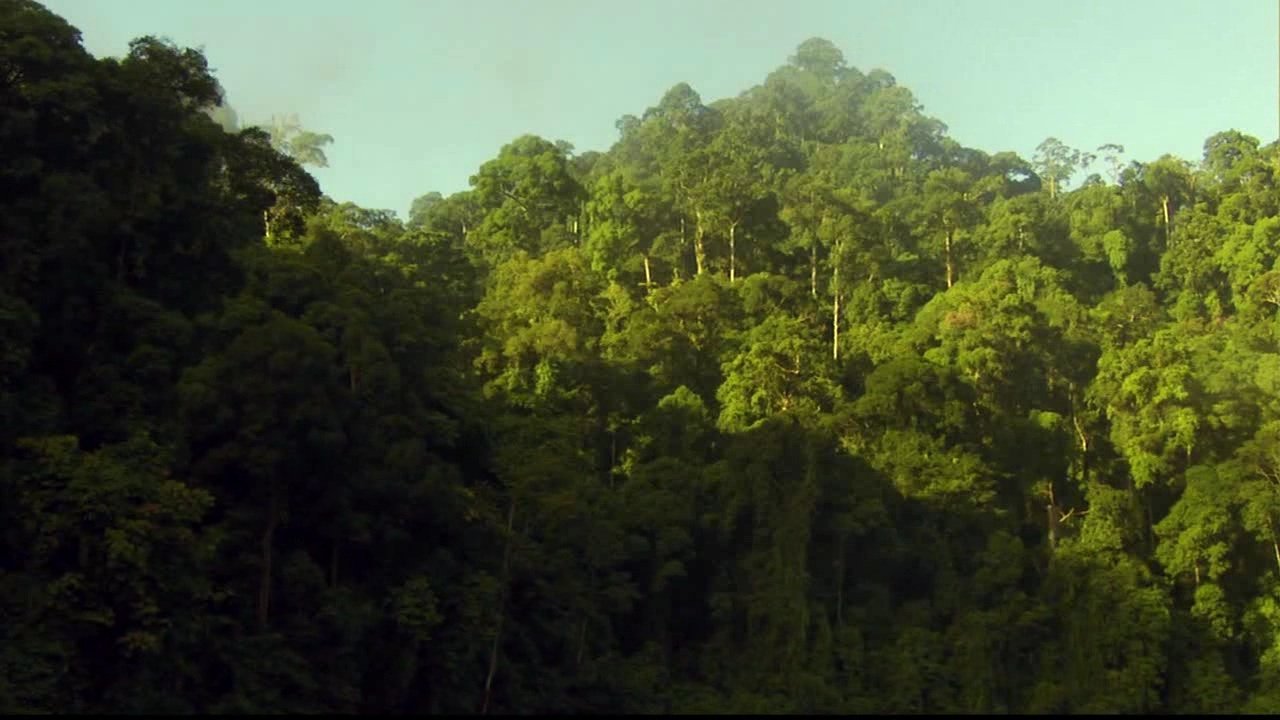
2. Battle For The Light AT THE EQUATOR dawn arrives with astonishing speed. In the rainforests of Sumatra and Borneo, it’s the tops of giant dipterocarp trees which catch the first rays of intense sunlight. After 12 hours darkness the abrupt return of the light is greeted by the operatic displays of the gibbons; just part of a dawn chorus as varied and overpowering as any on the planet. Nurtured by equatorial heat and year-round rainfall, the forest stretches up to 80 metres tall. The huge canopy trees have straight pillar-like trunks and umbrella-shaped crowns, which influence all the lives below. Not only do these “selfish giants” catch much of the sunlight and monopolise the nutrients from the forest floor; their leaves produce poisons making them unpalatable. So their massive resources are locked away from most forest creatures. What’s more the gaps between their gigantic trunks create aerial canyons that must be crossed – in astounding ways. |
Thursday · 20 years ago |
|
3. Rivers of the Sun AT THE EQUATOR the sun rises over the greatest rainforest on earth – Amazonia. Here one thousand rivers flow, the water and the sun fuelling an environment that is home to half the known species in the world. Equator: Rivers of the Sun takes viewers on a journey through this wonderful, mysterious and vast land and waterscape. Here there is a diversity of species like nowhere else on earth, the bizarre and the beautiful, the iconic and the obscure. This great abundance of life is the result of intense heat from the equatorial sun and the rains that come every November. Brought by trade winds from far out in the Atlantic, heavy clouds pass over the great South American landmass. Grown even more bloated from the rich forest, the clouds reach saturation point, the rain is released. |
Monday · 20 years ago |
|
4. Reef of Riches The Indonesian archipelago in the Indo-Pacific Ocean comprises thousands of islands, atolls and the largest concentration of coral reefs in the world. This rich and varied environment is a product of a unique set of natural circumstances. The equatorial sun powers ocean currents among the tiny dots of land. Where the archipelago meets the western tip of New Guinea an intersection of ocean currents creates perhaps the world's richest reefs in the region of the Rajah Ampat Islands. A coral reef houses a myriad of colours, shapes and patterns: from the bulb tentacle anemone which protects, and in turn is protected by, the brightly coloured clownfish; to the multi-branched gorgonian, home of the tiny pygmy seahorses. Coral animals have tiny symbiotic plants living within their tissues. Brought together by sunlight, it is one of the most powerful biological partnerships on earth. Young coral ingest free-swimming algae, but because of some ancient genetic signal, the algae are not eaten. Instead the coral wraps the tiny plants in membrane and moves them to tissues exposed to light. The algae are nourished and in response produce sugars that both they, and the coral, consume increasing the corals growth rate. Coral is far from a passive inhabitant of the ocean and once a year many species combine for an event that is both spectacular and of scientific intrigue. A mass spawning, which usually occurs during a full moon, provides not only a breeding opportunity, but also inter-breeding between coral species. It is this ease and adaptability of hybridization that is leading scientists to re-examine the most basic elements of what comprises a species. |
Thursday · 20 years ago |
|
5. Paradox of the Andes Ecuador’s Andes are mountains of paradox, where tropical species live alongside ice age relics in an unpredictable alpine desert. THE ANDES ARE one of the most unusual places at the Equator. In Ecuador, a country whose Spanish name means ‘equator’, unexpected plants and animals meet on the slopes of active volcanoes. Every day, a conflict rages between the heat of the equatorial sun and cold created by towering mountains. The weather is always unpredictable and changeable, and the inhabitants of the paramo must endure four seasons in a day, and sometimes even in an hour. Vicunas are camels, perfectly adapted to the cold desert of the high paramo. They’re protected from cold and intense levels of solar radiation by wool that is among the finest and warmest in the world. At 4300 metres above sea level air contains only half the oxygen it does at sea level, but vicunas can maximise each breath of this thin air. |
Thursday · 20 years ago |
|
6. Challenge of Change Finale Challenged by cycles of famine and abundance, the iconic species of Equatorial Africa have adapted to suit their unique environments. FOR MUCH OF the year the African Savannah bakes under the oppressive Equatorial sun. The dryness is unusual for the Equator, whose regions are often covered with dense rainforests and associated with a seasonless annual cycle. But the Savannah is a product of unique circumstances, of profound geological events that have combined to create a habitat for many of Africa’s iconic mammal species. Thirty million years ago part of east Africa was torn apart. Massive volcanic activity combined to form the beginnings of what would be the Great Rift Valley. Over millions of years the valley widened and grew longer, spreading north and south for more than 4,500 kilometres. The resulting mountain ranges rose 3000 metres, blocking clouds coming from the west and creating a rain shadow over east Africa. |
Monday · 20 years ago |
Equator Season 1 FAQ
When does Equator Season 1 come out?
Equator Season 1 premiered Monday, August 7, 2006 on Discovery.
How many episodes are in Equator Season 1?
Equator Season 1 has 6 episodes.
Are new episodes of Equator Season 1 released weekly?
Episodes are released on a mixed schedule; check the dates below.
When is the Equator Season 1 finale?
The Equator Season 1 finale (Episode 6) aired Monday, August 14, 2006.
How do I get notified when new Equator Season 1 episodes are released?
Download the Streambay app and follow Equator. You'll get a push notification the moment each new episode is out.
Never miss Equator Season 1.
Download Streambay and follow Equator. We’ll notify you the moment Season 1 is released, and as each new episode comes out. It’s free, with no sign-up and no personal information required.