
E13
13. Revolution
The New Radicals Is revolution possible in Britain today?
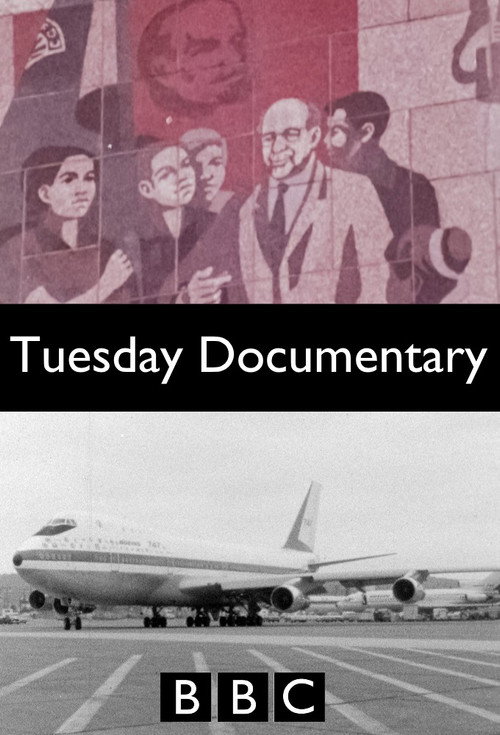
Latest episode
S10 E5 · Black
Tuesday's Documentary is a documentary TV series that premiered on September 10, 1968. It has 10 seasons and 258 episodes so far and has ended. The latest episode, Season 10 Episode 5 "Black", aired on July 26, 1983.
Long-running documentary series covering a wide range of current affairs topics.
Last updated
258 episodes · 10 seasons
1968 · 13 episodes · Last episode: 57 years ago
The New Radicals Is revolution possible in Britain today?
Britain is still paying to maintain an Army in Germany - the British Army of the Rhine. This film is about life in that Army as seen through the eyes of one of its regiments, the 17th/21st Lancers. The 17th/21st Lancers are a regiment with a proud history. They charged with the Light Brigade, fought at Khartoum, served with distinction in France in the First World War and in the Western Desert and Italy in the Second. Now for the best part of seventeen years they have been a unit of the British Army of the Rhine. The regimental motto of the 17th/21st Lancers is 'Death or Glory'. In Germany they have seen little of either; and yet that there should be neither death nor glory is the whole point of their being there at all.
Their parents - Sikh, Moslem, Hindu-came from Pakistan, India, and the Indian communities of Africa to find a better life in Britain. They were the immigrants. Today their children speak English like natives-natives of Bradford, Southall, Birmingham. They are the first generation. They have grown up in two worlds. At home their parents live the Indian villager's traditional family life, authoritarian, strict, where the head of the family lays down the law, and everyone's future, including marriage, is ' arranged.' But outside, instead of the fields of India, lies the world of Britain's industrial cities; the world of Powellism and mini-skirts; the world of youthful independence and contempt for authority, of competition and prejudice. How does the Asian teenager in Britain reconcile the conflicting demands of these two worlds?
Your future is being decided now - for better or for worse? The 'Gospel of Work' is hard to shake off. When we get the chance of more free time, many of us shy away. Perhaps we enjoy our time off only because we know it must come to an end. But what will happen when it doesn't? Professor Dennis Gabor says the age of leisure, if it comes too early, could be as big a potential threat to society as the atom-bomb. Some Britons already have a four-day week. In Lancashire there's even now a three-day week. Industrial change will bring more spare time for everybody. Are we ready or will leisure mean more of us seeking refuge in alcohol, drugs, and fantasy? From new-style educational holiday camps to giant 'fun bubbles' to roll around in, the battle's on to liven us up on the threshold of the age of leisure.
For many of us on this side, the English Channel is not just a strip of water but a state of mind. ' It's a different sort of people here.' Opinion polls investigate how many of us want to ' go into Europe'; experts discuss the economic and political pros and cons; but what sort of attitudes would we take over with us? What we feel has shown in the past to have mattered just as much. Do we want to be part of Europe or will the Channel go on symbolising something which makes us ' different '?
A View of an Age by EDWARD CRANKSHAW In the course of 600 years one family, the Habsburgs, came to dominate the huge area of central and south-eastern Europe which included what we know today as Austria, Czechoslovakia, Hungary and large parts of Yugoslavia, Poland, Rumania, and northern Italy. Fifty years ago their Empire fell. Tonight's film tells the story of the man who strove so desperately to hold his inheritance together, the Emperor Franz Joseph.
Towards Tomorrow – Super-city is a 1968 BBC documentary from the Tuesday's Documentary series exploring futuristic 21st-century urban designs, featuring visionary concepts from architects and thinkers like Buckminster Fuller and Reyner Banham.
"The Aristocrats: People Without Neighbours" is a 1968 BBC television documentary created by producer and director Peter Batty. It explores the lives, massive landholdings, and financial pressures of six wealthy British aristocrats and landed gentry.
A film by PETER BATTY How rich is rich in Texas? Why, Texan-rich of course-and to be thought rich in Texas you need to be worth at least £20-million. Tonight's film is about four such Texan-rich Texans. An oil man whose wife has a passion for million-pound paintings. The boss of the world-famous Dallas department store where the Big Rich of Texas buy their goodies-goodies such as submarines and solid-gold tooth-picks. The richest Texan (he earns £75,000 a day) and the most controversial, for he spends this wealth on what many consider to be reactionary causes. The greatest living showman, builder too of the world's biggest sports stadium. A taste of Texas, home of the brashest, most flamboyant, most controversial multi - millionaires anywhere
"The Trouble with Being One Self" is an individual 1968 television documentary episode, part of the Tuesday Documentary series hosted by Dr. Stephen Black. It explores human immunology, organ transplants, and the biological defense systems that distinguish self from non-self.
Your future is being created now -for better or for worse? A FUNNY THING HAPPENED ON THE WAY TO THE GARBAGE DUMP Waste of every kind is on the increase, polluting the earth. The volume of refuse alone will double in twenty years. Unless we do something, cities will be engulfed in their own wastes. Should we store our wastes in huge artificial mountains for possible future re-use? Or re-design our own homes to produce less waste? Waste can be eliminated. But there are psychological problems. Film from Britain, France, America, and Sweden shows what is being done in the eleventh-hour bid to avoid the waste-high society. Series editor, MAX MORGAN-WITTS Written and produced by MICHAEL WEIGALL
A film about an industry that didn't want to change Many trawlers are old-fashioned Trawlermen work in conditions illegal on land The industry spends over £100,000,000 a year on foreign fish It pulps British fish into cattle food Over 400 protection societies defend the status quo ... and 1968 has been a doleful year. Trawlers lost at sea, trawlers laid up, trawlermen laid off. Fishing is-in every sense-in deep water Produced and narrated by Roger Mills
A film by HUGH BURNETT What is the truth about South Africa? Apartheid, South Africa's policy of separate development, is based on the view of the country's white minority that they are the most developed group, best equipped, best able to judge the destiny of their society. The South African Government is the usual spokesman for the majority of people in South Africa the non-whites. Following the documentary White Africa, which gave the opinions of South Africa's whites, Hugh Burnett has been back to the Republic to investigate the feelings and opinions of its non-white peoples. Tonight's documentary looks at the country solely through their eyes, to discover how they feel about a policy which will determine the survival of the white man in Southern Africa.
1969 · 45 episodes · Last episode: 56 years ago
At the end of another decade this documentary looks back not on the 60s or the 50s, but on a year that really meant the end of one era, the start of another- 1913. The last year when people could ignore the undercurrent of change that was sweeping across Europe. The year of shocks; of pomp and rebellion. The year of opposites; of chaperones and jazz. The year of amazement; surrealism, speed, zeppelins. London, half a century ago, was the ' premier capital of Europe,' yet the gulf between the top and bottom people was immense. In Berlin Kaiser Wilhelm thought of peace and bigger, more glorious Germany. In Russia the Tsar and his family, four years away from revolution and murder, were celebrating the 300th anniversary of the Romanov dynasty. In Vienna 83-year-old Franz Josef sat on a tottering throne. Only one of the families who ruled the four great empires from London, Berlin, St Petersburg and Vienna was to survive.
A film about the greatest sale on earth Produced and narrated by Roger Mills On sale was the oilman's moon-half a million acres of Arctic wilderness, and below it a great ocean of oil. For a day a small municipal hall in Anchorage, Alaska, was the centre of the world, as oil magnates - British and foreign - threw millions on to the table in a ferocious orgy of bidding. The events that surrounded that auction were on the same gargantuan scale. Man conquered the ice-locked North - West Passage, and began to push an 800-mile pipeline across mountains. Two Foreign Secretaries exchanged ' words ' - and notices began to appear which read ' Eskimo Power.' A century ago the United States paid the Tsar of Russia 2d an acre for Alaska. On the day of the great auction, 2d would scarcely have bought a square inch.
For years now, people have been reporting the death-throes of the English village - dying crafts, shrinking population, loss of amenities. But the personalities that make the English village such a unique community are alive and well ... and living (among other places) in Peasenhall. Peasenhall is a village of 550 people - a straggle of houses lost in the fields of East Suffolk. It's not a particularly pretty village, and the last time most people heard of it was in 1902 when a young housemaid was murdered there - still a daily topic of conversation in the village. It sounds sleepy enough. But in fact, Peasenhall is alive with vivid personalities who talk about their involvement with the village and its changing way of life with nostalgia, humour, and occasional bitterness. There are the miller, the blacksmith, the farming vicar, the poacher, the gamekeeper, and the undertaker. Robert Dougall, the narrator, lives in Suffolk, only a few miles from Peasenhall. Produced by DAVID GERRARD
A personal impression of industrial Wolverhampton by Philip Donnellan On the top of a hill in the middle of England a town of 265,000 people. The western houses drain into the Severn and the Atlantic, the eastern into the North Sea via the Trent. A split-personality town: half agriculture, half heavy industry. With a reputation for toughness, craftsmanship and colour prejudice. Right or wrong? There are 22,000 coloured immigrants in Wolverhampton now but strangers - from Ireland, Wales. France, Poland, Australia-have been flowing in for 150 years. Where are they now?
For one week every year the Canadian Mid-West town of Calgary erupts with the noise and excitement of the world's biggest rodeo. A million visitors pack the town to see leading cowboys of the professional rodeo circuit compete for prize money of well over$100,000. This film records some of that struggle in the summer of 1969. Commentary by Gerald Priestland Produced by CHARLES DENTON
A film about what is happening in the rural western half of the Republic of Ireland today, nearly half a century after the landlords left. With independence came the kind of peasant society the Irish had desired through the centuries of occupation. Men worked their own small plots of land, women cared for large families, the priest sorted out the complications of this world and the next. But the world was moving on, in the United States, in Britain and in recent years up the road in Dublin. People everywhere were earning more. The emigrants came back on holiday first in better suits, then in bigger cars. A sense of having missed out turned to discontent and discontent to 'despair. Tonight's documentary looks at the struggle to save western Ireland, a struggle which is the more exciting because it is so directly against the modern current. Commentary spoken by DEREK HART
There are 50 active volcanoes in Japan, and this bubbling, sprawling molten place sometimes feels like the 51st.' Twice in 30 years Tokyo has been destroyed. Today it is the world's biggest city - with problems to match. , By day, a planner's nightmare of smog, sewage and student violence. By night, a vast pleasure palace of lurid fantasy. And everywhere a feeling that men and women are no longer being drawn willingly towards the city. They are being sucked in as if the city itself had an appetite, and will gorge itself on people until it finally erupts once more. Narrator Ian Holm Written and directed by CHRISTOPHER RALLING
A film about railways and railwaymen. 'I was one of those youngsters who felt I'd like to play with toy trains and I've continued playing with them ever since. You know the old saying that you get sawdust in your veins when you are working on a circus - it's the same for the railway.' - A passenger-train guard. There are 280,000 railwaymen in Great Britain. This film looks at a handful of these men - men who work or used to work on two lines in the north of England: the former Great Central route from Sheffield to Manchester, via the notorious Woodhead tunnel (a recent BBC2 play Men of Iron retold the story of its building), and the former Midland route from Birmingham to Sheffield via Derby and Ambergate. They are men who have railways in the blood and bone and who look at their changing industry with affection, humour and, occasionally, dismay. Narrated by Roger Snowdon, commentary written by Terry Coleman & produced by Malcolm Brown.
A film by Lord Snowdon and Derek Hart Why do you keep a pet? What do you demand from your dog, your cat, your budgie in return for feeding it and teaching it to be clean about the house? Is it companionship you want? Do you keep a dog to protect you? Is the bird you keep behind bars simply a living ornament or an essential member of the household just like one of the family? The relationships between human beings and animals, particularly domestic animals, are sometimes simple. But often they are as complicated as the relationships that exist between people themselves. Executive producer MICHAEL LATHAM
Gunpowder, Treason, and Plot asks why should we remember? And, more important still, how many needless accidents does it cause each year? No one knows the real facts about what happened on that first gunpowder night under the House of Commons 350 years ago. But the facts are clear as far as the casualty departments of our hospitals are concerned. Fireworks are an annual hazard which cripple and scar thousands of children. Millions get pleasure and amusement from firework displays, but we are still one of the few countries left that sell fireworks to children. The law says that they must be over 13 before they can buy - but those badly burned are frequently much younger. Man Alive last year sent out HAROLD WILLIAMSON as Well as JEANNE LA CHARD and JOHN PERCIVAL during the Guy Fawkes celebrations to bring back a disturbing film report about the cost of 5 November. This year the programme is shown again - in time, perhaps, to be a warning.
A film about the dilemma of South Africans neither white nor black. South Africa's face to the world is white, backed by a sea of blacks. But the real situation is much more complicated, the colour lines, drawn by law through the country's 19-million inhabitants, isolate two million people under the classification' Coloured They are above the blacks and below the whites in the social hierarchy of apartheid. Many of them are the legacy of three centuries of what would now be illicit sexual pleasure - across the colour line. Hugh Burnett has been back to South Africa to make this third film on the Republic's race policies. Tonight's documentary looks at the blurred edge of the colour line where things are not as black and white as they might seem to the outside world.
Tonight's film tells the story of Gandhi's life, in this centenary year of his birth, his long struggle against British rule in India and the tragedies that surrounded the final granting of Independence in 1947. Among those taking part are LORD mountbatten, the last Viceroy of India, PADDY QUINN , Gandhi's gaoler on three occasions, and many of his colleagues, including the English Quaker, DONALD GROOM Gandhi's other struggle was against the inequalities and injustices of Indian society itself. How far do his ideals influence India today? Is non-violent social change still possible in India? A Western economist, DR E. F. Schumacher , examines the practicality of Gandhi's belief in a decentralised village society. What was his attitude to science and technology?
A film about three ships - Naval frigate, container ship, sailing barge - and the men who live and work in them by PHILIP DONNELLAN Working on the sea is a dangerous trade, a job with special risks, needs, obligations. At sea, the Captain is king, priest and lawyer in one. By tradition the crew are ' scum, a parcel of villains,' living hard at one end of the ship while the officers luxuriate at the other. What is the reality? What is life aboard ship like today? How do Captains and crews see their relationship? Above all, how much do we know or care about the sea, and the men who sail on it?
Can a mother's mental state influence her unborn baby? Should a son be circumcised? Is it possible to assess the intelligence of a 6-month-old baby? In this programme which deals with the important first five years of a normal child's life Dr. Stephen Black questions A HARLEY STREET PAEDIATRICIAN whose work includes much more than the mere treatment of childhood illnesses DRS JOHN AND ELIZABETH NEWSON , Social Psychologists from Nottingham University. They are making a continuing study of how 700 Nottingham families really bring up their children DR COLIN HINDLEY , a Medical Psychologist at the London University Centre for the Study of Human Development. He studies growth of intelligence in children from the age of three months A SCOTTISH CHILD PSYCHIATRIST who is Consultant at the Royal Hospital for Sick Children in Glasgow. He believes parents would be shocked if they knew what goes on in their child's mind
' FOR OUR FREEDOM AND YOURS ' A film about the romantic and tragic history of the country whose invasion thirty years ago this week marked the beginning of the Second World War. Think, think of us, Poland of mine, when we shall be already gone! Have we not made of your name a prayer that weeps and a thunder that lightens?
Second World War could well have started a year earlier than it did-not on September 3, 1939, but in the last week of September 1938. Then the British Prime Minister of the day, Neville Chamberlain, flew to Germany for a final attempt to reach a settlement with Hitler in the dispute over Nazi Germany's demands on Czechoslovakia. They met in a city which has become a symbol of Britain's pre-war policy of appeasing the dictators-Munich. tells the dramatic story of this crisis of peace or war. Among those taking pa.rt are Sir Alec Douglas-Home , M.P. (then Chamberlain's Parliamentary Private Secretary) and Dr. Paul Schmidt (Hitler's interpreter).
From Defeat to Resistance 1940-44 In 1940 France, humiliatingly defeated, signed a separate peace treaty with the Germans. The French prime minister Marshal Petain , the hero of Verdun, went to shake hands with the conqueror Adolf Hitler. And so the terrible abasement of collaboration began. Five years later, in 1945, France took her place as an equal partner among the victorious Allied powers at the end of World War II. The honour of France, so tarnished in 1940, had been saved by the Resistance, the men and women who fought on after defeat. In the Name of France is the story of these heroic men and women and of the events which propelled them to resistance. It is about those who saved France's name, and who often died a secret and unlovely death, anonymous and alone.
In just four months, the world's first jumbo jet goes into regular service over the Atlantic. Already 200 have been ordered by the world's airlines. Each is designed to carry nearly 500 passengers. The jumbo has been called a 'pilot's dream'. Will it also be an airport's nightmare? By next year, half a dozen of the giants may be queuing at peak hours to disgorge their passengers at London Airport. Round the world, airports face their biggest jam in history. Jumbo jets will revolutionise airport design. But they may also speed up other travel developments, with far-reaching effects on the design and peace of our cities. Bigger planes still are on the way. How many is too many in an aeroplane? Produced by Michael Weigall.
A film by MICHAEL LATHAM and GORDON THOMAS It is two years since this award-winning documentary was first shown. Now the end of the story can be told. On the operating table lies a young mother. Round her the surgeon and his team gather to start one of the most difficult operations. Nobody knows what the outcome will be. This remarkable film tells how Heather Kent and her husband coped with this sudden crisis in their lives. As Heather calmly departed for hospital they both knew that it might be the end of their life together.
The Flight Deck Story is a 1969 short documentary film that explores the rich history and operations of aircraft carriers
The extraordinary story behind the American bid to land man on the moon. Dr. Wernher Von Braun designed the infamous German V-2: today, a dynamic fifty-seven-year-old American citizen, he heads the team that built the giant moon rocket, the Saturn V. For him ' it all started with the moon.' This film tells the epic and highly spectacular story of how his pre-war dreams have been turned into reality; it also reveals projects for future interplanetary travel using nuclear and electric propulsion.
In Case of Fire is a 1969 BBC television documentary focusing on British firefighters, featuring training drills at facilities like the Southwark Training Centre
Is There a Ghost in the Machine? A doctor, in a now classic case, cures an apparently incurable disease simply by talking to his patient-working on his mind under hypnosis. A State Registered Nurse smiles and feels absolutely no pain as two pins ease through her forearm. Even the brain reacts to the unreal world of hypnotically induced hallucinations-as if they were real. Some scientists suspect one mind can communicate with another-by telepathy. Police testify tint a man locates missing persons for them by extra-sensory perception. But how valid is this? These examples, if true, pose problems that cannot yet be answered in physical terms. They appear to be related to what we call 'mind.' But we cannot define mind or prove its existence. This programme looks at the intriguing evidence and asks: is some of this mind over matter? And if so-what is mind?
A profile of MALCOLM MacDONALD He has described himself, jokingly, as 'an Afro-Asian with a lot of Scottish blood.' A friend of Nehru, Chou En- Lai, and Kenyatta, and adopted son of a Dyak chief; a connoisseur, photographer, author, and humorist. He's the son of Britain's first Labour Prime Minister, and was in the Cabinet himself at the age of thirty-three. After more than twenty-five years' service in different parts of the Commonwealth, he's now due to retire. Tonight's film profile of Britain's most versatile Commonwealth diplomat marks this year's Commonwealth Day. With contributions from Mrs. Pandit Sir Alec Douglas-Home, M.P. Produced by JEREMY Murray-Brown
There are seventy-two manned lighthouses around the Scottish coast and it takes a vast and complex organisation to administer them. The isolated rock stations are serviced by four ships. These ships are crewed by seamen who know every rock in the gullies which are the hazardous landing places. This documentary is a story of storm and danger-and a story of lonely living.
Robert Conquest tells the story of fifty violent years of Communism in Europe and its failure to achieve its world-wide aims Let the ruling classes tremble at a Communistic revolution. The proletarians have nothing to lose but their chains. They have a world to win. THE COMMUNIST MANIFESTO In the summer of 1919 Lenin and his fellow revolutionaries were confident that Communism would quickly sweep across Europe and then conquer the world. In the summer of 1969 the Communist parties of Europe have been called to Moscow to discuss such fundamental problems as Soviet repression of Czechoslovakia and the challenge of Maoist China. The predicted world revolution has not occurred. The Communist movement itself has split into factions. Where is it likely to go from here?
The future is being created now -for better or for worse LEARNING TO LIVE The people of the twenty-first century are being fashioned now in our primary schools. Our boys and girls will have to live with the tempestuous uncertainties foretold for their world. They will have to learn how to do so-and that begins at school. What is going on in the classroom? Is progressive teaching a menace-or can it produce men and women better able to control and live within their society? This programme goes to the heart of this argument, which is about how children learn, and how parents and teachers are helping them in our primary schools. It is solely concerned with State primary schools because that is where the real educational revolution is happening.
The Battle for Cassino is a 1969 BBC historical documentary directed by Peter Batty that details the intense World War II military campaign to break through the German Gustav Line in Italy.
Tonight the winners of the DAILY MAIL TRANSATLANTIC AIR RACE will collect over £ 60,000 in prize-money. Are there any other rewards? Will the race make people more air-minded? Will it sell more British aircraft in the United States? Will it prove to be the aviation event of the year? The race was for the fastest or most enterprising crossing of the Atlantic by air between the top of the G.P.O. Tower in London and the eighty-sixth floor of the Empire State Building in New York City. More than 300 people tried to win it in every kind of plane from supersonic jets and V.C.lOs to a Tiger Moth. It lasted a week and ended in New York in the early hours of yesterday morning. This is the story of the race as it happened. An eye-witness account by BBC correspondents and cameramen on both sides of the Atlantic and in flight above it.
The future is being created now -for better or for worse A GOOD AND USEFUL LIFE? A guy who can't fit into society and steals - you lock up in prison. Kind of forget him until he steals again. Then you lock him up again. A PRISONER At a time when our prisons are overcrowded and longer and longer sentences are being imposed Tony Parker examines the effect of imprisonment on men now, and what this means for the future. The purpose of the training and treatment of convicted prisoners shall be to encourage and assist them to lead a good and useful life. THE PRISON RULES: RULE 1 What sort of life do prisoners lead inside? How does imprisonment change them - does it in fact help them to lead a good and useful life? First-hand evidence from former prisoners, prison officers, a prison Governor, and others concerned with the treatment of offenders.
How good a parent are you? Do you know the laws-old and new -governing you and your child? How far are you answerable, and how far is the State, for his health, safety, education, behaviour, hours of work? Cliff Michelmore and Magnus Magnusson give you the chance to check your knowledge of the rights and duties of parents; and of facts about children, from toddlers to teenagers.
For two-and-a-half-thousand years diamonds have been man's most coveted possession. Once they blazed in triumph from the crowns of Kings and Emperors. Today they are any girl's ' best friend' and diamond mining just another large-scale industrial process; yet the magic of diamonds remains. What lies behind this magic is the theme of The Diamond World.
This film tells the story of the struggle to conquer the Atlantic Ocean, always the most challenging, and today the greatest, of all the world's air routes.
A film about the travelling people of Britain gypsies-tinkers-nomads-potters The wanderers of our roads and lanes talk about their lives, their homes, their work, and their problem-us. They first came here in 1400. Many of their ways of life survive. How have they kept their independence? Can they go on doing so? Where do they go from here?
"Towards Tomorrow: 2001: An Earth Prophecy" is a 1969 television documentary episode from the series Tuesday's Documentary that explores futuristic ideas, ecological predictions, and human destiny as the year 2001 approached.
Big game hunting in Kenya is sport in luxurious style. A hunting safari is an impressive venture -highly organised, with big trucks to carry the stores and every possible comfort. The sport of hunting is often misunderstood by people who only read about it. The actual tracking, the long hours spent in a hide, getting up before dawn to look for animal tracks; all these are the necessary prelude to the hunt for a particular animal. There are no close seasons for game hunting in Kenya. The country is divided into hunting blocks and hunting areas, and the number of animals being shot for trophies is controlled by bookings.
The story of THE ARGYLL AND SUTHERLAND HIGHLANDERS They caught the public imagination under ' Mad Mitch' when they recaptured the Crater district of Aden. But they have been famous for much longer than that. It was they who withstood the charge of the Russian cavalry at Balaclava-and became a legend. At Lucknow they won six V.C.s before breakfast. The Argylls have always been in the news, stirring up hot passions. They are the modern descendants of the Campbells— once the most hated clan in the Highlands. As Colin Mitchell says in tonight's film, it was a detachment of the Argyll Militia that carried out the treacherous massacre at Glencoe. Since the war they have seen more active service than any other regiment in the British Army. Now they are faced with the axe; and more than a million people have signed a petition to ' Save the Argylls.' What is this controversial regiment really like? And does the country need them any more?
Christopher Brasher investigates some of the terrifying problems-moral, legal, economic, which have been brought about by new advances in medicine. We hear much about the ethical problem of heart transplants, about fertilising a human egg in a test-tube, but these are the problems of experimental medicine. There is only the remotest chance that they will affect us or the doctors who attend us. But there are many other problems, also brought about by new medical techniques, which do affect us today, and which involve our doctors in the most vital of all decisions-the quality of the life which they can give us.
In 1937 Sir Alexander Korda embarked on a film epic that was to overshadow all others and enshrine him as saviour of the British film industry. Robert Graves's classics, "I, Claudius" and "Claudius the God" told the story of an apparently imbecilic cripple who overthrew Caligula to become Emperor of Rome. Korda had a star-laden cast lined up: Charles Laughton, Emlyn Williams, Merle Oberon, and Flora Robson, and the legendary Josef von Sternberg was engaged as director. After a month's shooting—a month fraught with difficulties, according to von Sternberg—Merle Oberon was in a car crash and the entire project was shelved. It was not until 28 years later that BBC-TV producer Bill Duncalf came across some tins of film in the Denham studio vaults and realised that they comprised a unique document. The rescued rushes were edited, and together with filmed interviews with people who remembered working on the production, were made into an intriguing documentary.
A film about a sport that shows up a divided country A portrait of Rugby League, how it fell foul of the Rugby Union and broke away ... How northern working men got their hands on a Public School game and turned it inside out ... How one sport did not bring people closer together. Rugby Union and Rugby League have a common parent. But no brotherly love is lost between them. Rugby Union is amateur, middle class, and gentlemanly; Rugby League is professional, working class, not gentle, but very manly.
A further chapter in Malcolm Muggeridge 's television autobiography Twenty years ago during the administration of Harry Truman , Malcolm Muggeridge worked in the United States as the Washington correspondent of the London Daily Telegraph. After two years at the centre of the Western political world he came to the conclusion that he would rather be on the periphery, and left with relief. Last year Muggeridge returned to Washington to retread his old paths, to visit again the capital ' whose only industry is government and whose only output is words,' and to see whether his reactions remained the same combination of bemusement and foreboding. This film records these reactions.
The story of a lost dream A further chapter in Malcolm Muggeridge 's television autobiography In 1932 Malcolm Muggeridge went to Moscow as correspondent for the Manchester Guardian. As a young and ardent Socialist he regarded it as an assignment to Utopia. Instead of the perfect society he found chicanery, brutality, and dictatorship; art, architecture, literature, and the cinema-all toeing the Party line; foreign journalists and gullible tourists from the Western intelligentsia all joining in fatuous praise of a system which, by means of secret police, show trials, and enforced famine, was taking millions of Soviet lives. For Malcolm Muggeridge it was indeed the end of a dream and the disillusionment marked a turning point in his life.
Your future is being created now -for better or for worse? THERE IT IS ... WHERE IT IS 100,000-1: according to some metal men those are the odds against finding a new metal mine. But unless we begin finding unprecedented amounts of minerals very soon, by the turn of the century industry could grind to a halt for lack of raw materials. The odds have got to be shortened -- not only by prospecting every square yard of the earth but by exploring the deepest parts of the oceans, possibly even the moon. The only hope is that technology, which created the problem of exploding metal consumption, will also create the means to solve it -- by providing new tools to tip the balance in the prospector's favour.
An impression of the years which began with the fall of the Kaiser and ended with Hitler's appointment as Chancellor. They are remembered now as the Golden Twenties, a time of change and experiment, of horror films and jazz, of provocative art and spectacular night life, of Hindenburg and the men who came to Weimar fifty years ago to inaugurate Germany's first experiment in democracy. But they were also the years which saw the birth of a new German army and the reorganisation of industry, the growth of new political parties and the economic disaster of the World Slump.
If Concorde succeeds, her passengers will be hurled across the oceans at twice the height and twice the speed of today's jet travellers. In a few weeks her make-or-break test flights will begin. They will take up to three years to complete. But for the last ten years some of the best brain-power-and a lot of money-has been ploughed by Britain and France into the making of the Concorde. Tonight the planemakers tell their story of the race to be firs. with a supersonic transport-the story of the struggles, the promise, and the possible rewards.
1970 · 37 episodes · Last episode: 55 years ago
HARRY HOUDINI , the greatest escapologist of all time: the man nothing could hold. He escaped from handcuffs, straitjackets, sealed packing - cases, riveted steel boilers, thief-proof safes, milk churns filled with water, maximum security jails and even the sewn-up belly of a dead whale; but always the vacated prison was found to be still locked and intact! His exploits made this once penniless son of a Hungarian Rabbi a millionaire, and his name has entered the language and the dictionaries of the world. He became a legend, occult powers were attributed to him and Hollywood's film version of his life simply added to the confusion between truth and myth. Tonight, with four Americans who have spent their lives studying the escapologist, we present the real-life, extraordinary Harry Houdini , 1874-1926.
A Cockney in Japan GEORGE WHYMAN, ex-East End, ex-British soldier, ex-apprentice piano maker, went to Japan as a judo pilgrim 15 years ago. Then he was a third Dan. He wrestled with the language, the Judo masters, and poverty - living on £11 a month. Now he is a fourth Dan, still a bachelor with three girl friends, a catamaran, and manager of a Tokyo advertising agency ' For the first five years to build up business contacts, I played mah jong nearly every night....' Tonight we follow the boy from Hackney and some of his Japanese clients in Tokyo -the world's most aggressively competitive business country where wealth comes second to health and happiness is another sale.
Rudolf Hess landed by parachute in wartime Scotland on Saturday night, 10 May 1941. He was then Deputy Fuehrer of Nazi Germany at the height of its power; today he is the last-Nazi leader left in prison at Spandau, West Berlin. The questions posed by his mysterious flight and his subsequent behaviour remain unanswered, locked in Hess's mind. His curious actions were attributed to mental unsoundness. But was he really unsound? Or were his symptoms and loss of memory merely a sustained and successful hoax-as he himself afterwards maintained?
Willy Brandt , Chancellor of West Germany talks to Lord Chalfont about his life and times. He was born Herbert Frahm in Liibeck in 1913. He worked in the anti-Nazi underground under the assumed name by which he has been known ever since. By the age of 19 he was a man on the run. He spent 12 years in exile in Scandinavia. He became world-famous as governing Mayor of West Berlin at the height of the Cold War. Now he is the first Socialist Chancellor of the West German Federal Republic and indisputably one of the greatest Europeans alive today.
A film by Anthony de Lotbiniere For the first time television viewers can see behind the scenes of one of the most extraordinary market places in the world - The Risk Market at Lloyd's. In one very large room in the heart of the City of London some 300 underwriters sell £3-milllion worth of insurance cover every working day. There's nothing they won'insure-from a wine taster's palate to a hijack policy -and there's no disaster in the world, be it the failure of the potato crop in Manchuria or an earthquake in Peru, that doesn't affect the remarkable men who operate this unique market.
Karl Wallenda is probably the world's most famous high-wire walker. It was his daring in developing the seven-man-high pyramid that put the name Wallenda on the pinnacle of circus fame. When his terrifying act collapsed from 40 feet killing two members and crippling a third young man for life it seemed that the Wallenda dreams were over, but his leadership broke through all family objections to restore the performance one year later. In July of this year Karl Wallenda , at the age of 65, once again challenged death - this time on his own. He attempted a walk over a 700-ft gorge, a thousand feet wide in North Georgia, with no possible means of saving himself should he slip. Tonight's film is the story of Karl Wallenda and a fantastic day of show business in the hot sun.
A new BBC film, including material which has never been televised before, about the ill-fated expedition to Everest in 1924. On 8 June of that year, two climbers, George Mallory and Andrew Irvine , disappeared during the final assault on the world's highest mountain. Their names have gone down in history. What happened to them? Did they reach the summit? How did they die?
Pollution is increasing all over the North American continent. Nature is being killed off ... rivers and lakes despoiled ... coastal water contaminated with oil and waste. Industry and jet-aircraft are fouling the air in ever increasing proportions. More cars, refrigerators, air-conditioners, television sets, transistor radios are being purchased. To meet the demand industry grows ever bigger, creating more jobs, but more pollution. Easy, fast travel is demanded. The result is more airports near populated areas, and more giant jets pouring their noise and filth into the air of America. What can be done to hold back the pollution and its effect on the quality of life? What are the choices Americans must make if they want to save their country? This award-winning programme from New York tries to answer those questions.
Ignorant of democracy but hungry for the West they cannot visit, the 17 million East Germans are a force that could decide the fate of Russia's European Empire. For most of the past decade they have been isolated by the Berlin Wall and a fortified border over 600 miles long. Cold War attitudes have been slowest to melt in East Germany but this summer for the first time the German Democratic Republic opened its borders for three weeks to let in a BBC film crew. Tonight we see the first full-length report by a British television team on the life of the other Germans 'Beyond the Wall'.
For many, the British policeman is still the ' friendly bobby.' His image is envied by his counterparts abroad. But the policeman has little to be jolly about today. Police are harder-pressed than at any time since their creation a century and a half ago. Of the 1.500,000 indictable offences committed in Britain last year, more than half were never cleared up. We demand more of our police but complain when they seem too efficient. The policeman's world grows harsher. Can he hope to outlive these changes?
The story of a handful of young men who wrote a chapter of cinema history. In just 10 years, from post-war austerity, they produced a series of film comedies which were so original and funny that the name of their quiet, residential London borough became world famous. In their own peculiar way they put Ealing on the map.
The test pilot is one of the 20th-century's hero-figures. The mere name conjures up images of nerveless courage, death-defying heroism, ' the dashing gallant lad,' as one of them put it. But is he really like that? Or is he a much more skilled and calculating man? In this programme - presented in the week of the Farnborough Air Show - you can fly with the pilots, live with them, see how they are trained, and find out whether the myth remotely matches reality. The BBC got willing help from the pilots. This was just as well since in some cockpits three is more than a crowd; remotely operated cameras mounted on various parts of the aircraft were also used to give some picture angles which have not been seen before. Among the pilots appearing are such veterans as JEFFREY QUILL, who test flew the Spitfire a few days after its first flight in 1936, and JOHN CUNNINGHAM, still flying from Hatfield, where he pioneered the Comet.
The Scottish Highlands are Britain's great land of contrasts: huge sporting estates and small unworkable crofts; islands littered with deserted ruined cottages and others thriving on a successful fishing fleet; a tourist trade that has grown as relentlessly as the population has fallen. CHRISTOPHER BRASHER goes to the Highlands to meet their ' overlord,' Professor Sir Robert Grieve , Chairman of The Highlands and Islands Development Board, who has tried to give better opportunities to people who want to make a living in their difficult homeland. Professor Grieve grew up in Glasgow and learned as a boy to enjoy the Highlands as a huge playground - just as outsiders do. Now he is due to go back to Glasgow-back to university at the end of his five-year term. He looks at the Highlands and their people and their problems with a unique knowledge and insight and with vast affection.
A film from the Philpott File series with TREVOR PHILPOTT The second of two Files on the Salvation Army. Their bonnets and their brass bands may have a Victorian quality - but most of the men and women who become serving officers sign the ' Articles of War' in the heat of their youth. They renounce for a lifetime all career ambition and all hope of wealth, and they will ' fight,' for a pittance, on whatever grimy battlefield their commanders choose to send them. They know well enough the traps the devil sets, and they know he sets the most tempting ones for the young. And much of their most difficult work is done amongst suburban wives, runaway provincial girls and the bewildered young men to whom a steady job seems like a form of death.
A film from the Philpott File series with TREVOR PHILPOTT The Salvation Army was born to save the souls of the inhabitants of the Victorian East End - and it was literally more like warfare than religion. General Booth's ' soldiers ' suffered humiliation, injury, even death. They saw the devil in poverty, drunkenness and disease - and they fought him with bands playing and banners flying. The bands are still playing, the banners still flying. But what devil are they fighting now, in the days of council housing and bingo, national health and package holidays? How much has the Salvation War changed - and how much is it still the same?
"Be Fruitful and Multiply" was a BBC Tuesday Documentary broadcast on Tuesday, July 28, 1970 at 9:10 PM. The program explored the global population explosion and growing environmental concerns surrounding rapid human growth and resource consumption.
A film by don HAWORTH The multiples and chain stores have been growing since the beginning of the century. In the past 15 years they have grown very fast. Today more than a third of all the money spent by shoppers in Britain goes to the multiples. This film tells the story of their growth and the way they play the retail game. It shows in detail what goes on behind the scenes of two well-known organisations which have become household words. Many of the multiples have been created by strong individualists, men of character who have built their empires their own way. Now the personalities of the retail game are being superseded by the calculators and the computers but their methods are usually still those of the street market - buy cheap, sell cheap, put everything you've got on display and the turnover will pay for the pilfering. It's a thought that has made quite a few millionaires.
In Britain one person in every hundred is a diabetic and knows it. A further one in a hundred is a diabetic and doesn'know it - yet. Diabetes appears to run in families yet two thirds of all diabetics report no previous family history. Although it's one of the oldest diseases known to man its cause remains a mystery. Until 1921 diabetes was a painful killer - often within a few weeks in children, usually within two years in adults. Then, nearly 50 years ago, two young Canadian scientists, Frederick Banting and Charles Best , made one of the most dramatic discoveries in the whole history of medicine. They isolated a substance called Insulin which today keeps some ten million diabetics alive. In the programme Dr Charles Best , now aged 70, describes that dramatic discovery.
A profile of the Adviser Extraordinary He's a huge man - 6ft 2ins and 20 stone - hugely talented and with an enormous sphere of influence. The newspapers once dubbed him ' Mr X,' puzzled by a man of such immense authority with so little notoriety. But in the past five years he has entered the Lords, taken up the chairmanships of the Arts Council, British Lion Films, and the Observer Trust, become a member of a government board to streamline industry, and been baptised under strike fire as the new chairman of the Newspaper Publishers Association. But long before accepting public office he was advising influential men and politicians of all parties, arbitrating in union disputes, paving the way for government negotiations -and acting privately for Harold Wilson , whose solicitor he is. Lord Goodman is shy of television and public appearances, so tonight's programme is a rare occasion in which he has agreed to discuss, with DESMOND WILCOX , his many roles and the ideas that motivate him.
The political climate of India today takes one 200 years back to the country that existed before the British came. It is as though, in the 23 years since Independence, the decades of British rule have been forgotten. India seems to have reverted to the old concept of small states, the people owing loyalty to their states rather than to the country. Can this huge country with its 550 million people remain the stronghold of democracy in Asia/ Tonight's film is an impression ot India as it now strikes Dom Moraes , the Indian-born poet and author. Dom Moraes left India 16 years ago and returned last year to see his own country through western eyes.
Even today Europe has some weird and wonderful wildlife, some remote and unknown wildernesses. In this varied continent, stretching from Iceland to Turkey, from Portugal to Russia, flamingoes, porcupines, pelicans, bison, and polar bears still survive. But for how long? Threah to their existence can affect us all, for we share the same environment. This programme, filmed in 14 countries, follows the migration of the shy and elegant crane across a fast-changing Europe.
Gale was beautiful, intelligent and - according to everyone who knew her-had much to offer; everything to live for. Recently, aged 19 and a drug addict, she was found dead in the basement of a derelict house in Chelsea.Harold Williamson and a Man Alive team first met her when making a programme about people who had been brought up in children's homes. What was apparent, even then, was her total loss of hope, her disbelief in any future. Now, the people who were in her life and who cared for her in and out of various institutions ask: need she have died?
The Great Train Revival For years the world's railways steadily declined. Now trains are facing their biggest revolution since the discovery of steam and the age of the Iron Horse. The prospect - a railway revival in the 70s that may change our habits, even affect the / place we live in. In Japan, there's a 130 mph train, going as fast as an airliner when it lands. It covers the equivalent distance between London and Edinburgh in just over three hours. British Rail plan to introduce a 150 mph train soon. Speed pays. In Japan, Passengers have trebled in five years. When the super-train comes to Britain, cities like London, Manchester and Bristol will come within commuting distance of each other.
In the vast expanse of sea between Scotland and Norway lie ' the islands of Shetland, a 70-mile-long tangle of rock and cliff which provides home and livelihood for 17,000 British citizens. Yet though politically British, these people are first and foremost Shetlanders, who have never forgotten that Shetland once belonged to the Norsemen of Scandinavia until it was pawned to the Kingdom of Scotland as part of a thoroughly dubious marriage settlement 501 years ago. This is the story of one midwinter month in the life of these unique islands- January 1970; a month which began with snow, continued with storm and ended in a strange almost miraculous calm; a month which culminated in the great Viking fire-festival of Up-Helly-Aa, when 700 torchmen marched through the streets of Lerwick and the dragon-galley Ormrinn Langi perished heroically in a gigantic funeral pyre.
Give us a child when he's 7 and he will be ours for the rest of his mortal life. True or false? But it is certain that the Jesuits are the most misunderstood, the most militant order of the Roman Catholic Church and the most formidable company of men in the last 400 Years of world history. Reporter Macdonald Hastings This special BBC film has been made with unprecedented cooperation from the Jesuits themselves and is presented at a time when the Vatican is battling with a major crisis of confidence. Macdonald Hastings , himself taught by the Jesuits and now an agnostic, looks behind the walls of a Society whose power was so great that they influenced every court in Europe - not only in a religious sense, but in the impact they made on politics, exploration, astronomy and sociology. The Jesuits played a huge part in shaping the modern world. Not certain any more that they can find the recruits to fight for the old faith, the question now is whether they have a future.
Two hundred years ago Captain Cook sailed his ship Endeavour into Botany Bay, and claimed the great continent of Australia for the white man. In this special bicentenary programme Michael Charlton returns to his native country to report on Australia now, after two centuries of white settlement. Today, over twelve million people are proud to call themselves Australians. What have they made of that huge opportunity that history and the superior seamanship of Captain Cook presented them with? They call her a young country, but they lie; She is the last of lands, the emptiest (A. D. HOPE)
A film by HUGH BURNETT who looks at the strange white tribe that rules South Africa. The British invented apartheid. The Afrikaner legalised it. The British were the first to set up concentration camps. Boers were the inmates. For a hundred years the British tried to ban the Afrikaans language. Contemptuous of the rough peasant pioneers, the British defeated them, then handed South Africa over to them. Next week South Africa goes to the polls. The Nationalist Government, regarded by many as the greatest racialist regime, is accused by its own right wing of leftism and compromise. Tonight's documentary, Hugh Burnett 's fourth film about South Africa, looks at the society of the Afrikaner - the country that provides the ostrich feathers for the Folies Bergeand an ideological scapegoat for the world.
The extraordinary life and times of Paul Schmidt , Hitler's interpreter for ten dramatic years. A remarkable linguist, Dr Paul Schmidt was present at all the Fuhrer's meetings with foreign statesmen, from Lloyd George to Molotov. In the 10 years before Hitler came to power, he was the senior interpreter at the German Foreign Office and was a member of the German delegation received into the League of Nations in 1926. He thus witnessed at close hand the rise and fall of a great nation, from the hopes of Geneva to the final degradation of the Nuremberg war crimes trials. In tonight's documentary Dr Paul Schmidt talks to Donald McLachlan , former editor of the Sunday Telegraph and a foreign correspondent in Germany in the 1930s.
On 17 March last year, the Longhope lifeboat was called out. Next day, the lifeboat was found capsized. Her eight crewmen were dead. All these men came from a tiny hamlet called Brims in the Orkney Islands, a place so small that it was left with only a couple of able-bodied men. Overnight, Brims became a village of women and children. The men went to sea in the lifeboat as volunteers - not for money, not for glory, but because they simply had to go: it was what Brims had always done for mariners in distress on one of the worst stretches of water in the world - the Pentland Firth, off the northernmost cliffs of Scotland. The women and the children still live within the remorseless sound of the Firth. Tonight's film is the story of a community living by this ferocious sea - and how they survive under the tragedy that has bled them of their menfolk.
Widoiv loses pension rights - a healthy man dies in his prison cell - war heroes fight for German compensation - Government buys farmer's land for £40 per acre, sells for over £400 - taxpayer defended against tax inspector. Magnus Magnusson presents these cases and puts questions about his job to Sir Edmund Compton Parliamentary Commissioner for Administration Almost three years ago-on 1 April 1967-the British Ombudsman began work. Has the Parliamentary Commissioner for Administration (as he is officially known) measured up to the expectations of ordinary people who want their complaints taken to him, of mps to whom he is responsible, or of the experts who campaigned for the appointment?
The File on A Pension of Sunshine A film from the series with Trevor Philpott The number of British people going abroad to retire is doubling every year. The Englishman's dream of a pleasant old age is no longer one of roses around a cottage door in Devon. It is more likely to be geraniums around a Mediterranean balcony. He wants a little place where the taxes are low, the living is easy, and the sun is always shining. A vast industry has grown up to make his dream come true, an industry which has grown fat selling plots of sunshine all the way from Greece to the Caribbean. And every year when retirement day arrives, thousands of ordinary British people sell up their homes in Britain and head for the sun to live in a foreign land amongst foreigners. They are looking for a warmer, brighter, happier life. Do they find it? What is the price they have to pay?
There are some 15 million Chinese in South-East Asia. They can play an extremely useful role as catalysts in the process of modernising our economies. Lee Kuan Yew, Prime Minister of Singapore A lot of people talk about the Chinese as the Jews of South-East Asia, it isn't fair to the Jews, it isn't fair to the Chinese. P.G. Lim, Barrister Racial integration is not a problem exclusive to the Western world. Tonight's documentary, specially filmed in Singapore, Malaysia, Thailand, and the Philippines, looks at this problem through Eastern eyes. The Chinese emigrant communities, formed by the breakup of the old Chinese empire, provide a nucleus of people with the drive, energy and business acumen to drag South-East Asia into the 20th century. But the price of their economic and political success has been the envy, fear and often hatred of the peoples among whom the emigrant Chinese now choose to live.
You have almost certainly been in hospital at least once, if only to be born. The chances are that one of the nurses at your bedside was a young trainee. For every three qualified hospital nurses there are two in training, and without them hospitals would close down. In tonight's documentary we look at some of these teenage girls and examine some of their future problems and patients. For years it has been thought of as a vocation. But it is just an ordinary job. It is a very difficult job, it's a job that very few people understand unless you are actually there in the middle of it - doing it ... Tonight, at a time when nurses are fighting their way into the headlines, they get a chance to explain what this ' ordinary job involves.
Spiritual headquarters for 700-million Roman Catholics. Home of the Pope and his civil service. Storehouse of some of the greatest treasures in the world. The Vatican has never been the subject of so much interest or controversy as it is today, yet it remains a mysterious place. This film looks at the Vatican from the inside. For the first time, film cameras have been allowed to penetrate behind the splendid facade to show what the Vatican is really like-from the magnificent throne rooms in the Papal Palace to the tiny overcrowded offices. It looks at the place, and the men who work in it-from the humblest young priest to the Pope himself. Has this unique institution a role to play in the twentieth century?
What's a lifetime worth if marriage is the only experience you've had within it? There is that biological difference but whether you make that the lynch pin of your argument - that because they can be pregnant and breast feed, women must therefore be only mothers and wives - depends on what you want in your society.
The story of the submarine, with contributions from some of the world's submariners. The experiments of early inventors and the hardship of life in their boats - when the white mice died of petrol fumes and foul air it was time to come up; the revolutionary effect of the submarine on the war at sea' underhand, unfair, and damned un-English the experience of long, hazardous wartime patrols by men engaged in the most dangerous form of sea service. The faith and devotion both of the inventors of submarines and of the submariner has turned a frail midget into the capital ship of the present age - ingenious, expensive, unimaginably destructive. Written by CORRELLI BARNETT Narrator JOHN STOCKBRIDGE Produced by HARRY HASTINGS
In this Tuesday Documentary the Duke and Duchess speak of their life together - glimpse into the private world of the man who was King Edward VIII for a few short months. The Duke on the Establishment, his father, golf, blood sports, and his great-niece. The Duchess on children and their parents, careers for women, loneliness, and the Duke's bad habits.
1971 · 31 episodes · Last episode: 54 years ago
The tourists and pilgrims scatter across the countryside around Jerusalem in search of the shrines of three of the world's great religions-Judaism, Christianity and Islam. Tonight's film takes us with them - into the Tomb of Christ, to the site of Calvary, and the Ascension, to the Dome of the Rock where Mohammed left his footprint in the stone, and the Tomb of Abraham where Jews and Arabs worship side by side. But be prepared for some surprises. For instance there's a talking camel on the Mount of Olives. And a lady who saw the Virgin Mary. And two completely different places where Jesus went up to heaven. And a Franciscan monk whose ambition is to tear down his church. And there are problems with mice in the Manger at Bethlehem.
By the end of the century, over half our electricity will probably be generated by nuclear reactors. As our dependence on atomic energy grows, scientists are becoming increasingly disturbed by the evidence that this technology, created to aid man, may become one of the greatest dangers to his survival. There are two major fears: first, that the constant release of low-level radiation may eventually cause a massive increase in leukaemia and cancer of all kinds; secondly, that a nuclear reactor could ' melt down ' - releasing large amounts of radioactive fall-out, causing certain death to anyone in its path. Without nuclear energy, we may lack the power on which we are increasingly dependent. With it, we may be putting the world at risk.
Should a scientist who believes that he has evidence in his hands of dangerous pollution speak out before the proof is conclusive and risk alarming the public? Or should he remain silent? Three metals - mercury, lead and cadmium-that have no place in the human body are threatening the existence of human beings in several parts of the world. Fishermen in Japan and children in Missouri have suffered physical and mental illnesses attributed to metallic poisoning. On the other side of the coin the resulting scare has put hundreds of fishermen out of work in Canada and America. There is now evidence that we on this island might be running risks of similar poisoning. What would happen if we avoided the evidence and how big would be the price to pay if we heeded it too soon?
Is the German arrogant, a beer swiller, aggressive, fat, jack-booted and blond, pompous or just not to be trusted? Ask a British citizen and impressions like these may be high on the list. Every summer, in an effort to dispel these cliches, the West German government part sponsors visits by young people from Britain. One such group is from Barnstaple in Devon: a generation who know little about the last war and may soon find themselves partners with a country their parents fought. Tonight's documentary watches as one group of young people come to grips with the German way of life and decide whether they want to be part of the new Europe or not.
At 15, a man already knows what he wants to die for, and he's not afraid of giving his life-if he has found an ideal, which makes this sacrifice justified.' Che Guevara died for his beliefs. To the young, therefore, he's a hero. To the old, a threatening symbol of violent, long-haired disturbance. But do either young or old know what his beliefs were, or why he died? Che Guevara's life was lived and his ideals forged in South America - with problems and values a world away from ours. And yet his life and death are not irrelevant to us. This film searches his context, his actions and his ideals for clues to the man behind the myth.
Children now spend more than £125 million a year in pocket money and adults spend many times as much again on them. The enormous growth of the children's leisure market has had unforeseen consequences on three main industries - publishing, toys and television. The most dramatic has been in the toy industry where the Father Christmas image has been decisively put out into the snow. Books boom. Television finds the strings of its conscience tweaked by puppets - the ones that go into those series that children can watch on the screen and at the same time into the many lines of character merchandise, from soap to jigsaws, that they can buy or cry for in the shops.
Fifty years ago the British presence was withdrawn from all but six counties of Ireland after seven centuries of disputed rule. A treaty signed by Britain with Irish rebels in December 1921 created not the republic the Irish had hoped for, but a British dominion comparable in status to Canada to be called the Irish Free State. Six of the 32 counties were formed into the province of Northern Ireland and remained in the United Kingdom. Tonight's documentary looks at what happened after the British left and how the Irish Free State eventually became the modern Republic of Ireland.
Mrs Indira Gandhi Prime Minister of India talks to Lord Chalfont about her life and times. She was born Indira Priyadarshini Nehru in Allahabad in 1917. Her father, Jawaharlal Nehru , was one of the supreme architects of Indian independence and became the first Indian Prime Minister. She was involved from early childhood in the struggle for freedom and like the rest of her family was imprisoned by the British. Now she is Prime Minister of the largest democracy in the world, the elected leader of 550,000,000 people. This week Mrs Gandhi comes to London as the guest of the British Government.
Every boy and girl will come into contact with drugs, in some form or other, before they leave school. This film meticulously reconstructs five crucial days in the life of a sixth-form college in Berkshire which was brought face to face with drug-taking in its midst. The film was shot at the actual school, and the dialogue is based on statements made at the time and before a witness. Actors have replaced two police detectives and those students who were deeply implicated. But all the others appearing in the reconstruction are the actual people involved - the students, the staff of the college, and the Principal. This true story begins when a plain-clothes police officer overhears a group of pupils talking about drugs. It traces in detail the conflict of loyalty that developed within the community, the events which led to several expulsions, and a sequel that was unforeseen and tragic.
The Story of the Men Who Built Britain's Motor Industry On the eve of the Motor Show this film tells the inside story of the way a major British industry was created, from its beginnings back in 1896 up to the present day. At first it was an industry which provided fertile soil for crooks and charlatans as well as good engineers. But, although it brought fabulous wealth to a few men, it bankrupted hundreds more. Its future came to depend heavily on a handful of men, yet it became more important to the economy than any other single industry. The larger the British-owned sector grew the more did its fate rest on the clash of a few strong personalities.
Jim Douglas Henry and one film crew lived with a Catholic family. Harold Williamson and another crew lived with a Protestant family. With these two families, with their friends and relatives, it is possible to feel something of the tragedy that exists for ordinary people in Belfast. A year ago things were bad enough. The families filmed then had some hope for the future. Now, twelve months later, revisiting the same families, there is just despair and fear.
On 14 June 1971 the Government announced that there would be no more money for Upper Clyde Shipbuilders. The next day a liquidator was appointed. Six thousand men and their families faced the prospect of unemployment in a city where one in ten is already jobless - where the Hungry 30s are a living memory. Shop stewards and workers refused to accept the situation. Instead they initiated an entirely new form of industrial action: a ' work-in ' - running the shipyards themselves and defying redundancy notices. Hugh Cochrane , born and raised on Clydeside, has followed the course of events since the day of the announcement. His personal account reflects the view from Clydeside of an unprecedented industrial battle.
The Defeat of the German Air Force 1939-1945 One of the decisive factors in the defeat of Hitler's Germany was the Luftwaffe's failure to win the battle for the skies. Even during the war the German public criticised their Air Force and today the Luftwaffe's aims and tactics are still being questioned. Could the Third Reich have survived if Hitler had used his secret weapons-the jet planes and rockets - as his Air Generals advised him? Was there a mutiny among the German pilots at a vital stage in the war that the Nazis managed to keep secret? Was it the RAF's tactics -the decision to make massive raids on German cities, and not exclusively on military targets - that allowed the Luftwaffe to keep on fighting in spite of Hitler's mistakes and ' Goering's indecision? This documentary, made by West German Television, using combat film and interviews with ex-Luftwaffe Generals, tries to answer these questions.
East of Suez for JACK BRIGGS means the oil-rich Sheikdoms of the Persian Gulf. Twenty years a policeman, along the shores of the Gulf he has found the most exotic beat in the world. This ex-PC from Blackpool is now Commandant of Police to SHEIK RASHID BIN MAKTUM, the Ruler of Dubai. Soon the last of the British garrisons and British administrators in the Middle East will be leaving the Persian Gulf. The remaining British Protectorates there will emerge from the shadows of the Empire on which the sun has set - seven tiny desert sheikdoms of which Dubai is one. But there will still be jobs for British administrators and policemen East of Suez - men like Jack Briggs. Tonight's film is about an Arab Sheik, his British policeman and the patch of desert they both love and for which they both feel deeply responsible.
An enquiry into noise and its effects on you. Do you work in a noisy environment? Do you have to shout at close quarters to make yourself heard? If you do, you are almost certainly going deaf. The damage that has already been done to your ears is permanent. You may not notice it at the moment but, by the time you are 60, you will have difficulty using the phone, talking to people - and watching television. But you cannot claim it as an industrial injury. With the speed at which social attitudes are changing, noise as a constant and unavoidable feature of our daily lives is rapidly becoming the most important environmental issue. Something can be done - but at a price. The RB 211 could solve the problem of aircraft noise-but it broke Rolls-Royce. Are you prepared to pay the price? What are your priorities?
A personal success story that exactly parallels that of West Germany itself. Twenty-five years ago Axel Springer was unknown. Today his name is a household word in West Germany. At 59 he is one of the wealthiest and most powerful men in the country - as well as being one of the most controversial. Springer is a newspaper publisher, the boss of the greatest press empire on the European continent, and as such a considerable influence in his country's affairs.
In the light of President Nixon's historic visit, what is modern China actually like? In April ithis year, MAX HASTINGS and a camera crew from 24 Hours walked across the Shumchun bridge from Hong Kong into China. After five bitter years of private turmoil, China had thrown back the shutters and opened the nation's door -at least a crack-to an ever-fascinated outside world. Initially Hastings was invited only to cover international table-tennis, but was later given permission to travel extensively within China and to bring back these glimpses of life on the other side of the bamboo curtain.
In 10 years Michael Wood with his aeroplane has brought advanced surgery to primitive hospitals across the bush of East Africa. It has been an exciting and dangerous job covering an area as large as western Europe, over terrain sparsely populated and as hostile as any on earth-forests, swamps, deserts and snow-capped mountains. It is the only feasible way to bring surgical help to the vast remote areas of underdeveloped countries. This film, shot across thousands of miles of country from north of the equator to the south of Tanzania, is about the small beginnings of an adventure, the end of which is not in sight. It is the story of a man who has everything a pioneer needs - courage, luck and unreasonable optimism.
I didn't get no diplomas for nothing I'm doin'. No. Just let them notes come out right ... When trumpeter Louis Armstrong died on 6 July, jazz lost the most important creative force in its history, and show-business one of its most lovable entertainers. Tonight's documentary is an adaptation of an Omnibus programme shown last year in honour of his 70th birthday. It includes an extended interview with ' Satchmo' himself, and looks back over his extraordinary career.
Every day Russian military aircraft and ships operate in considerable numbers around our shores. It is the responsibility of RAF Strike Command to counter these probings. Tonight's documentary shows for the first time actual operations being carried out in the Defence of Britain in the Seventies. In the film we see the shadowing of the Russian fleet and its submarines, the locating of spy boats, and the interception by RAF fighters of Russian military aircraft. RAF Strike Command is described as being in the front-line of Britain's defence. How does it operate? Is it really effective in this nuclear age?
The story of people without jobs told by James Burke. Just what happens to a boss in 1971 when he finds there is no work for him - anywhere. How does an unemployed executive adjust to the dramatic fall in his standard of living? What does the ex-managing director's wife secretly think as she sees him off to the dole queue on a Friday? And as the months drag by, how does the rejected Top Person cope with his mounting fears - and debts? The position of the top executive has always been a precarious one. Today - as the casualties in the boardrooms of Britain daily increase in number - he is more vulnerable than ever. And new jobs have never been so hard to find.
A film about the breakdown men of the Seven Seas Narrated by FRANK WINDSOR A third of all vessels are involved in accidents every year. The thin red line that prevents the crippled ship from becoming a total loss is the Professional Salvor - the salvage man with his powerful ocean-going tug. His work is tough and skilled. It is also secretive and highly competitive. He is playing for high stakes - salvage awards in cash that can run into hundreds of thousands of pounds. So he lurks around the congested shipping lanes and maritime black spots ... waiting and listening. Sooner or later, the radio operator will pick up a ' May Day' call, and then the salvage man will pounce ...
A film by Anthony de Lotbiniere The story of a living legend - His Imperial Majesty Haile Selassie, Emperor of Ethiopia Tracing his descent from King Solomon and the Queen of Sheba this tiny old man now nearing 80 looks back on a reign that has brought Ethiopia out of the Dark Ages, and on a life which more than any other man's symbolises Africa's emergence into the 20th century.
Recent advances enable doctors to diagnose certain diseases in the unborn child and under the new Abortion Act to terminate the pregnancy. The birth of mongols, and children with some forms of muscular dystrophy, could be greatly reduced in this way. But what if doctors discover that personality defects can also be detected in the unborn child? Would an abortion be justified? A few years ago such a claim was in fact made. In the opinion of a leading consultant child-specialist, who introduces tonight's documentary, this new technique poses a serious ethical dilemma which cannot be left to the doctors alone. Society must share the moral responsibility.
It's already lasted for more than 80 years - but this particular love affair still seems pretty passionate. Mind you, the loved one has been behaving rather badly-killing 100,000 people last year, pumping thousands of tons of poisons into the air, wasting millions of pounds through congestion and the cost of accidents. Despite it all, the love affair shows little sign of breaking up. It's a complex relationship and tonight's unconventional programme explores some of the many subtleties of our magnificent obsession.
An objective look inside a unique phenomenon in the world of shops with comments from Sir John Betjeman Marjorie Proops Graham Turner Department stores are very much part of British life-medieval market places, roofed over richly adorned and centrally heated. This programme examines the nature of one which grew from an obscure Victorian grocery to be a household word, a significant clue to understanding the British and a sophisticated joke. An extraordinary shop designed to please the fastidious and the rich, it is also a mirror of social changes over the past 120 years. Is it an anachronism in the 70s? Does it cater for a nostalgia for the sort of privilege we would all like? Or is it just one of those things that makes this country different from others? Like it or not, this huge emporium exists and flourishes.
The Story of an Epic Chase Introduced by Ludovic Kennedy Thirty years ago this week - 27 May, 1941 - the ship Hitler called ' the pride of the German Navy' was sent to the bottom by the guns and torpedoes of the British Fleet. So ended one of the most fantastic chases in the history of Naval warfare. It lasted seven days, spread over some two million square miles of ocean, and during it 3,500 men died. At stake was Britain's lifeline, the convoy route to America. For Ludovic Kennedy it is a very personal story. As a Sub-Lieutenant in the destroyer HMS Tartar he took part in the pursuit, and witnessed the end of Bismarck. Tonight he tells the story of her last voyage with the help of those on either side who were there.
Do our children get a fair deal from their examiners? Part of school and university life is a hurdle race, run, so the theory goes, to sort the excellent from the middling from the failures. It is called the examination system and it is used to label young people for life. Most parents accept without question that sometimes at 11, then at 15 or 16, maybe at 18, 21, 22 or even beyond, their sons and daughters should be put on trial by examination. Some will Pass: more will fail-affecting family and careers. A fair-sized minority of results will be unfair: marking errors, health, nerves and other factors will distort them. Is this a fair and accurate way of judging human beings and should parents and employers put such faith in paper results? With teachers and educationists we follow a group of young people aged between 15 and 22 through their exams over one year to look for the answers.
An international organisation, born out of war, yet still in constant demand. The Red Cross was responsible for negotiating the release of hijacked passengers, co-ordinating relief in the Jordan civil war, and aid in the Pakistan floods. The name ' Red Cross ' instantly conjures up the word Relief. But how is it dispensed, who runs it, to whom will it give aid and when? Are they in fact the right organisation to give relief? To answer these questions a film crew was put on standby ready to film the Red Cross at work the instant a disaster was declared. In a world where war now means either civil strife or total annihilation and where politics plays an ever increasing role, the Red Cross is having to adapt and modernise its approach to Aid. Has it?
For centuries London was the greatest port in the world: today Rotterdam leads while London lags - sadly behind. Yet both are now in peril-a peril which may be inevitable for those who must catch the tide to fortune. What happens on the Thames is vital to this country because so much of her wealth and tradition is derived from ships and the sea; and we cannot afford to ignore Rotterdam which seems to be setting the style for other ports In the 1970s.
How safe is it to have a baby today? For the mother it is very safe. There is less than one death for every 5,000 confinements. But for the baby the position is not good enough. In the short perinatal period - the time between the seventh month of pregnancy and the first week of life -a little over two per cent of all babies are lost This amounts to 20,000 babies a year, which is about three times the number of people of all ages killed on the roads. The problem is as much social as obstetric- inequality starts before birth. A survey has revealed that the unborn baby whose father is an unskilled worker has twice the risk of dying or being handicapped as the unborn baby of a Professional man.
1972 · 25 episodes · Last episode: 53 years ago
The Nobel Prize has been won by some of the century's most distinguished but controversial figures: Sir Alexander Fleming didn't really discover that penicillin could cure; Alexander Sol Zhenitsyn can't leave Russia to receive his prize. Every year, a handful of the world's greatest scientists, writers, and peace-makers receive about £42,000 and a gold medal. But for each man on the platform in Stockholm last week, there are dozens who could have won the most prestigious prize on earth. But they never will, for reasons dictated by the paradoxical Will of Alfred Nobel , and the punctilious caution of the men who judge the winners. So in case you wonder why the telegraph boy never calls, this film draws up a list of eight rules.
Every wound and every death that has resulted from the fighting has caused a suffering that is universal. In Northern Ireland today, violence affects everybody. '... It's a tremendous price to pay for nothing - because there's nothing been done ... I can see a terrible lot of things going on here in Ireland and they're just not getting through. For three years people have been shot, maimed, blown up - everything. It's just taken as an everyday occurrence ... ' (Belfast bomb victim who lost both legs.) Harold Williamson talks to the losers in Northern Ireland -the widows, the children, the injured, the frightened, the dispossessed; the soldiers; people of different religions, different politics, but spokesmen for neither; and the ordinary people who are paying the price of violence.
A personal look by Robert Vas at 30 years' output of BBC Television, compiled from material in the BBC archives and with the opinions of British TV viewers. More than 100,000 hours of television have been transmitted by the BBC since 1936. In its archives, among 270,000 cans of film and 24,000 boxes of video-tape, the makers of television history sit side by side, from Richard Dimbleby to Muffin the Mule, from the News in Ulster to the Eurovision Song Contest. What is its impact on our lives and what role does it play in our society? What does it give and what does it take? Tonight's programme is a thoughtful, affectionate and sometimes irreverent browse along the archive shelves.
BBC Foreign Correspondents report to us continuously from all corners of the world. What is it like to be a BBC man living abroad - a British observer among foreigners? How does he get to grips with a strange country and come to understand its people? This documentary - Richard Caw ston's first since Royal Family - centres on the Far East, the United States and Europe. Through the eyes of just a few of the BBC's 19 Foreign Corres. pondents, we see how Britain's place in the world is changing and what other people think of us.
The story of what actually happened during the opening days of the Cod War, filmed at sea aboard trawlers and warships. On 1 September Iceland laid claim to the seas within 50 miles of her coast. Charlie Pitts from Hull - aged 42, at sea since he was 16, a skipper for 14 years - was one of seventy and more British trawler skippers who defied the Icelanders and kept on fishing despite being buzzed by aircraft and harassed by gunboats. At one stage his crew fought off a gunboat with fire-hoses. British tempers boiled over when the Icelanders cut away their nets. The skippers charged a gunboat and set off to attack the Icelandic trawler. All to the strains of Rule, Britannia! blaring from loud-hailers.
Professor Sir David Smithers introduces on the curability of cancer. The most dramatic example of the increasing success of the new treatments is in children. In leukaemia, the most tragic of all cancers, can we now begin to talk about cures?
From Russia to Israel At five o'clock every morning, the Chopin Express crosses the border into Austria - the last two coaches filled with Jews from Russia who have been allowed to emigrate to Israel. For more than a year this unprecedented exodus has been taking place. In 1972 it is expected that more than 30,000 Soviet Jews will be granted exit visas. This documentary follows the journey by train and air from the Czechoslovakian border to the arrival in Israel. The immigrants have had to leave almost all their possessions in Russia. How do they learn to live, not with the dream of a Promised Land but with the reality of modern Israel?
Has every couple an unconditional right to have a child? Advances in human genetics make it possible to predict the odds of certain couples producing genetically handicapped children. Combined with artificial insemination from a donor, and egg transfer from one woman to another, these genetic discoveries pose a whole series of ethical, social and legal issues. In this programme a MEDICAL DOCTOR discusses these issues with: A HARLEY STREET SPECIALIST in artificial insemination A CHILD SPECIALIST in Genetic Defects BERNARD WILLIAMS , a Cambridge Professor of Philosophy CANON CARPENTER, Archdeacon of Westminster Abbey FR GERARD HUGHES , a Jesuit priest MRS MARGARET puxon , a barrister and DR ANNE MCLAREN , who pioneered egg transfer in animals
A moving film about people who live below the poverty line and their struggle to keep afloat. In the London Borough of Southwark the tenants of Chaucer House, a decrepit half-way house for homeless families, reach breaking point. Angry that once more Southwark had failed to deliver on their promise to tear down the flat block and provide adequate alternative accommodation they stage a demonstration and wait for the officials next move. At the heart of their demonstration is a plea for better housing, better treatment, more understanding and above all a better future. This highly acclaimed documentary examines the way the officials deal, not only with the tenants of Chaucer, but with those living on or below the poverty line - people subjected daily to interrogation, investigation - those who seem to have been rejected by society. Following the release of the documentary, Chaucer House was demolished a year later.
The Combined Operations raid on Dieppe 30 years ago was a tactical defeat that sowed the seeds of victory. Tonight's programme tells the story of one of the most controversial operations of the Second World War: with Admiral of the Fleet Earl Mountbatten of Burma KG, GCB, OM, DSO, then Chief of Combined Operations Lord Lovat, DSO, MC leader of the only successful part of the raid The late Vice-Admiral John Hughes-Hallett, DSO Naval Force Commander Col C. C. Merritt, vc (Dieppe) South Saskatchewan Regt Col P. Porteous, vc (Dieppe) No 4 Commando and Officers and men of Canadian Regiments, the Royal Navy, the Royal Marine Commandos and German officers who give their impressions, supported by archival film.
Inflation is a word we read every day. Politicians and commentators talk endlessly about it, but what do ordinary people think? As prices go up and wages go up, the pound seems to be worth less. Desmond Wilcox asks ordinary people in Birmingham what inflation means to them. Young couples say they can'afford homes of their own; pensioners say they can'afford the weekly shopping bill. One car-worker claims he is worse off today than he was 20 years ago. Is there an answer? Does it lie with the politicians or the people?
Next year sees the start of a complete reorganisation at local government. Some counties will disappear and boundaries will change. But who cares? Apart from the dustman and rate demands, local government to most people is a closed book. Yet a small army of part-time amateurs is responsible for spending over £6,000-million on determining the quality of our lives from cradle to grave. What exactly do they do for our money? And how do they set about doing it? To provide some answers to these questions tonight's documentary concentrates on just one county - Cheshire. Not because Cheshire is typical but perhaps it's more representative than most.
The Truth Behind the Tartan Whether you live in Surbiton or Scrabster, there is a sporting chance that you have a Granny called MacLeod or Macpherson or Mac-' Something '. Do you care? An American tycoon came to Scotland - to find to his delight that he was a long-lost Clan Chieftain. Another Clan Chieftain is a West Indian living in Jamaica. So what price the Clan system in Scotland today? Is it a sentimental memory of Jacobite days -or a tartan-tinted tourist trap? Magnus Magnusson meets the people who keep the Clan idea alive.
A film by PETER BATTY to mark the 20th anniversary of the Egyptian Revolution. The signs were auspicious when the handsome 16-year-old Prince ascended the throne of Egypt in 1936, but within a very few years Farouk had grown fat and depraved, clashed with his patrons, the British, and angered his protectors, the Egyptian army. Tonight's film traces the rise and fall of the ill-starred playboy monarch through the eyes of people who knew him well.
On St Patrick's Day this year The Question of Ulster - The People Talking was broadcast on BBC1. In a London studio a large group of ordinary men and women from that murderously divided country talked, quietly and sincerely, about the problems of daily life - and some hopeful signs for the future. After the broadcast there were many demands for another programme, to continue the same theme - and to follow up some of the points raised. So tonight, Catholics and Protestants: housewives, schoolchildren, students, teachers, doctors, nurses, businessmen, shopkeepers, trade unionists and employers come together again. Not just the voices of those who live in the beleaguered areas, but also voices not often heard.
Tutankhamun has become one of the talking points of 1972-almost as though the young Pharaoh himself had been in residence at the British Museum. The treasures buried with him at the end of .his short life have been on display there for almost three months and still the visitors pour in to see them. Now that this marvellous exhibition has reached the half-way point, viewers are invited into the British Museum to look again at some of the ' wonderful things ' found by Howard Carter in the Valley of the Kings, 50 years ago. Introduced by Magnus Magnusson with Dr I. E. S. Edwards , Keeper of Egyptian Antiquities What lingered in the mind was the glitter of the gold necklaces, the intense blue of the lapis lazuli, and the vulnerable face of the young Egyptian?
For a week now politicians from more than a hundred nations will gather in Stockholm for the United Nations Conference on the Human Environment. The Conference's intention is to get action where before there has been only talk. Ecologist Gordon Conway gives his personal view of the significance of this by looking at the situation of six people in Britain - a farmer in Lincolnshire; a fisherman at Whitby; an executive at ICI, Billingham; a line worker at Fords, Dagenham; a housewife in Swansea; and an unemployed man on Tyneside.
In this programme HAROLD MACMILLAN recalls some of the outstanding events of the period: the Summit breakdown after the disastrous U-2 incident; Prime Minister Khrushchev's famous shoe-banging interruption at the United Nations; his first meeting with President Kennedy; how he came to make the 'Winds of Change' speech in South Africa; the weekend President de Gaulle spent with him at his Sussex home; and why he decided that Britain must apply for membership of the Common Market.
For 16 years-years when China was largely forbidden territory to Westerners - Anthony Lawrence was forced to watch the People's Republic solely from the outside. Now Lawrence, the BBC's chief China-watcher and doyen of all Far Eastern correspondents, has at last got into the country he has studied for so long. Major operations performed with only acupuncture for anaesthetic; exchanging compliments in Mandarin over tea with Chinese peasants; a school where the children learn to pour steel; a dam being built by human hands alone: all these are part of this personal account of the people behind the People's Republic - an account that Anthony Lawrence 's long study of China makes unique in television.
Four advice columnists talk to Dr Stephen Black 'Advice columns are all written by cynical middle-aged male journalists who make up the letters between trips to the pub ...', or so runs the popular mythology. The reality is not quite so cosy. Every year in Britain more than half a million troubled people seem to find that they have no one else to turn to. They all get an answer, and the tiny percentage of letters that appear in print give only the palest indication of the avalanche of sexual ignorance, personal anxiety, guilt and loneliness that the columnists are, every day, called upon to cope with. Who then, are these people who have to find all the answers - what is the reality behind those reassuring bylines?
Shotton Colliery is one of the few remaining pit villages in South West Durham. After 150 years of production the seams are running out. A Month of Sundays was filmed in Shotton during the miners' strike in February, and shows a community under the twin stresses of the strike and the imminent closure of the pit. Each day is a Sunday - a time for rest and relaxation; but now particularly a time for the miners and their families to reflect on the way of life carved out by a century and a half of mining and on their hopes and fears for the future. A mining village-a community whose hearthrob is the colliery. People who live and think and have their being because of the colliery.
In Holland the discovery of an immense reservoir of natural gas has started what could be an economic and industrial revolution. Farther north, the Norwegians have found themselves being called 'The Libyans of Europe' because off-shore oil drilling seems certain to provide , them with four times their domestic needs. Tonight's film takes the viewer into a world where investment runs into thousands of millions of pounds and, at the same time, shows what it's like for the rough-necks and roustabouts, the divers and helicopter pilots who are taking part in one of the world's great treasure hunts.
John Pearson investigates the story of a lame duck that flies. Just over a year ago Britain and the rest of the world woke up to find Rolls-Royce had gone bust. Newspapers said it was the greatest blow to national prestige since the sinking of Hood in 1941. What did happen to Rolls-Royce? Why did it happen? Who was responsible? What is happening now? What future is there for the national institution that went bankrupt? JOHN pEARSON-biographer of such other national institutions as Ian Fleming and the Kray Twins-pieces together the jigsaw puzzle of the Rolls-Royce story.
The increase in house prices during the past year has been the greatest on record, and in the South East of England the scramble for property has, in the words of one building society, reached the proportion of ' almost panic buying.' This is the stuff to make the headlines. But it's only the latest turn in the hitherto silent revolution by which home ownership has spread in 50 years from one family in ten to more than half the population. The building societies, which have made it happen, are unique institutions. The embodiment of capitalist respectability, yet they make no profit and take pride in their origins in the building clubs formed by resolute and radical working men last century.
The Prime Minister of Singapore talks to Lord Chalfont about his life and times. He was born in colonial Singapore in 1923, to a family that came from northern China over a century ago. He saw Singapore fall in 1942 and was there under the Japanese occupation. He took a brilliant degree at Cambridge. He became a successful lawyer and founded his own People's Action Party in 1954. He became the first Prime Minister of Singapore in 1959 when only 35. He is now a senior Commonwealth Prime Minister and undoubtedly one of the most attractive and controversial statesmen in world politics today.
1973 · 33 episodes · Last episode: 52 years ago
An inside view of life on the Bishop Rock Lighthouse. Perched on a tiny outcrop of rock at the edge of the Atlantic, ' the Bishop ' has something special about it for the Trinity House officers who man Britain's light-houses. It's the last lighthouse for westward-bound ships, and the last still operating almost as it did under Queen Victoria's patronage. Soon, it may be replaced by an unmanned light, but in tonight's programme Tony Parker talks with the men who still maintain their lonely vigil in the ' Ships' Graveyard,' off the Isles of Scilly.
Two hundred and thirty-six soldiers have been killed in Ulster since the emergency began in 1969. But very little has been heard publicly about the thoughts and feelings of the ordinary serviceman. Tonight's film covers three weeks in the life of eight riflemen bound for a routine four-month tour of duty in Belfast.
Hugh Cudlipp has, for more than 30 years, been one of the most outstanding journalists of his generation. He steered the Daily Mirror group from an early reputation for brashness and bare breasts to a position as the most powerful group of newspapers in the world. He became the terror of the Establishment; the pressure in politicians' lives; the man who, under the banner ' Forward with the People,' favoured only the underdog, attacked always the Establishment. He has been rude to Royalty and prime ministers -and remained friendly with both. He started in journalism at 14, was a national newspaper editor at 24 and now, at 60, has decided to retire because 'it would be an unpardonable vanity to continue.' He is the first of the Mirror group's chiefs to go quietly.
The story of the German battleship - the biggest ever built in Europe - and the many and ingenious attempts to sink her.
In 1969 John Letts and Rosemary Letts were a young childless couple living in a two-room rented flat with practically no possessions of their own. Then, following a visit to a Fertility Clinic, they became national news: Rosemary, aged 22, was told she might become the mother of-the largest number of children ever born at one time. For three years after the birth of the Letts Quins, film cameras followed the progress of the family of seven, struggling to find equilibrium in a world new to both the children and their parents.
A journey along Italy's most important river. Narrated by RENE CUTFORTH Two thousand years ago the River Po was where southern civilisation stopped and northern barbarism began. It is still a dividing line nowadays between a practical hard-working north and a sensuous, artistic, holidaymaker's south. But in the valley of the Po the people are united in one essential - a love of beauty in all forms. Tonight's film examines some of the ways in which they try to apply this approach to life.
Everyone associates Henry Ford with his famous' Model T, the Tin Lizzie, and with the birth of mass production. But he was a man of startling contrasts: a billionaire who hated bankers; a pacifist who published anti-Jewish pamphlets. One of his greatest talents was for publicity. He started his own film unit in 1914, and over a million feet of the film it made survives - a record of an industry that reeled from dizzy success to near-disaster, of a man whose ideas dominated the first half of our century. Here is the best of it.
A story of personal tension centred around the Formula 750 cc motor-cycle race held on the Isle of Man during TT week. Tonight's documentary watches the progress and tries to understand the motivation of two racers, their mechanics, managers, and wives. For these men are determined to contest, complete and conquer the most dangerous race circuit in the world. A contest that has already taken the lives of over 100 men.
The unspoken and sometimes hidden language of the human face. There's more in your face than just the eyes, nose and mouth with which you were born. Scientists are beginning to understand how facial expressions form a language of their own. Without realising it we may often be giving away our innermost thoughts and feelings. The face of a lover might briefly flash the hint of passion to come. Or the smile of a colleague that's just a little too quick may not be such a friendly gesture. The face may be used, and is used, for any and every human purpose - to dominate, to terrify, to harm, to please, to amuse ... the face is no different in this respect from speech. In this programme doctors and psychologists in Britain, the United States and Holland explain how we may read the meaning of facial expressions. Can we mask emotions? Does social background show in the face? How is the face used in courtship? And what is it in the face that can make it truly attractive?
Food is a necessity of life that has become a major pleasure industry. We eat 70,000 tons of it each day... Home cooking is going the way of sewing and knitting-a dying craft. We make up for it in Britain by being Europe's biggest eaters of frozen and tinned foods. We are illogical and ill-informed when it comes to choosing our foods. For instance, many of us believe a full feeling after a meal is the same as nutrition. We eat seven or eight times our own weight in a year. Our consuming passion has made the food industry the biggest in Britain. We're sitting targets for food men on the lookout for gaps in the social scene for which they can dream up a profitable new food. The film looks at our changing eating habits. It follows a typical new food from birth in the experimental kitchen to the first test-marketing among unsuspecting provincial shoppers.
Twenty-three years ago Andrew Robert Buxton Cavendish inherited the title Duke of Devonshire and set himself the formidable task of preserving the seat at Chatsworth in a style evolved through four centuries by one of the richest families in Britain. For the pleasure of it they had put thousands of people to work, built and rebuilt the house, demolished a town, transformed the landscape and through a system of artificial lakes and aqueducts created the grandest pattern of waterworks perhaps in the whole world. Outwardly, the estate is little changed, a monument to great thinking and to eccentricity, but industrial towns have crept up the other side of surrounding hills and Chatsworth itself is by no means an island where time stands still.
'You win races by taking as few chances as possible - it's a calculated risk and you have to calculate on your car's performance and your own performance' - GRAHAM HILL should know, twice World Champion, the oldest (at 44) Grand Prix driver still racing, with more Grands Prix under his belt than any other driver - ever. Next Saturday Graham Hill will race in his 153rd Grand Prix the British Grand Prix at Silverstone. He will be racing for the first time in this country his new car Shadow, described by Graham as 'a mobile fuel tank on wheels, divided into three compartments, two for fuel and one for me in the middle.' This documentary is a personal record of weeks of intensive effort by Graham and his mechanics.
What do you expect from three years' higher education? July is the month of the year when expectation runs high in schools, universities and poly-technics. Have you passed your A-levels - have you got your degree? And if you have is it worth going on to some form of higher education-and if you did get your degree what's it worth? With a quarter of a million students studying for degrees the question of what they expect from higher education becomes important, not only to them but also to their parents and prospective employers. Tonight's programme reflects our changing attitudes towards the value of a degree.
The last of three programmes on one of the most urgent problems of this half-century. If oil is running out and the safety of nuclear power is in doubt, what else is there? What energy will carry us through the last decades of this century and into the next? Curiously, the answer may be staring us in the face-the sun. It has been heating and lighting this planet since time began. The technology for harnessing it properly is available. Every household could have a virtually free supply of power. In addition to the power over our heads, there is plenty more under our feet. Geothermal energy only a few miles below the earth's crust is already being tapped. But many governments and big corporations are not looking at these things. The research is being done by small groups, often by amateurs. Why?
America's need for electrical power will double in ten years, Britain's within about 20. Nuclear energy has seemed to hold the answer: with the promise of clean, safe, economical electricity, thanks to the fantastic power in uranium. By the year 2000 half of the United States' grid may be supplied from atomic reactors; two-thirds of our homes could switch on with nuclear power. But now there's opposition. Some scientists ask ' Is it safe?' because radiation is the inevitable danger of splitting the atom. Raymond Baxter , Michael Rodd and William Woollard examine the arguments.
The first of three programmes on one of the most urgent problems of this half century. Do you run a car? Do you heat your home with oil or gas? Do you travel by air on business or on holiday? If you do, your life style may be radically altered in a few years' time. World supplies of oil and gas are running out. The crunch won't happen suddenly - it's a gradual process.
It has become part of his everyday experience to contend with incnediary bombs and booby traps, to attend the detonation of gelignite bombs and to be caught in the crossfire between army and gunmen.
A return visit by Hugh Burnett People of British descent in South Africa form one of the biggest English-speaking minorities in the world. As the tide of Britain's imperial power receded, they were left high and dry. They are, as one of them puts it, both comfortable and bewildered. They once ruled the roost and don't quite know how they lost it. But they are an intensely patriotic group and do not like criticism of South Africa. There are one and a half million of them - outnumbered nearly two to one by the white Afrikaners and 14 to one by the rest of the population. Tonight's film highlights some of their extremes of attitudes, their mixed feelings and some unusual forms of their British way of life.
The story of a historic voyage In the summer of 1947 an old river boat packed tight with 4,500 Jewish refugees on board sailed from the South of France in an attempt to run the British blockade and land illegally on the shores of what was then Palestine. The voyage of that ship, Exodus 47 as it was renamed, is now recognised as one of the most successful propaganda coups of all time.
Tonight LUDOVIC KENNEDY tells the story of the changing fortunes of the U-boat war, with rarely seen film from Germany of U-boats in action and British war film of the Royal Navy's and Coastal Command's reply. Men from both sides, who were enemies at the time, describe their experiences, including: Vice-Admiral Sir Peter Gretton , KCB, DSO, OBE, DSC, wartime commander, 7th Atlantic Escort Group Captain Donald Maclntyre , DSO, DSC, in command of the destroyer Walker Rear Admiral Otto Kretschmer , Commander of U-99, leading U-boat ace, who sank some 300,000 tons of Allied shipping Grand Admiral Doenitz, former C-in-C U-Boats who was, briefly, second Fuehrer of the 3rd Reich.
The story of the great currency convulsion that paralysed a nation. Inflation is a familiar word these days but to those who lived through the fantastic German inflation of the 20s the word has a different meaning. By November 1923 the German mark had sunk to one million-millionth of its pre-war value. Currency of astronomical face values of millions and billions was whirling through the country, its purchasing power dwindling eventually from hour to hour. In the end no one would use it. Money was dead. This monetary madness was cured almost overnight - and by a psychological trick. But irreparable damage was done to the structure of German society. The way was opened for Nazism and the second world war.
A report from the front line of the Welfare State by Esther Rantzen Television programmes often show people with problems - poverty, homelessness, children in trouble. Now, for the first time, a programme has been allowed to show the people whose job it is to deal with the problems - social workers: someone from the welfare. Their work is usually confidential. But with the co-operation of both sides, we follow just a few social workers as they try to cope with the problem of providing housing and money; holding families together; or even-when finally necessary - separating children from their parents.
Are too many guilty people going free? Some experts believe so, because - they claim -we have to use out of date rules of evidence in our criminal courts. Sir Robert Mark , Commissioner of the Metropolitan Police, has said: Only a small proportion of those acquitted by juries are innocent in the true sense of the word.' At this moment Parliament is considering overhauling these rules. MPs have before them a massive report, produced after eight years' work by the Criminal Law Revision Committee, which recommended important changes. These recommendations have aroused violent controversy in the legal world. Supporters and critics both base their case on what they think is in the best interest of the public. What is in our best interest?
The King of Jordan talks to Lord Chalfont about his life and times Tonight's documentary was filmed in the royal palace at Amman, at the Jordanian army base at Zerka and in the Jordan Valley at the King Hussein Bridge - Jordan's principal link with the much disputed ' West Bank,' which has been under Israeli occupation since 1967. King Hussein describes the high points of his intensely dramatic life. He tells the story of his grandfather's murder; recalls his days at Sandhurst; and talks frankly about his marriages, the Arab-Israeli war of 1967, the Civil War of 1970 and his hopes for peace and the future of his country.
Eight weeks ago President Nixon announced the end to the war in Vietnam - it was, he said, peace with honour. As the PoWs were returning home to a heroes' welcome, JULIAN PETTIFER set Out On a journey across the United States to discover how some others felt about America's longest war. Like the Kane family, who sent three sons and a father, all of whom returned from a war which for them still goes on. Tonight we hear from the ordinary people who now look forward to a peace that will last and a peace that must heal. Now is the time to count the cost as 'Johnny Comes Marching Home.'
The story of a newspaper. It started life in the 1780s as a four-page advertising sheet. It wasn't even called "The Times" to begin with. Its first proprietor went to gaol for libel. It prospered so quickly that by the 1820s it was considered the leading journal in Europe, and could be described as ' the greatest organ of temporary opinion in the world.' It moulded policies, toppled governments, attacked establishments, whether political or military. Like all great institutions it was sometimes dynamic, sometimes fossilised; but when its fortunes ebbed there were always remarkable journalists, or remarkable proprietors, at hand to rescue it. It has survived 188 tempestuous years, is still thought of in many parts of the world as the flag, as Britain; and hasn't finished with history yet.
The Secret Battle for Heavy Water. In April of 1940 the Germans invaded Norway and took over the hydro factory in Telemark. Here, heavy water was made for the German's atomic experiments. Thirty years ago tonight nine Norwegian saboteurs, trained in Britain, completely destroyed the heavy water stocks. Wrote Churchill - 'What rewards are to be given to these heroic men?' Theirs was an undercover war which ended with the sinking of a ferry in a Norwegian fjord, fought to prevent the possibility of a German atomic bomb. Reconstructed sequences were filmed at the factory with Norwegian soldiers, and film of the occupation, much not shown before, is also included.
With two of Britain's leading film directors, you can share the anxiety, the hopes and the risks experienced by those who are involved with films in the making. Peter Sellers, David Hemmings Jon Finch, Roger Moore & Jenny Runacre are among those seen at work.
Alcoholism could affect anyone. It's the fastest growing illness in the country; an illness of stigma, mystery, disastrous consequences. Most people have at some time over-indulged their body with the drug alcohol. For most it is a cautionary experience but for The Group it has been an ever present nightmare. Tonight's documentary watches the ritual of group life in a hospital ward for alcoholics. A therapy based on mutual help to combat one thing - their compulsion to drink alcohol.
The Story of a City's Water Each of us now uses 35 gallons of water a day and it costs next to nothing - about ½p apiece. So it's a shock in this free-swigging and sodden island to learn that some reservoirs are already down to the dregs and the whole country is in for a thirsty spell unless something drastic is done soon. The government is bracing itself to act. Tonight's film takes the water story so far, from the raindrop through a great industrial city to the sea, from the Victorians' first brash floodings of country valleys to the politics of meekness and the technology of electronic gadgets.
A Personal View by Dr Anthony Storr From the playing fields of Eton in Georgian England to White Hart Lane any winter Saturday afternoon young men have experienced and enjoyed violent bodily contact. What is it that makes men entertain themselves by hitting one another's heads until they bleed in a boxing ring, or throwing one another's bodies hard on to a rugby field? Is violence predominantly a male problem and, if so, why? In tonight's highly personal film DR ANTHONY STORR , psychiatrist and author, examines the roots of man's aggressive behaviour. Can violent sport help men get rid of these aggressive impulses or does it simply encourage them to further violence?
This is the time of year when the travel agents want you to think ahead to jetting away from it all next summer. Some of us do think about it, but with dread. What makes so many people afraid of flying? (and psychiatrists claim that anyone who says they're not afraid is either a fool or a liar). The answer seems obvious-crashes like last year's BEA Trident disaster killing 118 people are enough to put anyone off flying. And yet it's not as simple as that. There are more people killed in one week on Britain's roads than in any major air disaster, but that doesn't stop most of us travelling by car. JAMES BURKE , himself a nervous man when flying, travels with a holiday group from Luton to Nicosia and tries to find out what worries them most and how they, and he, can be helped.
A year to remember; but was it a turning point? William Hardcastle looks back on one of the most dramatic years of the century. The year of ... the coldest winter for nearly 200 years, the death of Hugh Gait skell, the resignation of Harold Macmillan , the assassination of President Kennedy, the death of Pope John , the peak of That Was The Week That Was, the first fame of the Beatles, the Great Train Robbery, the Profumo affair. How significant were so many dramatic events within the same year? Was there a pattern to 1963 or were its sensations merely a set of coincidences? F
1974 · 30 episodes · Last episode: 52 years ago
A report on the Soviet discovery of Sea Power by Ludovic Kennedy. This programme investigates the fastest growing navy in the world from its beginnings under Peter the Great to its present formidable power and shows how it is being used across the globe today. ' The Soviet Union's nuclear submarines, armed with ballistic missiles and long-range torpedoes, and backed by missile-carrying planes and ships, are capable of destroying an enemy in any region of the world's oceans.'
It is one of the most dangerous jobs in the world. Daily we are reminded of the courage and skill shown by the men of the Army's Bomb Disposal Squad, situated in the terrorist front line. The Bomb Squad modestly deny heroic labels and point to coal mining, deep-sea diving or motor racing as truly risky jobs. But everything about those jobs is designed to keep the miners, divers and drivers alive. And everything about bombs is designed to kill the bomb disposal men. Without them all of us could, too easily, become victims of the terrorist suitcase, or the booby-trapped parked car. Jack Pizzey has followed these quiet, self-effacing technicians through their training and into action in Ulster; watched how each man deals with the endless hoaxes and the heart-stopping realities of booby-traps and hair-triggers in the middle of, currently, the most intensive terrorist bomb campaign the world has ever known.
This year the Royal National Lifeboat Institution is 150 years old. The RNLI is fiercely jealous of its independence. It has no grant, no subsidies. Sadly, it is the disasters like the loss of a boat at Fraserburgh and Longhope that most effectively advertise it and bring in money. Lifeboats 150 years ago were powered by sails and oars. Today there are inflatable boats that will do 30 knots; deep sea boats that will do 20 knots. But the future of the RNLI will be very different as helicopters play an increasingly important role in search and rescue operations. Jeremy James looks at the RNLI's past and pays tribute to the lifeboatmen of today.
A film report by Julian Pettifer which looks at the way we deal with death. The programme is about the social attitudes towards death - the 20th century taboo. Undertakers, who are sometimes considered figures of fun, are interviewed about the stigma attached to their work. The programme also looks at an Irish wake-it seems that death is a different matter in a closed community, where the deceased is known to everybody. The main question the programme asks is whether the rituals attached to death are satisfying. In an increasingly secular society, just how satisfying is the funeral service to the bereaved?
Tonight's documentary looks at some of the ways that people have helped themselves to cut the cost of a roof over their heads.
The second of two films by RAMSAY SHORT Over 250 civilians in England and at least 1,700 civilians and soldiers in Northern Ireland have been injured by parcel and letter bombs in the last 18 months. Last October Raymond Hazan picked up a parcel which exploded, blowing off his right arm, damaging his ears - and blinding him. Raymond, 28, married, his wife expecting their first child, was a captain in the army stationed in Londonderry when it happened. The parcel was not addressed to me - but I was curious and picked it up - I don't remember any noise - it was as if a cage, a big black cage had been dropped over me.' Film cameras have recorded his attempt to readjust from when he left hospital, chronicling his early steps in a rehabilitation centre, the birth of his child: 'For months afterwards I was saying to myself " Oh God I wish I could see him", 'until two months ago when he felt he had completed the first stage of his new ambition to compete as a blind man in a sighted world.'
Ramsay Short Douglas, the subject of tonight's programme, suffers from manic-depression, a form of madness. 'It's really an exaggeration of the normal mood swings that we all have,' explains Douglas's psychiatrist. Douglas does not define his madness-he simply tells what it feels like to be mad: ' There's the attraction of madness -I do find that when I'm high I get fascinated by the proximity of a lot of mad people, I find it calming in a way.' Madness is elusive - cameras simply record a manic episode in Douglas's life -his home, his wife, his psychiatrists, the 70 days he spent in a mental hospital and his return to a normal life.
This is the adventure story - with just a whiff of espionage - of a wonder chemical which began life helping the Allies win the second world war. Since then it has freed half a planet from the scourge of malaria, and saved ten million lives. But DDT is also attacked as the darkest threat of the Silent Spring. It is accused of dealing indiscriminate death to fish and birds and of being a cause of cancer in man. As a spearhead issue of the environmental revolution it has been judged in the courtrooms of America - and banned. Is it safe to use DDT anywhere in the world? And just how valid is the evidence brought against it?
The world-wide obsession with the Dracula myth seems to be on the increase. The book which started it all, Dracula, was published in 1897 and has never been out of print. The stage play is always in production. More than 200 films have been made on the subject. Dracula has become a household name which can sell anything from ice lollies to package tours to Romania. In tonight's film Dan Farson investigates the weird obsession of his great-uncle Bram Stoker, the author of Dracula, and discovers that behind the Dracula Business is something more than a fascination with horror- something that goes deeper in today's society than was ever dreamt of by its original creator.
1945 was a crucial year for Britain and the World. The war ended but left behind difficulties and problems without parallel. Central Europe was in ruins, peopled by a generation of displaced persons; Britain was tired, ready for change, political and social; the Iron Curtain was ready to be lowered. Civil war was starting in Greece. While on the side lines Russia and America were ready to take advantage of every opportunity that might be offered. Yet it was a year of hope. An election and a chance to change Britain. The return to civilian enjoyments: Ascot, motor car racing, sport, the first time for five years without the threat of bombs. Entertainment by big established stars like Bing Crosby and Bob Hope ; the discovery of new ones like Frank Sinatra. All these events are reflected by library film of the time.
Anwar el-Sadat, third President of the United Arab Republic, is one of the most important figures in the world today. Born in an obscure village in the Nile Delta, he grew up with a strong grudge against Britain. He stood shoulder to shoulder with Nasser in the Egyptian revolution of 1952. When Nasser died in 1970, he took over as a stop-gap President. Now, following last year's brief but savage war with Israel, he is the incontrovertible master of Egypt and arguably the most influential and significant Arab leader currently in power. In tonight's Chalfont Profile he talks frankly about his personal life, achievements, his attitude to Britain and Israel, and his ambitions for himself and his country.
The Japanese provoke strong reactions. We admire their industrial skill, we envy their commercial success. But some of us remember the Burma Campaign; others simply feel suspicious of 'oriental cunning' of strange minds and strange ways of doing things. What happens then when a Japanese firm sets up a factory in Britain with Japanese bosses and a British workforce? Do the Japanese find our workers lazy and inefficient? Can they adjust and how in fact, does a group of English natives react to the Japanese way of doing things?
In 1968 three mentally ill children began a course of therapeutic treatment with the psychologist Irene Kassorla. Film cameras followed their improvement over six months and the results were shown in a documentary on 24 October 1968. The main sequences from this film are shown in tonight's programme. But for the children, the crucial question remains: was the improvement and the promise of the treatment sustained? The second part of the documentary looks at the work of Irene Kassorla today, at the children's families five years on - and at the prospects for the children in the life ahead of them.
Next week is Henley Week. Of all the events which use sport as an excuse to ease out the champagne corks and have a social junket-Ascot, Wimbledon, Lord's, Cowes-the most exquisitely English is Henley Royal Regatta. The course is English to the point of idiosyncrasy: it doesn't conform to international standards for one inch of its beautiful length. Yet every oarsman in the world wants to row on it. Even the Russians send their best men to heave and sweat past the Stewards' enclosure, where the English upper classes relax in deck-chairs, wear dazzling boat-club blazers, sip champagne, gossip with pretty women, and clap politely. Jack Pizzey was at Henley last summer, mingling with the crowds and looking behind the scenes of this most English occasion.
Raymond Baxter reports on the 1974 World Cup Rally . The morning after the Cup Final, ANDREW COWAN , INNES IRELAND, ERIC JACKSON and STIRLING MOSS were among the drivers of 70 cars which set out from Wembley Stadium to drive 10,000 miles through 14 countries of Europe, Africa and Asia, in a race to reach Munich in time for the World Cup kick-off this week. The route crossed the Sahara twice. The cars included Jeeps, Range Rovers, a 1957 Hillman Minx and a 1930 Bentley Tourer. This shows what happened to the starters and survivors of a great motoring adventure with a million pounds at stake in cars, crews, and prizes.
Place the palms of both hands on the ground. Place the navel on both elbows and balancing thus, stretch the body backward like a stick. This position destroys all diseases, removes abdominal disorders, digests unwholesome food, increases the appetite and destroys the most deadly poison.' In this kind of detail an ancient Indian text book, the Hatha Yoga Pradipika, spells out the ways of purifying the body by physical and mental effort, in order to reach union with God. But this is only the beginning and the West has little idea of the truth about Yoga. Tonight's film, made in the Yoga training centres and hospitals in India, sets out to explain the intricate techniques, the philosophy and the purpose of Yoga - to escape the suffering and miseries of this world where the spirit is trapped in the flesh and bones of humanity.
The story of how the death of one man led to the birth of dictatorship in Europe. On a midsummer afternoon in 1924, an Italian Member of Parliament, Giacomo Matteotti , walked out of his house in Rome and was never seen alive again. This was the beginning of the Matteotti affair. While it lasted, the fate of Italy and indeed of all Europe hung in the balance. Mussolini, on the threshold of his career, came within a hairs-breadth of political extinction, with incalculable consequences for the future of all of us. By the time the Matteotti affair was over the balance had moved the wrong way and the shadow of dictatorship fell across Europe. The story is told by Peter Nichols , The Times Correspondent in Rome for the last 16 years, and holder of the City of Rome Prize for International Journalism for 1973. The film was shot on locations in and around Rome where the events of the story took place.
Nobody actually chooses to have heart disease, but many doctors believe that you can now choose not to. Medical research has turned up three rules for a healthy heart, and doctors are recommending them to people at risk. This programme will tell you whether you're at risk, and what to do about it, and you can compare yourself with five people from all over Britain, including a famous businessman and a London housewife.
A film about the biggest domestic upheaval of the century, and the conflict between people and local authorities, resulting from the corporation rehousing programmes which are changing almost every city in Britain.
A film about the men and women who drive Britain's ambulances. In a violent age they will always be in the front line, never knowing just what form of agony they might be dealing with five minutes from now. What kind of people are they who have chosen to make this their daily task? What exactly do they do, how much medical knowledge should they have? As para-medical colleagues of the doctors, should they still earn under £30 a week? It has been estimated that one quarter of the 10,000 annual road deaths could be avoided by advanced, on the spot, medical- aid. In London alone 1,500 emergency 999 calls are answered every day at Ambulance headquarters. To show what happens, for this programme film cameras went with the ambulance crews on some of those calls.
An Investigation into Secrecy Workers have taken jobs in a London factory without first being told they could be working with a killer substance. Over 100 died in 12 years - the youngest was 32. In law they had no right to know potential risks. Yorkshire's rivers are the worst in the country but the identity of the polluters has been kept secret. ' The law protects the polluter not the public' claims the Yorkshire River Authority. Some local authorities say undue secrecy at the Department of the Environment hinders their efforts to improve the environment. As a recent Royal Commission demands a more open policy this film investigates specific cases of secrecy and asks should there be a ' right to know '?
The story of Baron Philippe de Rothschild and his extraordinary wine. The Rothschilds are a legend. They rival royalty in their wealth and history. For generations they have dominated a substantial part of what money can buy - whether it be racehorses or palaces, paintings or vineyards. Baron Philippe is perhaps the most extraordinary member today-of that most extraordinary family, but he is no eccentric. The grapes he grows in his vineyards at Chateau Mouton near Bordeaux produce some of the finest and most expensive wine in the world.
When four Hertfordshire boys set off into the Snowdonia hills last Easter on their Duke of Edinburgh Gold Award Expedition the weather was fine and their spirits high. By nightfall misfortune had overtaken them and there began a series of events which led to four days and nights of lonely fear and discomfort for the boys and to the biggest search operation ever mounted in that area. With the help of the four boys and many of those who took part in their rescue, tonight's film recreates the events of that weekend and looks at some of the lessons which can be learnt from them. This, on the eve of the boys' return to Snowdonia to complete their expedition and hopefully to gain their Gold Award.
Rose Kennedy , the mother of the most remarkable family of modern times, looks back over the events in her life which affected, and at times stunned, the entire world. Mrs Kennedy, now 83 years old, talks freely and frankly about her personal feelings and memories. Now scarred by unbelievable family tragedies, among them the shocking assassinations of two sons - one the President of the United States - she can still say, ' My life, even with its moments of pain, has been such a happy one.'
It was called ' Operation Chariot' and produced five VCs, 78 other medals and 51 mentions in dispatches, between 611 men. Winston Churchill recognised it as one of the key successes of the war - and an act of almost incredible courage on the part of 600 sailors and commandos. At midnight on 27 March 1942, a combined force of Royal Navy and commandos sailed up the River Loire, under heavy fire from German shore batteries. Their objective: to destroy the giant Normandie dock at St Nazaire, prospective Atlantic base for the dreaded battleship Tirpitz. The story is written and told by one of the survivors, former commando captain Michael Burn, MC, who finished the war in Colditz.
For five years now, the children of Northern Ireland's most troubled areas have grown up on the battlefield of guerrilla warfare. What is the effect on their growing minds? This is a casebook of children who live in the fear of sudden death, who believe they hate, some of whom are trained and prepared to kill. The story is told through their songs, their games, their paintings. It's told in their words, and the words of adults mostly concerned with children - parents, teachers, doctors and the Army for whom the children are becoming a tragic, insuperable problem. When the Troubles stop, will the troubles end for these children? We don' know the answers, because there has never been a war, never a casebook quite like this one.
Born in Kikuyuland in the 1890s, President Jomo Kenyatta is one of the great survivors of 20th-century history. He has lived long enough to see the rise and fall of the British Empire in Africa and to steer Kenya through its first ten years of independence. He has survived exile, imprisonment and controversy to become one of the most illustrious and formidable leaders to emerge from the third world. In tonight's film Lord Chalfont tells the story of this man's almost incredible rise to supreme power. He also raises the question : is Kenyatta's beautiful and much-fought-over country really as secure and stable as it seems? And what will happen to Kenya when Kenyatta leaves the scene?
Nobody loves a fat man, according to surveys, yet by some estimations- half of Britain is overweight. One baby in two may already have a weight problem by the time he is a year old. The film looks at the phenomenon which infuriates fat people - why should they put on weight while others eat just as much and stay thin? Scientists are looking at the 'miracle pill' that one day may enable us to choose an ideal weight without dieting. But meanwhile society's remedy is still to try and laugh the fat man away.
Few initials in modern times have more sinister or frightening connotations than those three letters: KGB. For the KGB is not just the Soviet intelligence service, it is a vast secret police apparatus penetrating every aspect of Soviet life. As a result of its activities there are some 10,000 political and religious prisoners in Russia at the moment. The organisation and inner workings of the KGB are highly secret and little known to the public. To compile this two-part reporter Mischa Scorer spent nine months travelling throughout the world, talking to scores of people with first-hand experience of the KGB -both victims of its attentions and former officers who have defected to the West. What is the history of the KGB? How has it come to be the powerful machine it is today? What can be found out about its structure -how is it organised? What sort of man is today's KGB officer?
The Shetland Islands are in the middle of a bigger oilfield than Texas. So in a world thirsty for oil, the islanders' future has been taken out of their hands. The outside world will come to these far-north islands for Shetland oil. But must it take away Shetland's way of life in the by-going? Magnus Magnusson found people who feared that things would change for the worse. He also found a quiet determination to make oil work for Shetland - a problem that many parts of Britain will have to face in the years ahead.
1975 · 22 episodes · Last episode: 51 years ago
The story of one herd in 1975. After a cold wet spring and the long drought of summer, a staple food is running short. Milk - and that means butter and cheese - is losing its attraction for farmers. Over 600 farms abandoned milk production in July alone. If that trend were to continue, there would be no milk at all in 1984. The national herd is being slaughtered at the rate of one hundred thousand a year. No British butter has been made since July and supplies of milk at Christmas are already threatened. Against this worrying background is the star of this film, Celia, a patient dairy cow, programmed to conceive, deliver and lactate for our benefit every nine months.
They call Abu Dhabi the richest country in the world. Yet a decade or so ago this place consisted of a cluster of mud houses and an old fort on the edge of the Arabian Gulf between the desert and the deep blue sea. In a technological explosion fuelled by oil Abu Dhabi is rocketing into the twentieth century. But it has not yet quite lost its innocence and its wonder at its own good fortune, and the foreigners from East and West who flock to this newest of the newly-rich oil kingdoms seem to enjoy working here. 'I would not recommend it as a place for a holiday,' says Patrick O'Donovan, 'but it is a place where, without violence, they have tried to distribute a wealth that came like showers of gold from heaven. For beginners in the capitalist game they are doing pretty well.'
The power that destroyed Nagasaki is being tamed. For more than 20 years the nuclear industry has been trying to harness plutonium and make it the fuel for a new generation of nuclear reactors - the 'fast breeders.' But many people outside the industry consider the dangers are too great. The benefits are clear: the harnessing of plutonium can provide cheap, abundant electricity for hundreds of years. But how can we assess the risks: atom bombs in the hands of terrorists or unscrupulous governments; cancer from a few grains of plutonium dust? Will our descendants curse us for the legacy of radioactive waste? Do we need the electricity anyway? Decisions will soon be made on Britain's nuclear future and the fast breeder reactor. Should we go ahead or do the risks dictate that we search for a safer alternative?
One by one the great ocean liners -which once carried the prestige of nations with them - have vanished from the north Atlantic. The ss United States, the fastest of them all, rusts slowly away in a naval dockyard in Virginia; the Michelangelo has made her final voyage from New York to Genoa; the France is laid up in Le Havre, her future a mystery; the Queen Mary is anchored for ever at Long Beach, California; and the Queen Elizabeth, the greatest liner ever built, lies a burnt-out shell at the bottom of Hong Kong harbour. All these, and many more, have been unable to bear the burden of inflation, the rocketing cost of fuel, the competition of the big jets. Only the QE2 has managed to survive and prosper, the last of the great ships on the Atlantic run. Long may she sail, but for just how long is there a future for the Ships of State like her?
Can you tell the difference between a tin of 'Stewed Steak with Gravy' and a tin of 'Stewed Steak with Gravy, Pie Filling'? Do you know how much water you buy with every frozen chicken or tin of ham? Could you tell the difference between a lump of vegetable protein and a lump of beefsteak? Exactly one hundred years ago Disraeli introduced the first effective Food and Drugs Act to protect us from adulterated food. Now that Act has grown into a massive tome of rules and regulations and in this programme Christopher Brasher wends -his way through the complexities of modern food trying to find out what we are really eating.
For 60 years naval pilots have flown their aircraft from ships at sea. During World War I the machines were frail wooden biplanes flying from makeshift platforms on the gun turrets of battle-ships. By 1942 great naval battles were being fought in the Pacific solely between aircraft. The aircraft carrier had supplanted the battleship as the capital ship of the fleet. Tonight's documentary charts the rise of this remarkable weapon of war at sea and features some of the first pilots who daringly pioneered the technique of landing on a moving runway.
Profile Yitzhak Rabin talks frankly about his remarkable rise to power, and discusses the many problems facing his embattled country today.
He's heir to a monarchy that has lasted 2,500 years. Now, thanks to oil, he has become one of the most powerful figures of the contemporary world. In tonight's Chalfont Profile, both the Shah and his Empress talk frankly about themselves and the challenges facing their people.
Britain invented railways 150 years ago and many of the greatgrandchildren of the men who built and ran them still run them today. Tonight's documentary is about the men and women of a town that lives and breathes railways - Crewe. Crewe was a hamlet until the Grand Junction Railway created a railway colony there and began building engines - 'The Pioneers of 1843.' Since then they have built and repaired tens of thousands of engines and are still hard at it today. The Mayor, like many past mayors of Crewe, is a railwayman, his father was a railwayman and his father before that - ' Crewe has no middle class,' he says, it's a working-class town - it's an island of industry in a vast agricultural area - like a French Foreign Legion Post in the Sahara Desert.'
An examination of the world of the Nun. Over the last ten years nuns have been directed to reconsider their attitudes to the values flowing from the three vows. Because of this they have come under enormous pressures and are in a state of anxious change. Tonight's documentary examines the inner world of the nun to discover what happens when women answer the irresistible call to serve God in the most complete way they know.
Few initials in modern times have more sinister or frightening connotations than those three letters: KGB. For the KGB is not just the Soviet intelligence service, it is a vast secret police apparatus penetrating every aspect of everyday life in Russia. One of the most important KGB officers ever to defect to the West, Yuri Ivanovitch Nosenko , recently agreed to be interviewed for the first time on television, for this new and completely updated version of the programme originally shown on BBC2. Before he left Russia, Nosenko was deputy head of the department concerned with the surveillance of tourists in Moscow. What operations does the KGB mount against foreigners who visit Russia? How much is the ordinary tourist watched? Another ex-KGB officer, Nikolai Khokhlov , talks about what it feels like to work for the organisation. Others with first-hand experience of the KGB describe some of the methods it uses.
What use is a mouse, or a wasp, or even a tiger? Surely, in this day and age of technology, wildlife is becoming more and more of a luxury? Should we bother to give it space unless its value can be proved absolutely convincingly? Julian Pettifer , who has mixed feelings about the animals that ransack his own garden, look far and wide for proof that man really needs wildlife anymore.
Life in Greece under the Dictatorship 1967-1974. This programme, filmed only weeks after the fall of the Colonels, investigates what it was like to live in Greece during those seven years. What sort of resistance was possible? And how were people able to express their feelings against the regime? The film includes remarkable documentary footage of the Polytechnic siege of November 1973 and describes an attempt by the resistance movement in Crete to stage a spectacular show of force against the Colonels. But above all it listens to ordinary people describing their own experiences of those seven years - seven long years which will never be forgotten.
In ten years, this deeply traditional, country has experienced more change than most nations have achieved in the past century: education for women, sophisticated weapons for its army, and new agriculture in a land where water is more expensive than oil. Faisal's dream was just beginning. Now he's dead. William Woollard and Ian Smart give an account of the achievement of the ultra-conservative who dragged his nation into the 20th century, yet feared the consequences of rapid change. Powerful as they are, Saudi Arabia's new rulers remain entirely dependent on the West for realising King Faisal's dreams.
Every week, in this country, more than 10,000 people reach retire, ment age. One week, seven years ago, five people - an engine-driver, a foreman, a box-maker, a lorry-driver and a welder - were filmed as they passed through this crisis point in their lives. It became a documentary called I Don't Know How I Found Time to Go to Work. Tonight's programme shows again some of their experiences as they celebrated their retirements and planned for the future: and now, seven years later, looks at what has happened to them and how they are getting on.
Two illusions died in 1956. One was that Britain could wield her power without interference; the other was that the end of Stalinism would mean a slow liberation behind the Iron Curtain. Suez and Hungary were to prick those balloons. But 1956 was also the year that saw the arrival of The Angry Young Men, the wedding of Grace Kelly to Prince Rainier of Monaco, the rise of Rock and Roll and the personal tragedy of a British Prime Minister.
It is a tiny village in the Yorkshire Pennines, yet it was already established when the Domesday Book was compiled. Its land was farmed by the Vikings and usurped by Normans. It has sent men to the wars from Flodden and Agincourt to Gallipoli and Alamein. It sheltered Quakers from persecution; gave Charlotte Bronte a job as governess; today its farmers grapple with the Common Market Agricultural Policy. The people of Lothersdale make their contribution to the programme in their own forthright way. ' Nobody's ever heard of Lothersdale,' says a local farmer but if the spirit of England is alive and flourishing it is in a place like this.
A film portrait of a busy Metropolitan Police station in West London and of the men and women who work there. The police only make front-page news when crisis strikes - an accident, a major crime, the heroic policeman or the bent cop. Now, for the first time, cameras have been allowed behind the scenes in a police station - following police on the beat and in the charge-room - dealing with lost kittens and bomb scares-interrogating the suspects - coping with the tragedy of a serious fire. And we have a chance to compare make-believe thrillers with genuine police work. Esther Rantzen meets the policemen and policewomen who tackle violence, face danger and fight crime in real life. They talk to her about the life they lead and their attitudes to it - about crime and punishment, the public and the police.
Do you know what it is like to starve? At least one in ten of the world's population will find out this year. That is 400-million people. Not all will die, but all will suffer severe mental and physical damage. Children, of course, will suffer most. As one medical expert says: ' Severe shortage of food is the worst thing that can happen to any human being - it's the one thing when you clearly have no hope for the future at all.' The world's food crisis is far worse than the energy crisis-worse even than a nuclear war. Famine is not a distant problem of far-off countries, but is directly related to our own eating habits. This programme analyses how we got into this crisis and shows how certain patterns, which you may not have noticed, are rapidly changing our lives.
He was once 'Trendy' Trudeau, the darling of the press photographers and the gossip-writers. He excelled at everything, fast driving, high diving, canoeing, skiing, judo. He was rarely seen out without a pretty girl on his arm. He was Canada's political superstar, Prime Minister and Leader of the Canadian Liberal Party after being in Parliament for a mere two-and-a-half years. Now, at 55, he has been in office continuously for the past seven years and has recently won an election that should keep him there almost to the end of the 70s. Now married, with two sons (both born on Christmas Day), he has matured into one of the most interesting and thoughtful leaders in power today. Tonight's Chalfont Profile is presented while Prime Minister Trudeau is on an official visit to Britain in the course of an intensive five-nation European tour.
A personal view of the Vietnamese by RICHARD WEST. For eight years, writer and journalist Richard West has been covering the war in South Vietnam and has come to regard its people with awe, respect and a deep affection. In tonight's film he revisits Vietnam and looks at some of the legacies of the American participation and at the way in which the people seem not only to survive but to retain their peculiar charm and character, despite a war that has been going on for nearly 30 years.
Should a new-born baby's life be preserved at all costs-even if the quality of that life is going to be painful, with severe retardation and with enormous strain on the family that supports it? Spina bifida is one of the most common birth defects. Sometimes it has only a small effect on the child; it can be disastrous. The decision whether or not to preserve the lives of some of the worst cases has caused deep controversy in medicine. What causes it? Two years ago the potato was a prime suspect. and might still hold the clue as to the solution. Can it be prevented? In the last few months a triumphant experiment in an Edinburgh laboratory has shown that thousands of women need not fear that they might give birth to a crippled spina bifida child. Robert Reid looks at the work which is trying to unravel one of medical science's most intriguing but deadly riddles.
1982 · 17 episodes · Last episode: 44 years ago
Fifty years ago on 1 March 1932 the baby son of world-famous American aviator Charles Lindbergh was kidnapped from his home near Hopewell, New Jersey. Four years later a German immigrant carpenter, Bruno Richard Hauptmann, died in the electric chair convicted of the murder of the baby. At the time, and ever since, doubts have existed about the guilt of Hauptmann and today his 83-year-old widow is suing the State of New Jersey, alleging the wrongful execution of her husband. Ludovic Kennedy looks at the evidence only recently made public and at the circumstances in which Hauptmann was arrested, tried and convicted. He shows that those doubts are now more than ever justified.
Mark Tully was born in Calcutta during the last days of the British Raj. When he was nine years old the family returned to England. Since 1972 he has been the BBC's correspondent in India. As the Festival of India draws to a close, MARK TULLY looks at the country with the knowledge. experience and affection gained over many years. He is optimistic about India's future and puzzled that the image of India which prevails in the West is'one of poverty, corruption and over-population. For many the film will be full of surprises - India is the world's tenth largest industrial power, has the fourth largest army and is virtually self-sufficient in food and manufactured goods. Most of the Indians with whom Mark Tully speaks are openly critical about many aspects of their society, but share his fundamental optimism. It is above all the fact that Indians can criticise their country and their government without fear which gives Tully hope for the world's largest democracy.
On 15 April 1942 King George VI awarded the George Cross to Malta, 'To honour her brave people I award the George Cross to the island fortress of Malta, to bear witness to a heroism and devotion that will long be famous in history'. Tonight's documentary tells the story of the siege of Malta which began on 11 June 1940 and lasted until September 1942 - > 40 years ago. Narrator Ian Holm Director COLIN JONES Producer BRIAN JOHNSON
Barry Norman tells the story of a famous training establishment for would-be stars in the 40s and 50s. The Rank Organisation called it 'The Company of Youth' but the Press quickly dubbed it 'The Charm School', where youngsters from varied backgrounds and with little or no acting experience, were put under contract at £10 a week and trained at a church hall next door to Rank's Highbury Studios. Taking part are former charm school students, Diana Dors, Pete Murray, Christopher Lee, Barbara Murray, Peggy Evans, Susan Beaumont and the Viscountess Rothermere plus publicity executive Theo Cowan, Rank's Director of Artists Olive Dodds, and producer Betty Box.
Hollywood is still the home of the American Dream - the place where fame and fortune can be achieved overnight. Or so the story goes. For some it does come true. In this status-conscious town Barry Norman looks at the attitudes towards success and failure among the famous and the not quite so famous. Those taking part include Ali MacGraw, Angie Dickinson, Henry Winkler, Charlton Heston, Christopher Atkins & Linda Evans. Film cameraman John Goodyer. Film editor John House. Producer Judy Lindsay.
A lighthearted look at the blend of Western and Oriental influences on the Hong Kong Chinese. Written and presented by Barry Norman with comments from entertainers Frances Yip and Roman Tam; gourmet Willie Mark ; socialites Brenda and Kai-Bong Chau ; millionaire businessman Cyril Fung ; designer Kenneth Ko ; shipping magnate T. Y. Chao ; boutique-owner Joyce Ma ; and movie tycoon Sir Run Run Shaw ; plus an array of Chinese dancers, jugglers, fortune-tellers and gamblers.
Kenneth Griffith examines the Battle of Jutland, the only major gunnery engagement between Dreadnought Battleships, and explains how this fascinating and flawed battle came to be fought. The British public had expected a second Trafalgar - they were to be sadly disappointed.
It is a killer and affects thousands. It often appears on death certificates disguised as bronchitis. It is particular to certain towns in Lancashire. It was first identified, in The Lancet, more than a century ago. It is one of Britain's most serious occupational diseases-and one of the least recognised. It is byssinosis, caused by cotton dust which attacks a victim's ability to breathe. Its continued existence - at least 3,000 people have it - is a story in which employers, unions and Whitehall are all to blame. And generations of workers, in their stoicism, must also bear some responsibility. In the face of overwhelming evidence of the disease's causes and effects, no one has succeeded in more than 60 years in taking any effective step towards its control.
Cairo is calm today, surprisingly, extraordinarily calm' (WALTER CRONKITE , CBS News, 7 October 1981) Never has a Third World leader been as widely honoured in the West as was President Sadat. His funeral was attended by royalty, presidents, and prime ministers from all over the world. Yet, strangely, Egyptians themselves stayed away; they were - as Western journalists observed - extraordinarily calm, even apathetic. Why? Had Sadat, by moving on to the sophisticated stage of world statesmanship, lost touch with the simple hopes of his own people? Had he been seduced from the harsh realities of Egyptian poverty by the adulation accorded him by Western media? Had he forgotten his own hopes and promises of only a few years earlier? Had he become an almost inevitable target ... ?
On 26 January 1885, two days before his 52nd birthday, on the steps of the Governor's Palace in Khartoum, Charles George Gordon , Major-General in the British Army, Governor-General of the Sudan by commission of the Turkish ruler of Egypt, the Khedive, met his death in the morning at the hands of soldiers in the army of the Islamic Revolutionary Mohammad Ahmed Ibn Abdullah - the Mahdi.' With these words, spoken in a quiet school chapel in Surrey in front of a quaint Victorian painting, Robert Hardy begins this television portrait of one of the most famous and most controversial of British heroes. The story ranges across many conflicts and many continents before reaching its tragic climax, by the banks of the Nile.
More than half the hospital beds in the National Health Service are occupied by the elderly, and by the end of the century the proportion will be even higher. Four Score Years and Then ... is about one geriatric ward that gives its patients the medicine of hope. Ward 14 is a rehabilitation ward for the elderly in a south-west London hospital. It's run on the philosophy that the old and feeble have the right to choose how they want to live, even if it means letting them go home where they'll be at risk.
Johann Strauss got it wrong. The Danube isn't blue. It is grey - and a killer. Fairytale villages, pinnacled castles, three capital cities - all carry the scars of past battles against the river's cataracts and massive floods. Now everything is changing. ROBERT SYMES , who grew up on the banks of the Danube, returns to uncover the amazing master plan for taming the river from Germany to Russia. It is also a plan that makes the Danube the centre of a new power struggle, one which could threaten the security of all of western Europe.
1982 will be the 50th anniversary of what is generally regarded as the greatest road race in the world ... Le Mans. Motor race, fun fair, sponsors' bonanza, death trap. Whatever it is, the 24-hour race at Le Mans has become a legend; for the driver, just to finish is an achievement; for the fans, to be there is a unique experience. For the race marshals and police there is little chance to relax, for when tragedy strikes it can be swift and terrible....
For four extraordinary days, Britain's television screens were filled with Catholic faces. Suddenly many of us realised we knew surprisingly little about our five million fellow citizens who happened also to be Catholics. Who exactly were they? What were their preoccupations? Were they somehow different from the rest of us? John Paul 's People answers some of those questions by considering the ideas and the lives of some individual Catholics.
Millions of Americans are determined to live through what they foresee as an inevitable nuclear war. Others are heading for camps in the remote back-country to escape the chaos of an impending political or economic cataclysm. They sing hymns, chant psalms of war, preach the survival of the fittest and arm themselves to the teeth. They are the Survivalists.... This film talks to women training with machine guns, to undergraduates taking courses in How to Stay Alive, to retired generals who run schools for mercenary killers, and to self-appointed clergy who say their native America has 'gone soft on the Devil and the Reds' and has become a 'Disneyland for Dummies'.
What causes cancer -and how is it caused? Some people are convinced that vast numbers of people die from cancer contracted at their work place as a result of environmental factors such as synthetic chemicals. As a result of this belief, trade unions are exerting powerful political pressure to force industry to improve its safety standards. But what are the facts? If we could understand how cancer is caused, not only could we find out whether these worrying claims are correct, but we could also prevent cancer. In this programme two courageous men, jump jockey Bob Champion and sea captain Arthur Wilson, discuss what they know of the origins of their cancers-and the consequences.
Before the autumn of 1978 few people outside Poland had heard of Karol Wojtyla , then quite suddenly, he was Pope. Today JOHN PAUL II is known to almost everyone. He has taken the Papacy out to the people of the world - jetting in to 20 different countries where he has been received by rapturous crowds. He has championed human rights in the Third World, supported Solidarity in Poland, and spread the protection of his Papacy to the poor and politically suppressed. He is adored by millions, yet he has his critics. They say he runs his Catholic Church with a rod of iron, is intolerant of dissenting discussion, has little understanding of today's women, and has absolute confidence in his own sure judgement on almost every issue. In this film Norman St John-Stevas visits Poland, Brazil and the Vatican to assess the impact of Jnhn Paul II and at an exclusive audience in Rome, talks to the Pope himself.
1983 · 5 episodes · Last episode: 43 years ago
"The Negro: idleness, treachery, stealing, lying, nastiness ... the Negro is an awful example of the corruption of man left to himself." And that's from the Encyclopaedia Britannica - the 1810 edition! Griff Rhys Jones impersonates the author of this and other such remarkable writings of the 18th and 19th centuries. They might be funny if they weren't so appalling - and it is something of a tribute to human tolerance that young British blacks today can laugh together at the 1980s version: You know, you finish a football match, everyone is sweating, and you pass a bottle to your white mate, who says Oh, ta, mmm', and he tips it about four inches above his mouth, and you've been taking extra care to wipe the top. But behind the laughter, there's anger - and a growing movement of determined young activists who are saying NO to racism in white Britain.
When we was in Ireland, I used to listen to the news and I thought - Christ, I hope I never go out to Lebanon (CORPORAL KEITH DICKEN, Beirut). Most of Lebanon is occupied by Israeli, Syrian and Palestinian forces. But in Beirut itself, 100 British soldiers are serving with the multinational peacekeeping force. Their task is to help the Lebanese Government end eight years of violence which reached a climax last summer with the massacre at Sabra and Chatila refugee camps. Last Saturday's, Q.E.D.- Before the Massacre looked at British volunteer medical staff. Tonight's programme follows the British soldiers on and off duty and explores their reactions to what they have seen and learned about the people they hope to protect.
While a United Nations Conference in London examines ways of lightening sports sanctions against South Africa, members of the MCC are currently being balloted on whether they should send a cricket team there, thus breaching those sanctions. In South Africa itself things have moved on from the 60s, when the Basil D'Oliveira affair brought racial inequalities in sport to the world's attention, today black and white play sport together and compete, for Springbok colours. As a result many people are questioning the justification for sanctions, and asking why pick on South Africa alone ?
A Night with the Blue Watch at Brixton Fire Station A Tuesday Documentary Five-thirty pm and the 13 firemen on the Blue Watch start drifting into the baroque fire station. By six o'clock they're on parade, beginning a watch that will take them through until nine the following morning. Station Officer LOU GILL knows that his 12 firemen are a highly-trained élite, hand-picked to man one of London's busiest fire stations: Brixton. None of the firemen, even the seasoned ones like Lou and Mad Mick , will get much sleep. But Winkle and Milky are new to the job: for them each ' shout', when the bells ring all over the station and the fire appliances roar out into the night, will be a test. For arson, accidental fire and death are all part of the job as they go about an ordinary night.
The first of a new Tuesday Documentary series. What was it like to be summoned unexpectedly to war? What was it like, to cope with the problems of command in a hard intense campaign 8,000 What was it like to go into action at the controls of a Harrier fighter, to be a sitting target in 'Bomb Alley', to abandon ship and fight for your life in the water, to be in the middle of an infantry attack (whether as civilian or soldier) to be wounded in battle? What was it like to be doctor or a nurse coping with gravely injured men? Did men get a 'buzz' from going to war? What was the feeling among the troops and the Falklanders when the white flags appeared over Port Stanley - just one year ago today? This film is about the personal experience of some of the men and women involved in the Falklands conflict of 1982, not about its causes, politics or strategy
Tuesday's Documentary has ended, so no new episodes are scheduled. The final episode aired on July 26, 1983.
The most recent episode of Tuesday's Documentary, Season 10 Episode 5 "Black", aired on July 26, 1983.
Tuesday's Documentary has 10 seasons with 258 episodes in total.
Tuesday's Documentary first aired on September 10, 1968.
Download the Streambay app, follow Tuesday's Documentary, and you'll get a push notification the moment each new episode is released.

7.2
5.6

4.8

10.0
8.2

S1 · E552 3 months ago
7.6
6.1

7.1

8.4

10.0
S18 · E260 4 years ago
6.3
Download Streambay and follow Tuesday's Documentary. We’ll notify you the moment a new episode is released. It’s free, with no sign-up and no personal information required.