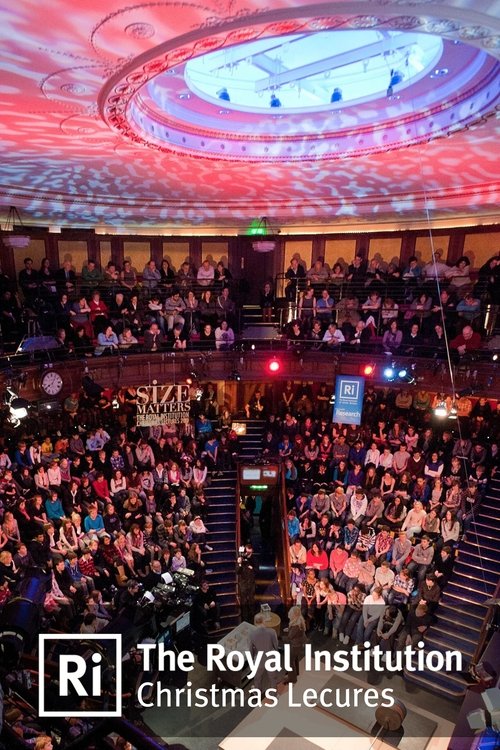
Royal Institution Christmas Lectures is a documentary TV series that premiered on BBC Four on January 4, 1966. It has 60 seasons and 125 episodes so far and is still airing new episodes. The latest episode, Season 60 Episode 3 "To the Stars and Beyond", aired on December 30, 2025.
The Royal Institution Christmas Lectures are a series of lectures on a single topic, which have been held at the Royal Institution in London each year since 1825. The lectures present scientific subjects to a general audience, including young people, in an informative and entertaining manner. Michael Faraday initiated the first Christmas Lecture series in 1825. This came at a time when organised education for young people was scarce. Faraday presented a total of nineteen series in all.
Royal Institution of Great Britain Christmas Lectures 1973: The Languages of Animals
S8 E5
E5
5.
Foreign Languages
Air date TBA
Royal Institution of Great Britain Christmas Lectures 1973: The Languages of Animals
S8 E4
E4
4.
Simple Signs and Complicated Communications
The fourth lecture in the series, 'Simple Signs and Complicated Communications', is considered lost, as there is no known copy of it.
If you do have a copy of the recording, the Royal Institution would love it if you got in touch at [email protected] to help us make all our CHRISTMAS LECTURES available for future generations.
S8 E3
E3
3.
Parents and Children
Air date TBA
Royal Institution of Great Britain Christmas Lectures 1973: The Languages of Animals
S8 E2
E2
2.
Be mine
Air date TBA
Royal Institution of Great Britain Christmas Lectures 1973: The Languages of Animals
S8 E1
E1
1.
Beware!
Air date TBA
Royal Institution of Great Britain Christmas Lectures 1973: The Languages of Animals
Dawkins opens by talking how organisms “grow up” to understand the universe around them, which requires certain apparatus, such as a brain. But before brains can become large enough to model the universe they must develop from intermediate forms.
S26 E4
E4
4.
The Ultraviolet Garden
Dawkins begins by relating the story of asking a little girl "what she thought flowers were 'for'." Her response is anthropocentric, that flowers are there for our benefit. Dawkins points out that many people throughout history have thought that the natural world existed for our benefit, with examples from Genesis and other literature.
S26 E3
E3
3.
Climbing Mount Improbable
Dawkins starts the lecture coming in with a stick insect on his hand. He describes with how much details such a being imitates its environment, its almost like a key that fits a lock. He then shows another insect, namely a Leaf Insect, which basically looks exactly like a dead leaf.
S26 E2
E2
2.
Designed and Designoid Objects
Dawkins' second lecture of the series examines the problem of design. He presents the audience with a number of simple objects, such as rocks and crystals, and notes that these objects have been formed by simple laws of physics and are therefore not designed. He then examines some designed objects - including a microscope, an electronic calculator, a pocket watch, and a clay pot - and notes that none of these objects could have possibly come about by sheer luck.
S26 E1
E1
1.
Waking Up in the Universe
Dawkins discusses the amazing capabilities of the human body and contrasts these with the limited capabilities of computers and other man-made machines. He uses a small totem pole (which is used in ancestor worship) to illustrate the importance of studying our ancestors to understand how we've evolved.
In her final Christmas Lecture, Nancy Rothwell reveals some of the incredible adaptations that animals have evolved to cope with life in the extremes. From anti-freeze blood to double-layered fur, each animal has found its own way to overcome the extremes. We also learn what it takes for humans to survive in these locations – from the perilously cold conditions confronted by Antarctic explorers to the extreme forces experienced by fighter pilots.
S33 E4
E4
4.
Times of Our Lives
Air date TBA
In her fourth lecture, Nancy Rothwell explores how our bodies and those of animals are trained by sunlight. From summer to winter, and land to ocean, Nancy explores nature's most unique examples of timing, including why Cicadas emerge from the nest after exactly 17 years, and how the Iguana can tell whether it’s daytime even with its eyes shut.
S33 E3
E3
3.
Chilling Out
Air date TBA
In the third of her Christmas Lectures, Nancy Rothwell reveals how humans and animals alike have evolved to keep their body temperatures constant, even when the temperature of their habitats is changing. After journeying down to the chilly depths of the ocean to tell us how sharks keep warm, Nancy returns to the warm climes of the Arabian desert to explain why some Bedouins still wear dark robes despite knowing that black absorbs more heat than white.
S33 E2
E2
2.
Fats and Figures
Air date TBA
In her second lecture, Nancy Rothwell explores how much energy is in the different foods we eat, and what happens to our body weight when we eat it. Different people need to eat different amounts of food, and each of us burns energy at different rates. The human body expends energy even when we’re sitting still, keeping warm. So how do we know how much energy we require?
S33 E1
E1
1.
Sense and Sensitivity
Air date TBA
In the first of her lectures, Nancy Rothwell reveals how we are endowed with a multitude of sensors that help us regulate our bodies. This process of regulation – known as 'homeostasis' – is sensitive to even the slightest change in our environment. How we respond to these changes determines how well we fare in different situations. Nancy puts her own blood under the microscope to show the cells keeping her body in balance. Plus, Olympic champion Chris Boardman gets back on a bike to demonstrate the effect of exercise on our brain and blood.
Most of us get enough to eat, but roughly 800 million people in the world go hungry every day. The world's population is set to increase from about six billion today to nearly ten billion by 2050. Will more people inevitably go hungry? Is the earth capable of producing enough food for the future? In the 20th century the green revolution produced a lot more food for the world's rapidly expanding population, through a mixture of better crops, more fertilisers and pesticides and more efficient machinery. Is the same solution going to work in the 21st century? What will be the impacts on the environment?
S40 E4
E4
4.
When Food Goes Wrong
We uncover the hidden and not so hidden dangers that might lurk in our food and explode some of the myths that surround these risks. Are you or any of your friends allergic to one kind of food or another? Perhaps as many as one in ten children has a food allergy and allergies can sometimes kill. What happens when people react to food with an allergy? Why is food allergy apparently on the increase? Have you ever suffered a bout of food poisoning? We take a look at that two-month old piece of cheese you find at the back of the fridge. It's covered in blue mould. It may look unappetising but is it dangerous?
S40 E3
E3
3.
You Are What You Eat
Our bodies are made from the food we have eaten during our lifetime. To survive and grow we need to eat enough of each of the essential building blocks of the human body. How did scientists discover the right mix of nutrients and how does what we eat match up? Is it true that eating fish makes you brainier, carrots help you see in the dark and spinach will make you stronger? John takes us through the maze of diet and health. We uncover the truth behind the claims for different kinds of foods, including organic food, and ask whether we instinctively tend to choose the balance of nutrients our bodies need.
S40 E2
E2
2.
Yuck or Yummy?
What is your favourite food? What are the things you wouldn't touch with a barge pole? Food may be fuel, but it's also something we really enjoy - unless it's one of those foods you can't stand. What is it about some food that makes it irresistible, while other food is a real turn off? In 'Yuck or yummy' we explore the sensory world of food. How do taste, appearance, texture, smell and even the name of the food affect our enjoyment? What goes on in the brain when we enjoy, or are revolted by particular foods? We ask whether or not we are programmed by our evolutionary past to like some foods more than others and how our own experiences early on might affect our preferences for life. One person's pleasure in food may be another's disgust. How do individual differences arise?
S40 E1
E1
1.
The Ape That Cooks
What did you have for your Christmas dinner? The traditional turkey? A vegetarian meal? And how did the turkey tradition start? What did people have for Christmas dinner 500 years ago? Just how is your Christmas meal turned into you? John takes us on a journey through time from our earliest ancestors, on the way exploring how scientists have come to understand the diets of our fossil ancestors from studying their teeth and bones and how differences in food habits among populations and cultures have arisen.
Mathematics is the ultimate fortune teller. It can predict if a new plane design will make it off the ground. It can plan the path of a spacecraft so it passes close to every planet on its journey through the solar system. But some of nature's equations are more tricky. Why is weather so hard to forecast? How will world populations evolve? The mathematics of chaos theory helps explain why problems like these are so challenging.
S41 E4
E4
4.
The Case of the Uncrackable Code
From the Caesar Cipher to the Da Vinci Code, people have been fascinated by secret messages. The mathematics of codes lets us to do everything from photographing the surface of Mars to shopping securely on eBay. Find out how prime numbers are now the key to codes which protect credit cards from internet hackers, and how, in the digital age, i-pods and digital TV are just a load of 0s and 1s.
S41 E3
E3
3.
The Secret of the Winning Streak
Place your bets as we use maths to win at games. Logic is an important part of playing games and mathematics can help you plan the best strategy to win. Explore why some games are won or lost on the first move, how lateral thinking unlocks fiendish brainteasers, and why the economy, the law courts and even human relationships are one big game.
S41 E2
E2
2.
The Story of the Elusive Shapes
Ever wondered why bubbles are always round even if you blow them with a square frame? Or why footballs are made out of pentagons and hexagons? Take a tour through the mathematical and cultural world of shapes - from pyramids in Egypt to the domes of Italy, and from the shape of good dice to the smell of symmetry. We'll even take a trip into hyperspace and reveal how to see in four dimensions.
S41 E1
E1
1.
The Curious Incident of the Never-ending Numbers
The secret life of numbers has fascinated people ever since humans learned to count. Join Marcus as he investigates where our numbers came from and where they are going, how big they can get and whether infinity is really a number. Explore the mysterious primes, the indivisible numbers. Just why did Beckham choose the number 23 shirt? And why do sunflowers have 89 petals? Find out how to try for the $1 million prize for cracking mathematics' biggest mystery.
Tonight’s presentation examines the part genetics has to play in our ability to survive. Is everyone’s ability to survive the same? Faced with the same perils, would we all cope just as well? And if not, is it down to luck or relative toughness, or is there such a thing as the will to live?
S42 E4
E4
4.
Fight, Flight and Fright
The focus of tonight’s presentation is stress and exertion. When faced with a threat like the approach of a predator, a human’s natural response is to turn and flee. Yet a soldier facing enemy guns can choose to stand and fight. Such a decision and the subsequent physical work required involves burning a huge amount of energy. So how does the body deliver such a large amount of energy so rapidly? What happens to the heart, lungs and blood vessels used to transport the energy, and how is it used once it is delivered?
S42 E3
E3
3.
Grilled and Chilled
How the body copes with extremes of temperature. Humans live in some extraordinary places, from the middle of the Sahara desert to the frozen wastelands of Alaska. Take a snake to the North Pole, and it will stop moving in minutes; take a cat to the desert and it will be dead in hours. So how can some humans survive such extremes, and could anyone?
S42 E2
E2
2.
Completely Stuffed
Tonight’s lecture examines how food is processed and used by our cells. The food we eat contains the fuel we need to power our bodies. But what are these fuels? How do we get them from our dinner plates to our cells? And what other things are there in the food apart from fuel? Dr Montgomery explains what happens to the fuel and oxygen in a cell, describing how food is converted into an energy currency to be spent in different ways around the body.
S42 E1
E1
1.
Peak Performance
Dr Montgomery examines the theme of respiration. Just like racing car engines, humans use oxygen to burn fuels and release the energy that powers each function in every cell. So how do we get the oxygen from the air to the cell, and what happens when oxygen levels in the air are dramatically reduced?
In the last of this year’s lectures, Chris Bishop looks at one of the great frontiers of computer science. He explains how some of the toughest computational problems are now being tackled by giving computers the ability to learn solutions for themselves. This has led to impressive progress with problems such as recognising handwriting and finding information on the web.
S43 E4
E4
4.
Untangling the Web
In this lecture, Chris Bishop untangles some of the mysteries of the web. He reveals one of the most surprising results in computer science, and shows how it is used to make web pages secure. He also studies the different ways of scrambling information to stop eavesdroppers from reading it, and explains how quantum physics can provide a secret means of transmitting data over the internet.
S43 E3
E3
3.
The Ghost In The Machine
Computers are the most versatile machines ever invented, and the same piece of hardware can be used for thousands of different purposes. They can create virtual worlds with extraordinary realism, play chess better than almost any human, and even isolate a person’s position to within a few metres anywhere on the planet. What makes this possible is something that cannot be seen, felt or touched, but without it the digital revolution would never have happened. Professor Bishop investigates the software that brings a machine to life, and turns it into a phone, a music player, a game, or any number of other devices – including ones not even imagined by the creator of the hardware.
S43 E2
E2
2.
Chips with Everything
In this lecture, Professor Bishop reveals state-of the-art advancements in computer interaction, including new touch-screen technology. Surface computing allows people to manipulate documents just as they would pieces of paper on a table. Users are able to perform a host of functions, including organising and resizing photos, poring over maps and making selections from takeaway menus. The interface is capable of processing the requests of multiple users. Professor Bishop also demonstrates 3D displays and flexible screens that can be rolled up when they are not being used.
S43 E1
E1
1.
Breaking the Speed Limit
Professor Bishop goes on a fascinating exploration of the extraordinary world of the silicon chip and attempts to answer the plethora of questions associated with this technology. How is it possible to build a machine as complex as this with a billion tiny components packed into a space the size of a postage stamp? What are the challenges that are making it harder to continue the incredible improvement in speed, and what ideas are being explored to overcome them? Can new kinds of computers be built that are based on individual molecules? Can single electrons be used to store information? Could computation machines exist without consuming energy?
With changing climate it is difficult to predict who will win the 300 million year war. What has gone wrong when herbivores get the upper hand and strip plants bare? The battle ground is changing such that different conditions could favour either the plants or the herbivores. When the balance is broken we could have an ‘outbreak’, which is a situation where one side of the war gets an unfair advantage and grows unchecked. Will climate change compromise the abilities of plants, including our crops, to defend themselves?
S44 E4
E4
4.
Dangerous to Delicious
Lunch anyone?
Human agriculture has usually tried to disarm plant defences and increase plant nutrient content. Our domestic varieties of wheat and cabbage now look, and taste, very different to their wild relatives. White carrots anyone? We cook, cure, freeze and otherwise process plants until they become edible and more nutritious. We grow them to epic proportions. And now, using the latest scientific research, we have the opportunity to grow them more efficiently and perhaps more healthily using genetic modification.
S44 E3
E3
3.
Talking Trees
Can a plant, something without a mouth, ears or eyes, communicate?
Yes! Plants do communicate but not in ways that are obvious to humans. Instead of barking or shrieking when they are attacked, they release chemical ‘signals' into the air which can be detected by other plants. But these physical and chemical defences cost energy that could be used to grow instead of being used for protection. Do they protect themselves, or grow?
S44 E2
E2
2.
The Animals Strike Back
Ecologist Professor Sue Hartley continues to show how the epic 300-million-year war between plants and animals has shaped us and the world we live in. The life of a herbivore is not a happy one. For a start, plants are the wrong sort of food for animals: they are low in essential nutrients and getting any of those nutrients in the face of flora defences is even harder. In this programme, Professor Hartley reveals the many different ways plant-eating animals, from sloths to aphids, have evolved to overcome these problems. Herbivores use all sorts of tricks: they employ "friendly" bacteria in their gut to extract as many nutrients as possible from indigestible plants. They also have continuously growing teeth to grind down tough plants like grasses. Professor Hartley also reveals some of the many ways herbivores cope with plant poisons, and that some herbivores even steal plants' poisons to use in their own defence against their predators
S44 E1
E1
1.
Plant Wars
In this years Royal Institution Christmas Lectures ecologist Professor Sue Hartley - only the fourth woman to present the lectures since they began in 1825 - shows how the epic 300-million-year war between plants and animals has shaped us and the world we live in. Plants may seem harmless, but Professor Hartley reveals that the opposite is the case: they've had to develop terrifying and devious ways to defend themselves and attack their plant and animal enemies. Vicious poisons, lethal materials and even cunning forms of communicating with unlikely allies are just some of the weapons in their armoury that have seen off everything from dinosaurs to caterpillars. And Professor Hartley demonstrates how humans have turned plants into food, medicines and drugs and reveals what is likely to happen next in the epic struggle between plants and animals. In this first lecture Professor Hartley reveals how, despite animals attempts to destroy plants by eating them, plants are winning the war.
Why is the tallest building on earth less than half a mile high? Why don't we have mountains as tall as those on Mars?
In the last of this year's Christmas Lectures, Dr Mark Miodownik investigates the world of the very big and very tall. He reveals that, at this scale, everything is governed by a battle with one of the strangest forces in the universe - gravity.
With help from acrobats, levitation devices, spiders, birthday cake candles and even some sticky goo, Mark discovers how gravity can make solid rock behave like a liquid and investigates whether one day it might be possible to build a structure from Earth into space, taking us beyond the reach of gravity without the use of rocket.
E2
2.
Why Chocolate Melts and Jet Engines Don't
Dr Mark Miodownik zooms into the microscopic world beneath our fingertips. In this unfamiliar landscape, strange forces dominate the world and common sense goes out of the window. He reveals how this tiny hidden world can make objects behave like magic, and discovers the secrets of the extraordinary metals that make jet engines possible.
With a mass audience taste test, Mark reveals why chocolate is actually one of the most sophisticated and highly engineered materials on the planet, using special crystals designed to melt in the mouth. He looks forward to new era of self-healing materials where a broken mobile phone or car bumper could heal itself and how, one day, material scientists might even create artificial life.
E1
1.
Why Elephants Can't Dance
How can a hamster survive falling from the top of a skyscraper, ants carry over 100 times their own body weight and geckos climb across the ceiling?
In the first of this year's Christmas lectures, Dr Mark Miodownik investigates why size matters in animal behaviour. He reveals how the science of materials - the stuff from which everything is made - can explain some of the most extraordinary and surprising feats in the animal kingdom.
By the end, you will understand why you will never see an elephant dance.
With a little help from a baby, a robot and a magician, Professor Bruce Hood uncovers what makes us truly human in this final lecture.
E2
2.
Who's in Charge Here Anyway?
Professor Bruce Hood tests the limits of the memory, finding out how humans learn, how the brain takes shortcuts and why multitasking can be dangerous.
E1
1.
What's in Your Head?
Bruce Hood measures the brain's nerve cells in action, reads someone's mind from 100 miles away, and reveals how the brain creates its own version of reality.
For centuries alchemists have tried to turn base metals into gold. But is such a feat even possible? In the final Christmas Lecture, Dr Peter Wothers explores the elements within the earth and discovers just how difficult it is for chemists to extract the planet's greatest treasures. He discovers how our knowledge of the elements can allow us to levitate, turn carbon dioxide into diamonds and maybe turn lead into gold. Peter is joined by Nobel Prize-winning chemist Professor Sir Harry Kroto and together they find out whether a member of the audience is really worth their weight in gold and what happens when you set fire to a diamond.
E2
2.
Water: The Fountain of Youth
Medieval alchemists wrote of a mysterious fountain of youth, whose waters could rejuvenate anyone who drank them. But can water really be magical? In the second of this year's Christmas Lectures, Dr Peter Wothers drinks from the fountain and finds out whether the elements lurking in the water can restore his youth. Along the way he discovers how exploding balloons could solve the energy crisis, how water contains the remains of the most violent reactions on Earth and that the real secret to eternal youth might be drinking no water at all. Peter is joined in his quest by Paralympic champion cyclist Mark Colbourne and finds out what happens when the two most reactive elements on the periodic table, caesium and fluorine, meet each other.
E1
1.
Air: The Elixir of Life
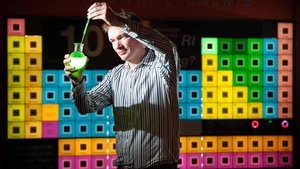
The medieval alchemists made elements react to create magnificent shows, enthralling kings and commoners alike, but their secrets were never revealed until now. In the first of this year's Christmas Lectures, Dr Peter Wothers explores what the alchemists knew about the air we breathe and reveals how our modern knowledge of these elements can be used to control fire, defy gravity and harness the power of a lightning storm. Peter is joined by the cast of the musical Loserville and is helped in his exploration of the 118 modern elements by a periodic table made from audience members at the Royal Institution.
In this year's final Christmas Lecture, Dr Alison Woollard from the University of Oxford, tackles a question that has intrigued scientists and natural philosophers for centuries. The cycle of life and death affects all cells, but Alison reveals a shocking truth - that 'cell death' plays an important part in life. It enables the development and survival of most multi-celled organisms from hedgehogs to humans.
E2
2.
Am I a Mutant?
In the second of this year's Christmas Lectures, Dr Alison Woollard from the University of Oxford unravels this mystery of life. She reveals that the extraordinary diversity has all come about by genetic mutation. Life revolves around the survival of the fittest mutant.
E1
1.
Where Do I Come From?
One of the greatest conundrums of life is how we emerge from a single cell into a walking, talking, multi-trillion-celled organism that we call the human body.
In the first of this year's Christmas Lectures, Dr Alison Woollard from the University of Oxford reveals just how this incredible transformation takes place. Using dramatic live experiments she shows how each of those trillions of cells knows what to do, when to do it and how to organise themselves to carry out vital specialist roles in our body.
Inspired by the Royal Institution’s very own Michael Faraday, Prof Danielle George attempts to use simple motors to construct the world’s greatest robot orchestra.
When Michael Faraday demonstrated the first electric motor in 1822, he could never have dreamed that in 2014 we’d be surrounded by mechanical devices capable of performing nearly every human task. In this lecture, Danielle will explain how these robotic and motor-driven appliances work and show how they can adapted to help you kick start a technological revolution. She’ll show you how to turn a washing machine into a wind turbine, how Lego can solve a Rubik’s Cube and how the next Mars rover will traverse an alien world.
E2
2.
Making Contact
Inspired by Alexander Graham Bell, Prof Danielle George attempts to beam a special guest into the theatre via hologram, using the technology found in a mobile phone.
When Scottish inventor Alexander Graham Bell demonstrated the first telephone in 1876, he could never have dreamed that in 2014 we’d all be carrying wire-free phones in our pockets and be able to video chat is crystal clear HD across the world. In this lecture, Danielle will explain how these technologies work and show how they can adapted to help keep you connected to the people around you. She’ll show you how to control paintball cannons with a webcam and turn your smartphone into a microscope whilst also investigating a device that allows you to feel invisible objects in mid-air.
E1
1.
The Light Bulb Moment
Inspired by fellow Geordie inventor Joseph Swan, Prof Danielle George attempts to play a computer game on the windows of a skyscraper using hundreds of light bulbs.
When Joseph Swan demonstrated the first working light bulb in 1878 he could never have dreamed that in 2014 we’d be surrounded by super-bright LED screens and lights that could be controlled using mobile phones. In this lecture, Danielle will explain how these technologies work and show how they can be adapted to help you realise your own light bulb moments. She’ll show you how to send wireless messages using a barbeque, control a firework display with your laptop and use a torch to browse the internet.
In the third and final lecture, Kevin explores the the next frontier of human space travel. Live from the Station hurtling at 17,500mph, 400 km above the Earth, Tim answers questions directly from the children in the lecture theatre audience. With Tim's help out in Earth's orbit, Kevin investigates how the next generation of astronauts will be propelled across the vast chasm of space to Mars and beyond.
So, how will life be artificially sustained as we travel the millions of kilometres to the red planet and on into the cosmos? How will our food last for three years or more? And what is waiting what for us when we finally land? With earth-shattering experiments, top space scientists and our astronaut live from space, Dr Fong reveals how we'll survive that voyage to space's next frontier and beyond.
E2
2.
Life in Orbit
In the second lecture, Kevin explores life in orbit on board the International Space Station. As Tim settles in to his new home he sends special reports about what it takes to live and work in space.
Four hundred kilometres above the Earth, hurtling at a speed of 17,500mph, astronauts' bones and muscles waste away, the oxygen they breathe is artificially made, and they face constant threats from micrometeorites, radiation and extreme temperatures. If a medical emergency strikes, Tim is a very long way from home.
In its 15-year lifetime, the International Space Station has never had a major accident. With a British astronaut in orbit, gravity-defying experiments and guest astronauts in the lecture theatre, Dr Fong shows us how to survive life in orbit.
E1
1.
Lift Off!
In the first lecture, Kevin explores and probes second by second what it takes to 'lift off' into space. With Tim only days into his six-month mission, he helps Kevin answer what keeps astronauts safe and on track as they are propelled into orbit.
How do you control the energy of 300 tonnes of liquid fuel? What happens to your body if you don't wear a spacesuit? And how do you catch up with a space station travelling at 17,500 mph to finally get inside?
With explosive live experiments, guest astronauts in the lecture theatre, and planetary scientist Monica Grady direct from the launch pad in Kazakhstan, we learn all this and more as those thrilling minutes of lift off are recreated.
Saiful Islam explores how to store energy. With the UK generating far more energy today than 80 years ago, finding better ways to store it is vital for our futures.
E2
2.
People Power
Saiful Islam investigates how humans as living machines actually use energy, asking whether it's possible to 'supercharge' the human body and increase its performance.
E1
1.
Let There Be Light!
Saiful Islam talks about how to generate and store energy. To begin, Saiful investigates how to generate energy without destroying the planet in the process.
Professor Sophie Scott investigates what language is and whether humans are really the only species to use it.
E2
2.
Silent Messages
Professor Sophie Scott explores the world of silent communication, investigating why smells and body language can say so much.
E1
1.
Say It with Sound
Prof Sophie Scott uses hissing cockroaches, chirping crickets and rumbling elephants to explore how humans and animals have evolved to use sound to send messages.
Professor Alice Roberts and Professor Aoife McLysaght take viewers on an immersive voyage through our evolutionary past and ask challenging questions about what our future holds.
Professor Alice Roberts explores what makes each of us totally unique and celebrates the incredible diversity we see in humans across the globe.
E2
2.
What Makes Me Human?
Professor Alice Roberts explores the story of human evolution, revealing how a humble African ape became a successful global species.
E1
1.
Where Do I Come From?
Professor Alice Roberts meets our ancient ancestral family, from armadillos to sharks, and discovers our true place in the tree of life. With 4D scanning, giant origami and a ukulele, they will explore evolution like never before.
Dr Hannah Fry tests the limits of our control, from gravity-defying stunts to human-sized drones, and delves into the world of fake news to separate the truth from the lies.
E2
2.
How to Bend the Rules
Dr Hannah Fry reveals how data-gobbling algorithms have taken over our lives and now control almost everything we do, without us even realising.
E1
1.
How to Get Lucky
Dr Hannah Fry, through a host of live experiments, uncovers the secrets of luck to discover what really controls our destiny, from dodging erupting volcanoes to pulling Christmas crackers.
Dr Tara Shine takes a deep breath and explores the gases that make up the air we breath. One of them might provide the answer for heating and transport in the future.
E2
2.
Water World
Dr Helen Czerski explains why the ocean is so vital to life on earth and what we need to know to be good citizens of our ocean planet.
E1
1.
Engine Earth
Professor Chris Jackson reveals how, for billions of years, volcanic activity drove climate change on planet Earth. Now, it is humans.
England’s Deputy Chief Medical Officer, Jonathan Van-Tam will be joined by a host of top UK scientists to take a deep dive into the science of viruses.
Professor Mike Wooldridge is joined by leading experts to grapple with the future of AI. What opportunities and dangers lie ahead as AI continues to evolve?
E2
2.
My AI Life
Professor Mike Wooldridge reveals the huge role AI already plays in our daily lives, sometimes without us even realising what it is doing.
E1
1.
How to Build an Intelligent Machine
Professor Mike Wooldridge explores the nature of artificial intelligence. By using experiments and demonstrations, he investigates how AI learns and what it can do.
In this year’s Christmas Lectures, Dr Chris van Tulleken delves deep into our guts – to reveal the revolutionary latest science around what happens inside our bodies when we eat. He investigates how food has fundamentally shaped human evolution, uncovers the importance of our microbiome – as the extra ‘organ’ we didn’t know we had – and asks how we can all eat better in future, for the sake of our own health and the health of the planet. Chris will reveal how what we eat can have a massive effect on both our bodies and our brains. He’ll bring the science to life through a series of fact fuelled demos, special guest appearances, festive food hacks, and a healthy dose of self-experimentation. From tastebuds to toilet, we’ll find out what happens in the body when we eat. How we eat with our eyes (green eggs and ham anyone?) and how smell and even sound can affect the taste of our food.
What did the very first meal on earth look like? To begin his third and final Christmas Lecture in an explosive fashion, Dr Chris van Tulleken takes us back more than four billion years, to the beginnings of life. This was when microscopic bugs first began eating gases and metal, marking the start of an incredible food web which, billions of years later, humans have learned to master.
E2
2.
How Food Makes Us
In this lecture, Dr Chris van Tulleken investigates how we get energy from our food and how what we eat makes us who we are. He reveals how combustion engines get their energy in a series of controlled explosions – which he demonstrates using a kitchen cupboard of different foods. As the bangs get bigger, it becomes clear that our bodies can’t get their energy in the same way. Luckily, Chris shows us our bodies are much cleverer than even the most advanced engine.
E1
1.
From Taste Buds to Toilet
Dr Chris van Tulleken follows the extraordinary journey food takes through our bodies – from the very first moment we see and smell a potential meal... until it finally emerges at the other end of our digestive tract. Be prepared for plenty of gross moments in this one-hour lecture!
Dame Dr Maggie Aderin-Pocock takes us on a voyage deep into space, on an astronomical search for extraterrestrial life, celebrating 200 years of the Christmas Lectures.
Dame Dr Maggie Aderin-Pocock, with the help of the world’s most powerful telescope, ventures through the Milky Way and into the universe beyond, on the hunt for alien worlds.
E2
2.
Searching the Solar System
Space scientist Dame Dr Maggie Aderin-Pocock continues her search for alien life with a grand tour of our solar system. Could any other planets or moons out there be habitable?
E1
1.
Destination Moon
Dame Dr Maggie Aderin-Pocock begins her search for extraterrestrial life with an exploration of our nearest neighbour, and her favourite space rock, the moon.
Cast & crew
Helen Czerski
Herself - Presenter
Tara Shine
Herself - Presenter
Chris van Tulleken
Himself
Royal Institution Christmas Lectures FAQ
When is the next episode of Royal Institution Christmas Lectures?
A date for the next episode of Royal Institution Christmas Lectures hasn't been announced yet. Follow Royal Institution Christmas Lectures in the Streambay app and you'll be notified as soon as a new episode airs.
When did the latest episode of Royal Institution Christmas Lectures come out?
The most recent episode of Royal Institution Christmas Lectures, Season 60 Episode 3 "To the Stars and Beyond", aired on December 30, 2025.
How many seasons of Royal Institution Christmas Lectures are there?
Royal Institution Christmas Lectures has 60 seasons with 125 episodes in total.
When did Royal Institution Christmas Lectures first air?
Royal Institution Christmas Lectures first aired on BBC Four on January 4, 1966.
How do I get notified when new episodes of Royal Institution Christmas Lectures are released?
Download the Streambay app, follow Royal Institution Christmas Lectures, and you'll get a push notification the moment each new episode is released.
Arena is a British television documentary series, made and broadcast by the BBC. Voted by leading TV executives in Broadcast as one of the top 50 most influential programmes of all time, it has run since 1 October 1975 with over five hundred episodes made, directed by the likes of Martin Scorsese, Alan Yentob, Roly Keating, Frederick Baker, Volker Schlondorff and Vikram Jayanti. Arena's subjects are a roll-call of the world's best known cultural figures from the 20th and 21st centuries, from singers Bob Dylan and Amy Winehouse to academics Edward Said and Eric Hobsbawm, from writers Jean Genet...
Synopsis: Arena is a British television documentary series, made and broadcast by the BBC. Voted by leading TV executives in Broadcast as one of the top 50 most influential programmes of all time, it has run since 1 October 1975 with over five hundred episodes made, directed by the likes of Martin Scorsese, Alan Yentob, Roly Keating, Frederick Baker, Volker Schlondorff and Vikram Jayanti. Arena's subjects are a roll-call of the world's best known cultural figures from the 20th and 21st centuries, from singers Bob Dylan and Amy Winehouse to academics Edward Said and Eric Hobsbawm, from writers Jean Genet...
The South Bank Show is a television arts magazine show produced by ITV between 1978 and 2010. A new series began on Sky Arts from 27 May 2012. Presented by Melvyn Bragg, the show aims to bring both high art and popular culture to a mass audience.
Synopsis: The South Bank Show is a television arts magazine show produced by ITV between 1978 and 2010. A new series began on Sky Arts from 27 May 2012. Presented by Melvyn Bragg, the show aims to bring both high art and popular culture to a mass audience.
For the first time ever, a 30-year insider has come forward to reveal over 70 years of humanity's hidden history in space. Corey Goode joins David Wilcock in this inaugural presentation of Cosmic Disclosure to offer an overview of the history and extent of humanity's celestial presence.
Synopsis: For the first time ever, a 30-year insider has come forward to reveal over 70 years of humanity's hidden history in space. Corey Goode joins David Wilcock in this inaugural presentation of Cosmic Disclosure to offer an overview of the history and extent of humanity's celestial presence.
Major real-life air disasters are depicted in this series. Each episode features a detailed dramatized reconstruction of the incident based on cockpit voice recorders and air traffic control transcripts, as well as eyewitnesses recounts and interviews with aviation experts.
Synopsis: Major real-life air disasters are depicted in this series. Each episode features a detailed dramatized reconstruction of the incident based on cockpit voice recorders and air traffic control transcripts, as well as eyewitnesses recounts and interviews with aviation experts.
Fitil is a popular Soviet/Russian television satirical/comedy short film series which ran for about 500 episodes. Some of the episodes were aimed at children, and were called Фитилёк, Fitilyok, Little Fuse. Each issue contained from the few short segments: documentary, fictional and animated ones. Directed by various artists, including Leonid Gaidai who presented his famous trio of Nikulin, Vitsin and Morgunov into the cast. It was called in USSR as "the anecdotes from the Soviet government".
Synopsis: Fitil is a popular Soviet/Russian television satirical/comedy short film series which ran for about 500 episodes. Some of the episodes were aimed at children, and were called Фитилёк, Fitilyok, Little Fuse. Each issue contained from the few short segments: documentary, fictional and animated ones. Directed by various artists, including Leonid Gaidai who presented his famous trio of Nikulin, Vitsin and Morgunov into the cast. It was called in USSR as "the anecdotes from the Soviet government".
The best in the performing arts from across America and around the world including a diverse programming portfolio of classical music, opera, popular song, musical theater, dance, drama, and performance documentaries.
Synopsis: The best in the performing arts from across America and around the world including a diverse programming portfolio of classical music, opera, popular song, musical theater, dance, drama, and performance documentaries.
PBS' premier science series helps viewers of all ages explore the science behind the headlines. Along the way, NOVA demystifies science and technology, and highlights the people involved in scientific pursuits.
Synopsis: PBS' premier science series helps viewers of all ages explore the science behind the headlines. Along the way, NOVA demystifies science and technology, and highlights the people involved in scientific pursuits.
'Fantástico' is a journalistic program shown on Sundays, presented by Poliana Abritta and Maju Coutinho. Every week, he presents special reports, shows and various paintings.
Synopsis: 'Fantástico' is a journalistic program shown on Sundays, presented by Poliana Abritta and Maju Coutinho. Every week, he presents special reports, shows and various paintings.
20/20 is an American television newsmagazine that has been broadcast on ABC since June 6, 1978. Created by ABC News executive Roone Arledge, the show was designed similarly to CBS's 60 Minutes but focuses more on human interest stories than international and political subjects. The program's name derives from the "20/20" measurement of visual acuity.
The hour-long program has been a staple on Friday evenings for much of the time since it moved to that timeslot from Thursdays in September 1987, though special editions of the program occasionally air on other nights.
Synopsis: 20/20 is an American television newsmagazine that has been broadcast on ABC since June 6, 1978. Created by ABC News executive Roone Arledge, the show was designed similarly to CBS's 60 Minutes but focuses more on human interest stories than international and political subjects. The program's name derives from the "20/20" measurement of visual acuity.
The hour-long program has been a staple on Friday evenings for much of the time since it moved to that timeslot from Thursdays in September 1987, though special editions of the program occasionally air on other nights.
Never miss Royal Institution Christmas Lectures.
Download Streambay and follow Royal Institution Christmas Lectures. We’ll notify you the moment a new episode is released. It’s free, with no sign-up and no personal information required.