
Skip to content
Streambay
Nature's Microworlds poster
TV series

Nature's Microworlds

Latest episode

S1 E13 · Scottish Highlands

About Nature's Microworlds

Nature's Microworlds is a documentary TV series that premiered on BBC Four on July 16, 2012. It has 1 season and 13 episodes so far and has ended. The latest episode, Season 1 Episode 13 "Scottish Highlands", aired on March 6, 2013.

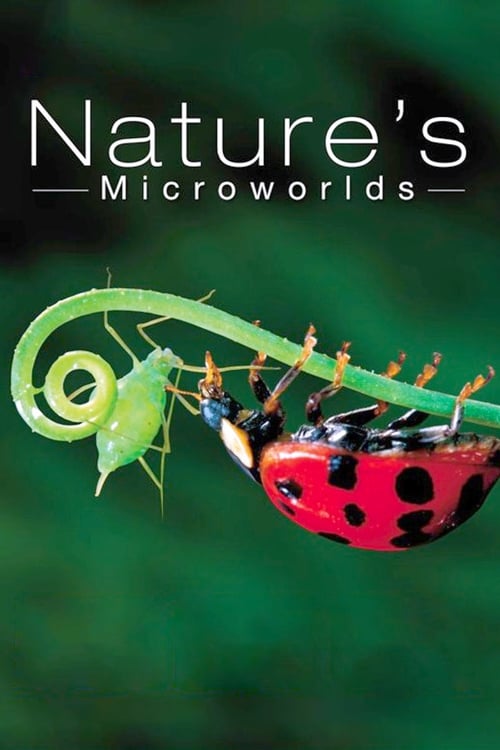
Earth is a collection of worlds within worlds, each one a self-contained ecosystem bursting with life. These microworlds depend on an intricate web of relationships and natural forces that make each one unique. This stunning series delves deep into the heart of these habitats, breaking down each intricate ecosystem into all of its component parts, introducing the animals that live there, and revealing the fine balances of its existence.

  • Documentary

Last updated

Episodes

13 episodes · 1 season

Season 1

2012 · 13 episodes · Last episode: 13 years ago

Nature's Microworlds Season 1 release dates →
  1. Nature's Microworlds S1 E13 still E13

    13. Scottish Highlands

    Finale

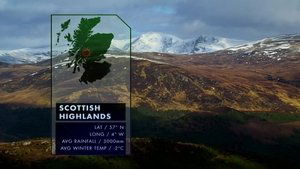
    Steve Backshall looks at the Scottish Highlands, home to some of the most iconic wildlife in the British Isles. The two contrasting landscapes of open moor and Caledonian forest are both crucially important to their wild inhabitants and yet the history of the Highlands show that they shouldn't exist side by side. Steve guides us through the landscape and reveals the surprising part that humans have to play in allowing both habitats to thrive, thereby keeping this corner of the British Isles wild.
  2. Nature's Microworlds S1 E12 still E12

    12. Australia's Red Centre

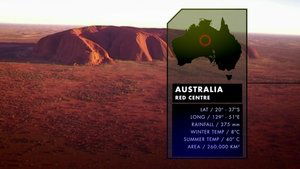
    In Australia's red centre, Steve Backshall reveals two-metre-tall kangaroos, the world's most venomous snake and a burrowing toad living among the throng of animals. Parched by the sun, scorched by fire and prone to unpredictable floods, the heart of this island continent is as inhospitable as it gets. Poor soils make vegetation tough and indigestible even to Australia's largest herbivore, the red kangaroo. However, it teems with animals found nowhere else on Earth. The key to the success of this extraordinary place is as surprising as the creatures that make it home.

  3. Nature's Microworlds S1 E11 still E11

    11. The Deep Sea

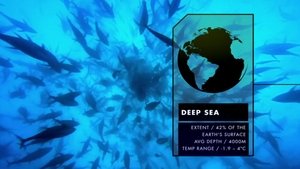
    Steve Backshall takes us to a place few have ever visited - the deep sea. 99 per cent of the space on Earth inhabited by life is under the ocean and almost 90 per cent of this is deeper than a kilometre, a place of perpetual darkness and crushing pressure. Far from being lifeless, the vast inner space of our planet contains an extraordinary array of beautiful and bizarre creatures, from 40m-long jellyfish to grotesque angler fish and vampire squid. Our journey from the sunlit surface waters to the deepest reaches of the abyss reveals how life persists in such a hostile world.

  4. Nature's Microworlds S1 E10 still E10

    10. Yellowstone

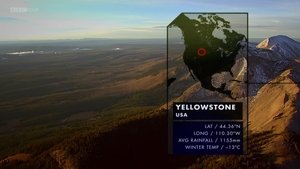
    In the spectacular Yellowstone where wolves, bears, coyotes, bison and elk roam vast grasslands, wetlands and forests, Steve Backshall looks for the answer to a puzzle. Wolves and beavers have little to do with each other so why, when wolves were returned after an absence of 70 years, did the beaver population increase? The revelation is as magical as it is surprising.

  5. Nature's Microworlds S1 E9 still E9

    9. Namib Desert

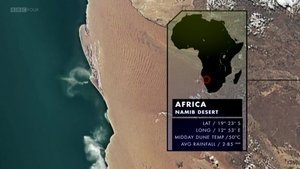
    Steve Backshall takes us on a journey to the oldest desert in the world, the Namib in south west Africa, where the treacherous Skeleton Coast sees freezing waters meet a sea of spectacular dunes. With temperatures regularly reaching 60 degrees and with little to no rainfall, the animals that live here have to be tough. Steve tracks down these amazing animals, showing the clever tactics that each employs to combat the heat, before revealing the unique secret that allows life to survive here at all, in such a harsh environment.

  6. Nature's Microworlds S1 E8 still E8

    8. Great Barrier Reef

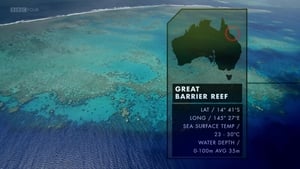
    Steve Backshall goes beneath the surface of Australia's Great Barrier Reef to discover the crucial conditions that allowed a tiny coral building block to create the largest living structure on the planet. He unravels the complex mosaic of reef environments to reveal the key to the microworld's success, but discovers that life on this coast is not always easy. Nutrient-poor water, enormous storms and rising seas should make it impossible for such a vibrant ecosystem to exist here, so what allows the Great Barrier Reef to not only survive but flourish as the largest reef on Earth?

  7. Nature's Microworlds S1 E7 still E7

    7. Canada's Coastal Forests

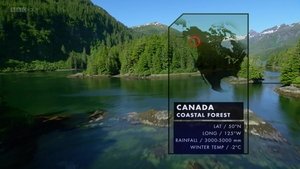
    Steve Backshall pulls apart the pieces of Canada's remarkable coastal forest to reveal why this ancient sylvan environment is not only home to some of the largest trees on Earth, but also some of the greatest aggregations of top predators in North America. He untangles the complex relationships between the seasons, the landscape and the wildlife to discover what might be fuelling this forest's prolific productivity and supporting eagles, bears and wolves. In this complex coastal system, the secret to success comes in a remarkable annual event.

  8. Nature's Microworlds S1 E6 still E6

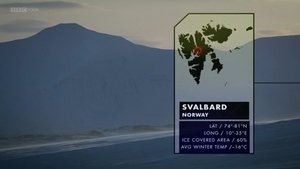
    6. Svalbard

    In a revelatory look at Svalbard, the most northerly region in the series, Steve Backshall leaves no stone unturned as he unravels the secrets that lie covered in ice for most of each year. Svalbard is cold, dark and foreboding, yet it is home to the world's largest land predator and the most northerly population of large herbivore, but Steve discovers that the real secret to this place comes from a very different world.

  9. Nature's Microworlds S1 E5 still E5

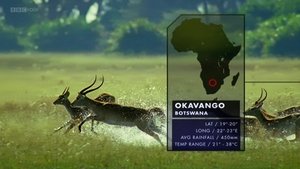
    5. Okavango

    Steve Backshall tries to discover just what makes it possible for a river to stop in the middle of a desert. The Okavango is the world's largest inland delta and home to a one of Africa's greatest congregations of wildlife, and in asking the difficult questions Steve reveals the astounding secret to its existence.

  10. Nature's Microworlds S1 E4 still E4

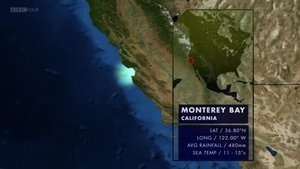
    4. Monterey Bay

    Monterey Bay on California's coast is one of the most diverse marine ecosystems in the world, its giant kelp forest bursting with life, from microscopic plankton to visiting ocean giants. The secret key to success in such a busy microworld is balance. Steve Backshall guides us through the unique geography of the bay and introduces some of its key characters in a quest to find the one species that keeps life in the kelp forest in check.

  11. Nature's Microworlds S1 E3 still E3

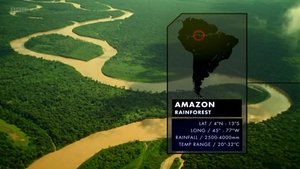
    3. Amazon

    Steve Backshall lifts the lid on an incredible world of intricate relationships and unexpected hardship in the Amazon rainforest, explores the way that the jungle's inhabitants interact, and reveals a hidden secret that might just be what keeps the whole place alive.

  12. Nature's Microworlds S1 E2 still E2

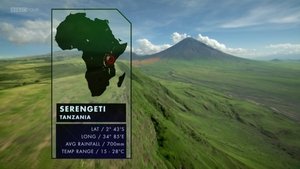
    2. Serengeti

    A look at one of the most famous habitats on the planet, the Serengeti in East Africa, a vast grassland that is home to some of the greatest concentrations of herbivores on the continent. But what is the key to this exceptional grassland that allows such density and diversity?

  13. Nature's Microworlds S1 E1 still E1

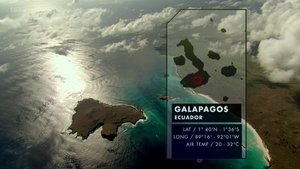
    1. Galapagos

    Warning: Contains scenes of animals eating prey that some viewers may find distressing. A visit to arguably the most famous archipelago on Earth, the Galapagos. It's home to a myriad of bizarre and unique creatures, endemic to these islands - but how did they get here and what is the key to these extraordinary islands that allows them to thrive? The programme reveals that this key holds not just the secret to life here, but also to how Darwin was able to leave with the ideas that would revolutionise biology.

Nature's Microworlds FAQ

Will there be new episodes of Nature's Microworlds?

Nature's Microworlds has ended, so no new episodes are scheduled. The final episode aired on March 6, 2013.

When did the latest episode of Nature's Microworlds come out?

The most recent episode of Nature's Microworlds, Season 1 Episode 13 "Scottish Highlands", aired on March 6, 2013.

How many seasons of Nature's Microworlds are there?

Nature's Microworlds has 1 season with 13 episodes in total.

When did Nature's Microworlds first air?

Nature's Microworlds first aired on BBC Four on July 16, 2012.

How do I get notified when new episodes of Nature's Microworlds are released?

Download the Streambay app, follow Nature's Microworlds, and you'll get a push notification the moment each new episode is released.

More like Nature's Microworlds

  • Arena poster

    7.2

    S1 · E686 1 year ago

    Arena

    Synopsis: Arena is a British television documentary series, made and broadcast by the BBC. Voted by leading TV executives in Broadcast as one of the top 50 most influential programmes of all time, it has run since 1 October 1975 with over five hundred episodes made, directed by the likes of Martin Scorsese, Alan Yentob, Roly Keating, Frederick Baker, Volker Schlondorff and Vikram Jayanti. Arena's subjects are a roll-call of the world's best known cultural figures from the 20th and 21st centuries, from singers Bob Dylan and Amy Winehouse to academics Edward Said and Eric Hobsbawm, from writers Jean Genet...

  • The South Bank Show poster

    5.6

    S45 · E4 3 years ago

    The South Bank Show

    Synopsis: The South Bank Show is a television arts magazine show produced by ITV between 1978 and 2010. A new series began on Sky Arts from 27 May 2012. Presented by Melvyn Bragg, the show aims to bring both high art and popular culture to a mass audience.

  • Galileo poster

    4.8

    S14 · E235 4 years ago

    Galileo

    Synopsis: This daily German magazine show delivers interesting facts on numerous topics centering around technology, life, and bizarre knowledge.

  • Cosmic Disclosure poster

    10.0

    S30 · E11 6 months ago

    Cosmic Disclosure

    Synopsis: For the first time ever, a 30-year insider has come forward to reveal over 70 years of humanity's hidden history in space. Corey Goode joins David Wilcock in this inaugural presentation of Cosmic Disclosure to offer an overview of the history and extent of humanity's celestial presence.

  • Mayday poster

    8.2

    S26 · E10 7 months ago

    Mayday

    Synopsis: Major real-life air disasters are depicted in this series. Each episode features a detailed dramatized reconstruction of the incident based on cockpit voice recorders and air traffic control transcripts, as well as eyewitnesses recounts and interviews with aviation experts.

  • Fuse poster

    7.6

    S47 · E136 18 years ago

    Fuse

    Synopsis: Fitil is a popular Soviet/Russian television satirical/comedy short film series which ran for about 500 episodes. Some of the episodes were aimed at children, and were called Фитилёк, Fitilyok, Little Fuse. Each issue contained from the few short segments: documentary, fictional and animated ones. Directed by various artists, including Leonid Gaidai who presented his famous trio of Nikulin, Vitsin and Morgunov into the cast. It was called in USSR as "the anecdotes from the Soviet government".

  • Great Performances poster

    6.1

    S55 · E4 1 week ago

    Great Performances

    Synopsis: The best in the performing arts from across America and around the world including a diverse programming portfolio of classical music, opera, popular song, musical theater, dance, drama, and performance documentaries.

  • NOVA poster

    7.1

    S53 · E16 4 days ago

    NOVA

    Synopsis: PBS' premier science series helps viewers of all ages explore the science behind the headlines. Along the way, NOVA demystifies science and technology, and highlights the people involved in scientific pursuits.

  • Fantástico poster

    8.4

    S54 · E45 Today

    Fantástico

    Synopsis: 'Fantástico' is a journalistic program shown on Sundays, presented by Poliana Abritta and Maju Coutinho. Every week, he presents special reports, shows and various paintings.

  • 20/20 poster

    6.3

    S50 · E3 1 month ago

    20/20

    Synopsis: 20/20 is an American television newsmagazine that has been broadcast on ABC since June 6, 1978. Created by ABC News executive Roone Arledge, the show was designed similarly to CBS's 60 Minutes but focuses more on human interest stories than international and political subjects. The program's name derives from the "20/20" measurement of visual acuity. The hour-long program has been a staple on Friday evenings for much of the time since it moved to that timeslot from Thursdays in September 1987, though special editions of the program occasionally air on other nights.

Never miss Nature's Microworlds.

Download Streambay and follow Nature's Microworlds. We’ll notify you the moment a new episode is released. It’s free, with no sign-up and no personal information required.

Coming soon to App Store Get it on Google Play
Nature's Microworlds Get new episode alerts Get alerts